In a nutshell
- 🧽 Uses uncooked rice and mild acid (white vinegar or lemon) to create gentle abrasion that dislodges limescale and biofilm without scratching glass.
- 🧪 Clear steps: add 2–4 tbsp rice, warm water, and vinegar; swirl for 2–5 minutes; rinse hot; finish with a microfibre dry for a streak-free sheen.
- 🔍 Diagnose issues: patchy rough deposits respond to repeats, but uniform cloudiness indicates etched glass, which requires professional polishing or disguise.
- 🛡️ Prevention matters: change water daily, add a teaspoon of vinegar in hard-water areas, quick monthly rice swirl, and dry thoroughly to stop new spots.
- ⚠️ Safety first: never mix vinegar with bleach, avoid harsh abrasives, protect gilded or decorated rims, and dispose of used rice in food waste, not the sink.
Cloudy vases are an everyday frustration, the ghost of hard water and flower sap dulling what should gleam. A humble fix sits in the cupboard: uncooked rice. When swirled with water and a dash of acid, it becomes a miniature polishing crew that scours interiors a brush can’t reach. The trick is not brute force but gentle abrasion, a tactile nudge that dislodges limescale without scratching glass. It’s quick. It’s cheap. It’s oddly satisfying. In minutes, murky film can give way to crisp translucence, restoring a vase to the star role it deserves on a windowsill or dining table.
Why Rice Works on Cloudy Glass
Most vase haze is limescale and organic residue from stems—calcium carbonate, magnesium salts, tannins, and biofilm clinging to the curve of the glass. Brushes struggle in narrow necks. Scouring powders are risky. Uncooked rice solves the geometry. Each small grain acts as a rounded, low-hardness abrasive, creating micro-abrasion that loosens deposits while avoiding deep scratches on standard soda-lime glass. Add water to float the grains, then swirl; they roll, tap, and lift. Introduce a mild acid—white vinegar or lemon juice—and chemistry joins mechanics, softening mineral bonds so friction finishes the job.
There’s also sound physics at play. Rice distributes pressure across many points, reducing the chance of gouging. The slosh generates controlled turbulence, pushing grains into tight angles where film hides. This method excels in bulbous or trumpet vases where cleaning tools can’t turn the corner. It’s sustainable, too. No harsh solvents, no microplastics. Just pantry staples doing elegant work. Note the limits: if glass looks frosted no matter what, it may be etching—permanent surface corrosion that abrasion can’t reverse. In that case, hide the marks with blooms or seek professional polishing.
Step-By-Step: The Gentle Abrasion Method
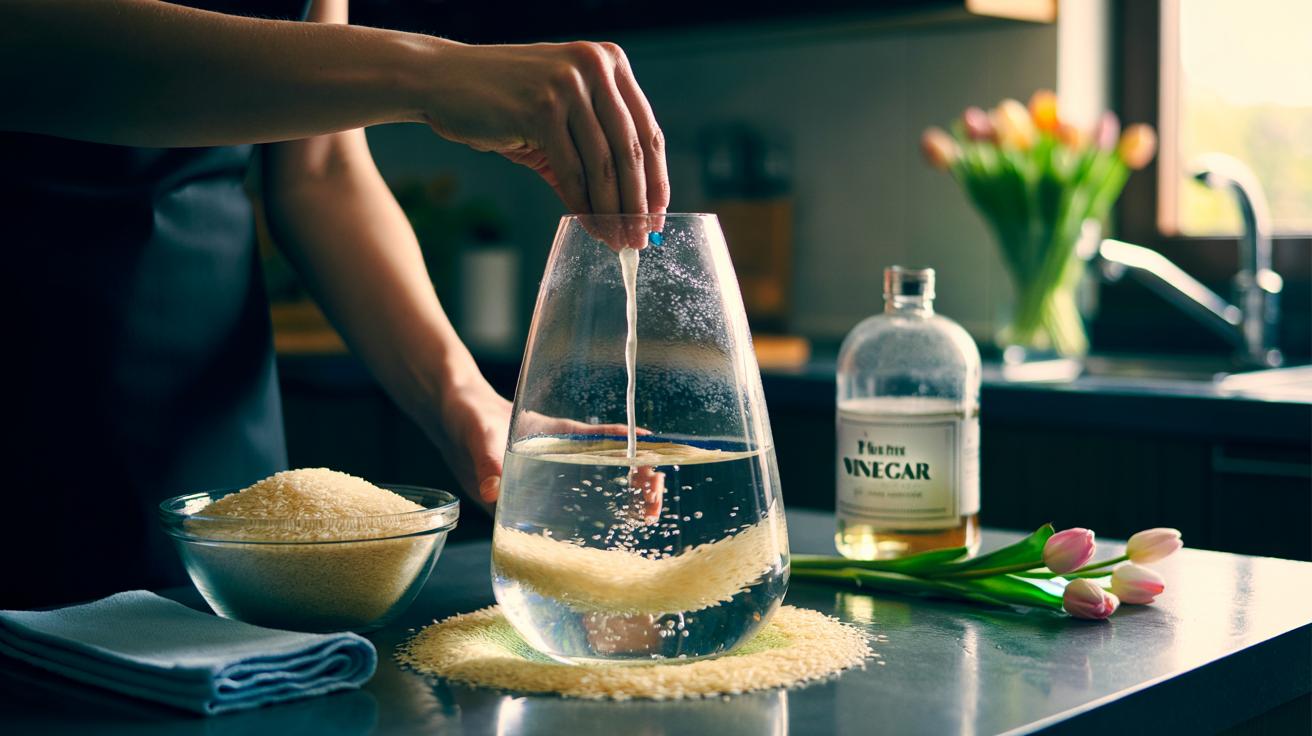
Start with a quick rinse to remove loose grit. Tip in 2–4 tablespoons of uncooked short- or medium-grain rice (more if the vase is large). Add warm water to one-third full and a splash of white vinegar—about 1–2 tablespoons per 250 ml. Cover the mouth with your palm or a silicone lid. Now swirl. Slow circles, then brisk figure-eights. Rotate the vase so grains reach every curve. Two minutes is often enough; five for stubborn scale. If you hear sharp scratching, stop and check for sand or chips—foreign grit can mark glass.
Pour out the slurry. Rinse thoroughly with hot water to clear loosened residue. For a showroom finish, follow with a final rinse of diluted vinegar and dry immediately with a lint-free microfibre cloth to prevent new spots. Narrow neck? Use a paper funnel to add and remove rice, or part-fill, invert, and shake. For heavy buildup, repeat the cycle rather than scrubbing harder. Consistency beats aggression. The goal is patient, uniform contact between grains and glass, not force.
| Item | Function | Typical Amount | Notes |
|---|---|---|---|
| Uncooked rice | Gentle abrasive | 2–4 tbsp | Short/medium grain rolls well |
| Warm water | Carrier for grains | 1/3 vase volume | Helps loosen residue |
| White vinegar | Mineral dissolver | 1–2 tbsp per 250 ml | Citric acid works too |
| Microfibre cloth | Spot-free drying | As needed | Prevents new marks |
When the Hack Fails and What to Try Next
If rice doesn’t restore clarity, diagnose the enemy. Etched glass looks uniformly cloudy even when wet; deposits look patchy and feel rough. Etching is permanent without specialist polishing. Brown or orange streaks hint at iron staining; try a citric acid soak (1 tsp per 250 ml warm water) for 30–60 minutes, then the rice swirl. Organic slime after dead flowers? A denture-cleaning tablet in warm water breaks biofilm, then rinse and abrade gently. Avoid harsh scouring powders and steel wool on glass; they trade haze for scratches you can’t polish out at home.
For cemented limescale, go long and light. Fill with hot water and vinegar at 1:3, leave for a few hours, then swirl rice. Repeat rather than increase force. A soft bottle brush can assist in straight walls, but keep pressure modest. Staining from green florist foam may need an oxygenated cleaner; test in a hidden area first. Antique or lead crystal? Use only mild acid and minimum time. Decorated rims, gilding, or painted bands can lift under aggressive chemistry. When in doubt, line the neck with cling film to shield decoration while you treat the bowl.
Care, Prevention, and Safety
Prevention begins when the flowers arrive. Trim stems outside the vase, rinse debris, and use fresh, not chalky, water. Add a teaspoon of white vinegar to slow limescale if you live in a hard-water area. Change water daily, and after the last bouquet, rinse immediately. A quick rice swirl once a month keeps interiors pristine. Dry the vase fully—lip to base—with a clean microfibre cloth; air-drying invites spots. For prized crystal, finish with distilled water to avoid mineral specks. Small habits win. Once scale sets, removal takes far longer than prevention.
Safety is simple. Wear washing-up gloves if you have sensitive skin and avoid inhaling vinegar fumes in small spaces. Never mix vinegar with bleach or bleach-based cleaners; the reaction releases chlorine gas. Dispose of used rice in food waste, not the sink. Check for chips before swirling; sharp edges can snag grains and scratch. Store a small jar of “cleaning rice” to reuse several times, then discard. Label it. Don’t cook it. As for brushes and tablets, test first, go gently, and keep the vase’s finish front of mind.
The rice-cleaning hack earns its place because it marries physics with thrift, turning pantry staples into a glass polisher that outperforms many gadgets. It’s tactile, low-waste, and reassuringly fast. In the time it takes to boil a kettle, a dull vase can return to crisp, sparkling form, ready for tulips, roses, or a sculptural branch. Getting clarity back feels like buying new glass without the bill. Which vases in your home—the heirloom jug, the skinny-neck bud holder, the wide wedding gift—are you itching to rescue with a swirl of rice and a splash of vinegar?
Did you like it?4.6/5 (26)