In a nutshell
- 🍚 A simple preliminary soak hydrates grains evenly, curbs starch eruption, and delivers fluffy, separate rice instead of clumps.
- 💧 Rinse to remove loose surface starch, then soak in cold water (white: 15–30 min; brown: 45–60 min) and drain well to match the correct water-to-rice ratio.
- 📏 Use precise ratios after soaking: Basmati 1.1–1.25:1, Jasmine 1.1–1.2:1, Brown 1.6–1.8:1; a quick table in the article acts as a cheat sheet.
- 🔥 Cook with a gentle boil, lid on low, do not stir, then rest off heat for 10 minutes to let steam settle and grains separate.
- ⚠️ Avoid over-soaking, under-rinsing, hot-water soaks, and aggressive boils; for service and leftovers, cool quickly, store safely, and reheat to piping hot.
Fluffy rice shouldn’t be a gamble. Yet so many home cooks accept clumped, gummy grains as inevitable. The quiet secret, championed by chefs from Delhi to Tokyo, is a simple one: a preliminary soak. It takes minutes, costs nothing, and transforms texture. Soak. Then cook. The science is neat, too, because this pause lets water seep into the grain before heat arrives, helping it expand evenly rather than burst erratically. The result is striking: separate, tender grains that hold their shape and shine. If you’ve been rinsing and rushing, here’s why waiting 15–30 minutes is the most potent upgrade your rice will ever get.
Why Soaking Rice Changes Everything
Every grain carries a film of surface starch and microscopic flour left from milling. That powder turns to glue when it meets boiling water, binding grains into clumps. A careful rinse dislodges it, but the real magic is the soak. As grains sit in cold water, moisture migrates gently into the outer layers. They swell slightly. The core relaxes. When heat arrives, the transition from raw to cooked is smoother, and less starch erupts onto the surface to make a sticky mess.
Inside the grain, the balance of amylose and amylopectin determines texture. Soaking steadies both. It primes the starch for even gelatinisation, so basmati stays long and feathery, jasmine turns plush yet distinct, and brown rice softens without turning chalky. Heat can then travel through a better-hydrated grain, reducing splitting and that dreaded glue-line at the pot’s base. Crucially, soaking evens out cooking time across the whole batch, which is why professional kitchens rely on it.
There’s a flavour benefit, too. Even hydration means more controlled steaming and a cleaner, nuttier aroma. If you season your cooking water, those flavours distribute consistently rather than patchily. Soaking is not faff—it’s insurance. That tiny delay repays you with a pot of rice that serves elegantly, reheats beautifully, and holds its structure beneath curries, stews, or stir-fries.
Exactly How to Soak for Fluffy, Separate Grains
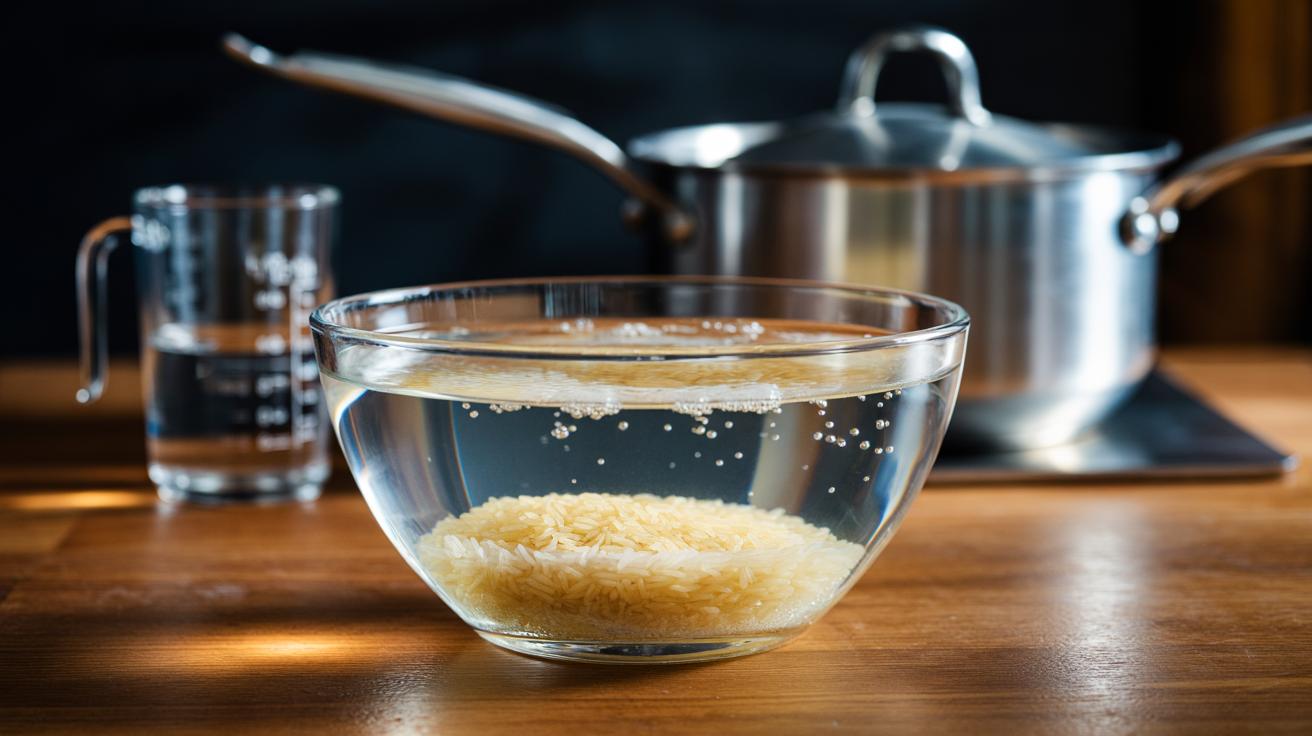
Start with the rinse. Put rice in a bowl, cover with cold water, and massage gently. Drain. Repeat until the water runs almost clear; you’re removing loose surface starch, not bleaching the grain. Now cover the rice with fresh cold water and soak. For most white long-grain varieties, 15–30 minutes is ideal. Brown rice prefers 45–60 minutes. Drain thoroughly before cooking—this matters because your water-to-rice ratio assumes well-drained rice. Soaked white rice generally needs less water than unsoaked, which is why sticking to the right ratio makes or breaks texture on the hob or in a rice cooker.
| Rice Type | Typical Soak Time | Water:Rice (after soaking) | Texture Target |
|---|---|---|---|
| Basmati (white) | 20–30 min | 1.1–1.25 : 1 | Long, fluffy, separate |
| Jasmine (white) | 15–20 min | 1.1–1.2 : 1 | Tender, slightly plush |
| Short-Grain (sushi) | 15–20 min | 1.1–1.2 : 1 | Soft, cohesive, not gluey |
| Brown Long-Grain | 45–60 min | 1.6–1.8 : 1 | Firm, nutty bite |
Bring measured water to a gentle boil, add drained rice, and stir once to level. Lid on. Heat down to low. Don’t peek. White long-grain finishes in roughly 10–13 minutes; brown often needs 25–30. Kill the heat and rest, covered, for 10 minutes. That off-heat steam is where grains firm up and separate. Lift the lid, fluff with a fork to release extra steam, and serve immediately—or keep covered for another few minutes if you prefer softer edges.
Common Pitfalls and How Professionals Avoid Them
Over-soaking makes grains fragile; they’ll break and shed starch. Keep within the windows above and always drain well. Under-rinsing is the opposite sin: you leave a film that guarantees clumping. If the water never clears, you’re being too gentle—massage a little more robustly. Think: remove powder now to avoid glue later. Water that’s too hot during the soak also causes trouble; use cold water so hydration stays even and the grain doesn’t start cooking prematurely.
Heat control matters. A furious boil thrashes grains and scrapes starch into suspension. Go low once the lid is on, and leave it alone. Never stir rice while it’s cooking. That’s when you smear softening starch across every grain and build a sticky tangle. Misjudged ratios cause sogginess; with soaked white rice you need less water. Old, very dry rice can be the exception—add a tablespoon or two more water per cup if batches keep finishing too firm.
Finally, respect the finish. The covered rest is not optional; it’s a quiet phase where steam evens moisture from edge to core. Skip it and you’ll see wet patches and hard centres. If you’re holding rice for service, keep it warm, not hot, and avoid stacking condensation on the lid by wiping it once midway. Cooked rice stores safely if cooled quickly and refrigerated within an hour. Reheat to piping hot and fluff again. Grain discipline pays off every single time.
Soaking isn’t a trendy hack; it’s the calm, proven method that lets the grain, not the glue, take centre stage. Whether you love the long, perfumed strands of basmati or the pillowy comfort of jasmine, a short cold-water bath sets you up for success, then careful heat and a patient rest complete the job. The ritual is small. The payoff, generous. Once you taste the difference, it’s hard to go back. What rice are you cooking this week, and how will you tweak your soak and ratio to dial in your perfect texture?
Did you like it?4.4/5 (27)