In a nutshell
- 🔥 The science: rice’s specific heat capacity, low thermal diffusivity, and tiny air gaps let grains absorb energy quickly and release it slowly, while the sock’s fabric adds insulation for lasting warmth.
- 🕔 DIY in five minutes: fill a cotton sock with 300–500 g rice, heat with a mug of water in 30–40 second bursts, shake between rounds, and skin-test before use for safe, even comfort.
- ⚠️ Safety and longevity: use short pulses, never leave the microwave unattended, retire if you detect burning, store dry, and add stitched baffles to keep heat distribution consistent; supervise children and pets.
- 🧺 Fillers compared: rice is cheap and mouldable with medium–long warmth; wheat holds heat longer; flaxseed releases gently but can go rancid; cherry pits are light yet less conforming.
- 💡 Everyday uses and hacks: soothe cramps and stiff necks, pre-warm beds, wrap in a scarf for extra insulation, refresh with a light spritz, or flip it for cold therapy from the freezer—always aim for slow, even heat.
It starts with a sock, a scoop of rice, and a microwave. In under five minutes you create a pocket of stored warmth that seems to last far longer than its humble ingredients suggest. That reliable glow isn’t magic. It’s materials science at kitchen-counter scale. Grain-filled packs excel because their inner structure slows heat escape while their modest moisture content soaks up energy quickly, releasing it steadily against skin, muscle, and aching joints. The result is simple comfort, on demand. What matters is how the grains take heat in, hold it, and let it go. Here’s why a rice-filled sock stays warm for ages, and how to craft one safely today.
The Physics of a Warm Sock: Why Rice Works
Rice is mostly starch. Starch granules and the tiny air gaps between them act like a dense, breathable sponge for heat. The grains’ specific heat capacity—boosted by a little residual moisture—allows each kernel to absorb a meaningful amount of energy without scorching when heated properly. At the same time, rice has a low thermal diffusivity, so heat moves slowly from the core to the surface. Slow flow equals lasting warmth. That’s the essence of the rice-sock effect: charge rapidly, release gently. The weave of the sock itself adds insulation, throttling heat loss to the room while still allowing comfortable conduction to your skin.
Think of the pack as a small thermal battery. The grains’ mass provides thermal inertia, smoothing peaks and troughs so you don’t get an initial blast that fades in minutes. Air pockets reduce convective losses, like the loft in a duvet. Moisture counts too. A bit of water bound in the grain amplifies effective heat storage and moderates temperature gradients, so the surface feels even. Because rice is granular, you can mould it to a shoulder, a knee, or the curve of your neck, improving contact and perceived warmth without cranking up the temperature.
Make a Heat Pack in Five Minutes
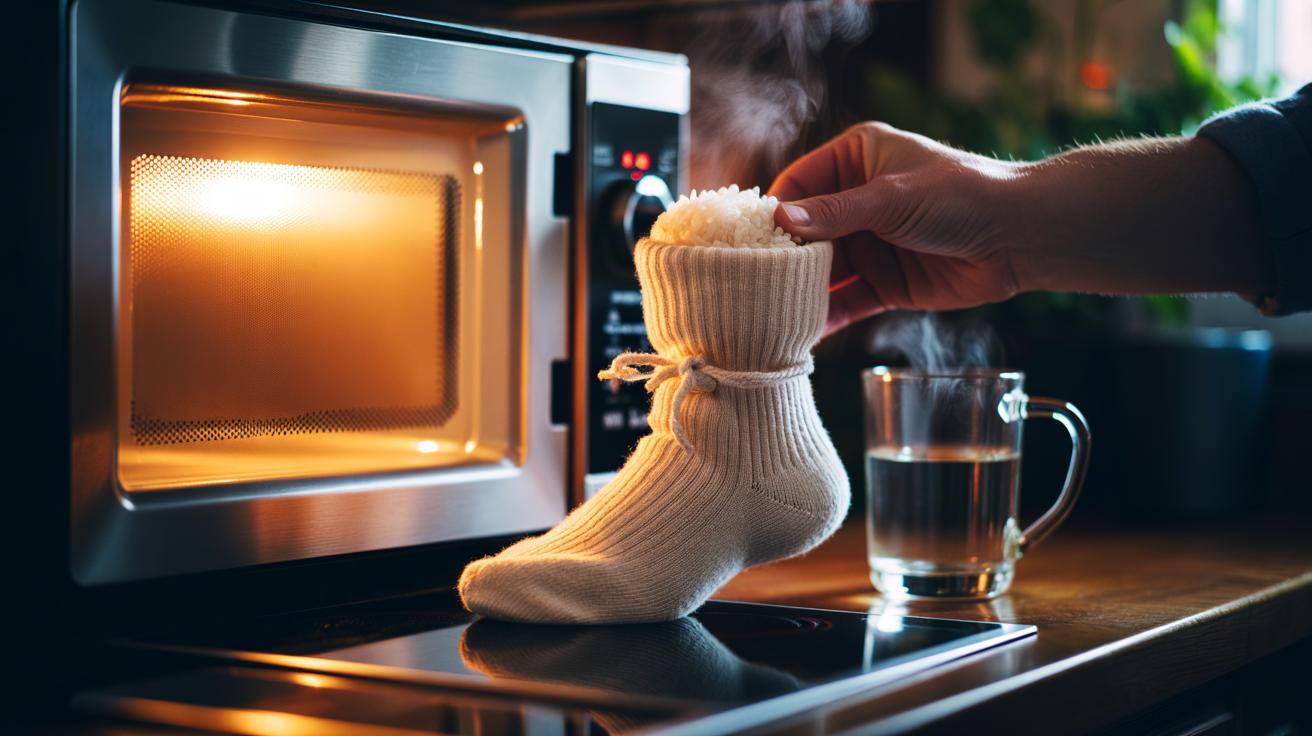
Grab a clean cotton sock, 300–500 g of uncooked rice (white or brown both work), and a microwave-safe mug of water. Fill the sock to your preferred size, leaving space to tie a firm knot or to secure with a stitch. Add a teaspoon of dried lavender if you like scent, though it’s optional. Pop the mug of water into the microwave alongside the sock—this buffers the environment and reduces scorching. Heat on high in 30–40 second bursts, turning or shaking gently between bursts, until warm throughout. For most microwaves, that’s 1.5–3 minutes in total.
Test carefully against the inside of your wrist. If it’s too hot, let it breathe for a minute; the temperature evens out quickly. Never leave the microwave unattended, and stop immediately if you smell charring. The sweet spot is soothing, not searing. For repeat use on a cold night, reheat in shorter pulses as needed. Want a hand-warmer in a hurry? Make two smaller socks so one charges while the other comforts. The method scales: larger packs for backs; little pouches for pockets. Keep it simple, keep it safe, and enjoy that steady, radiant comfort.
Safety, Longevity, and the Best Fillers Compared
A rice pack should be dependable, not delicate. Store it cool and dry between uses—an airtight bag discourages moisture and pests. Every dozen heats, spread it out and check for singed grains; if you find any, compost and refill. If it ever smells burnt, retire it. For sensitive skin, wrap the pack in a thin tea towel to soften first contact. Avoid oils or lotions on the fabric; they can raise the risk of hot spots. People with reduced heat sensitivity, children, and pets require close supervision. For longevity, consider stitching channels (“baffles”) to keep grains evenly distributed, preventing slumps that create uneven heating.
| Filler | Heat-Up Time | Warmth Duration | Pros | Watch-outs |
|---|---|---|---|---|
| Rice | Short | Medium–Long | Mouldable, cheap, available | Can scorch if overdried |
| Wheat | Short | Long | Classic warmth, pleasant weight | Gluten allergy concerns, odour over time |
| Flaxseed | Medium | Long | High oil content, gentle release | Rancidity if stored warm and damp |
| Cherry Pits | Medium | Medium | Light, washable shell | Less mouldable, shorter glow |
Rice remains the smart default: inexpensive, consistent, and forgiving under short, controlled bursts in the microwave. The key is moderation. Short pulses, frequent shaking, regular checks. That discipline keeps your pack cosy for months, not days.
Everyday Uses and Smart Hacks for Lasting Comfort
The humble rice sock is a multitasker. Night-time foot warmer. Pre-warming a cold bed. Soothing menstrual cramps. Calming post-gym muscles. Easing tension on a stiff commuter neck. Slip one under a winter coat collar on the platform and you’ll understand Britain’s covert love affair with grain-powered heat. For chill-prone hands at the keyboard, park a small pack near your wrists. For children, a light version shaped like a soft toy (with careful supervision) can be reassuring on draughty evenings. Warmth reduces perceived pain by relaxing tissue and nudging blood flow, so even ten quiet minutes can change the day’s tone.
Want extra longevity? Pre-warm the spot you’re treating with a dry towel, then apply the pack. Wrap the sock in a thin scarf to add a layer of insulation, extending the glow by another ten minutes. A quick spritz of water (very light) before heating refreshes moisture content and evens temperatures, but use sparingly to avoid steam pockets. Stitching simple baffles stops the rice from pooling and makes heat delivery consistent. For mornings, keep one in the freezer for cold therapy—same sock, different duty. And remember: if it feels too hot, it is too hot. Comfort is the point.
For all its simplicity, a rice-filled sock is a small triumph of physics and practicality. Dense, safe, and soothing, it brings immediate relief to winter-nipped fingers and overworked muscles alike, while costing pennies and minutes. The trick is respectful heating, mindful handling, and a bit of craft. Once you’ve made one, you’ll make three—home, desk, travel bag. The warmth lasts because the grains release energy slowly and evenly, just as you want on a long evening. What will you warm first: a stiff neck after a long commute, or the foot of a cold bed before lights out?
Did you like it?4.4/5 (22)