In a nutshell
- 🧲 A humble rubber band boosts static friction at the lid’s rim, converting slip into usable torque and creating a reliable no‑slip grip.
- ⚙️ Quick method: dry surfaces, loop a wide band around the lid’s rim, stabilise the jar (second band or towel), then apply a short, confident anticlockwise twist—no blades needed.
- 📊 The numbers: skin-to-lid μ ≈ 0.25–0.35 vs rubber-to-lid μ ≈ 0.8–1.0; typical opening torque 2–6 N·m—raising μ keeps you in static grip for an easy pop.
- ♿ Everyday edge: reduces strain for arthritis or weaker hands by shifting load to larger muscles; it’s low-cost, accessible, and cuts plastic gadget clutter.
- 🔧 Beyond jars: add grip to tap handles, tools, lens rings, and more; choose wider, textured bands or silicone for latex-free friction gains.
Across Britain, a familiar kitchen drama plays out: a stubborn jar of marmalade resists, wrists strain, and tempers fray. The quickest fix is hiding in the cutlery drawer or round a stack of post—an ordinary rubber band. Wrap, twist, pop. Behind that tiny victory sits serious physics. Friction turns a flimsy loop into a robust no-slip grip, turning wasted effort into useful torque. A rubber band doesn’t add strength; it redirects it where it counts. In an age of pricey gimmicks and plastic gizmos, this is the rare hack that’s cheap, sustainable and measurable in seconds, not minutes. It’s also quietly empowering—handy for older hands, arthritic joints, or anyone who’d rather save energy for dinner.
Why a Rubber Band Works
When a lid skids under your fingers, the culprit is low static friction. Skin on smooth tinplate might offer a coefficient around 0.25–0.35—barely enough to bite when the seal is tight. Slip begins. Energy vanishes as heat. The jar wins. Introduce a rubber band and things change. Soft elastomer deforms into the lid’s micro-grooves, multiplying contact points and raising the coefficient of friction closer to 0.8–1.0. That jump is seismic. More friction means more torque delivered before slipping starts.
Here’s the subtlety: idealised friction is independent of area, yet real-world hands aren’t ideal. Rubber’s compliance spreads pressure, evens out high spots, and increases the effective normal force where ridges meet ridges. The band also moves grip to the lid’s outer rim, increasing the radius and so the torque for the same effort. Add a second band around the jar’s neck and you stabilise the counterhold, cutting wobble and energy loss. Static friction clings; once the vacuum “pops”, kinetic friction is lower, and the rest is easy.
Quick Method: From Cupboard to Twist in Seconds
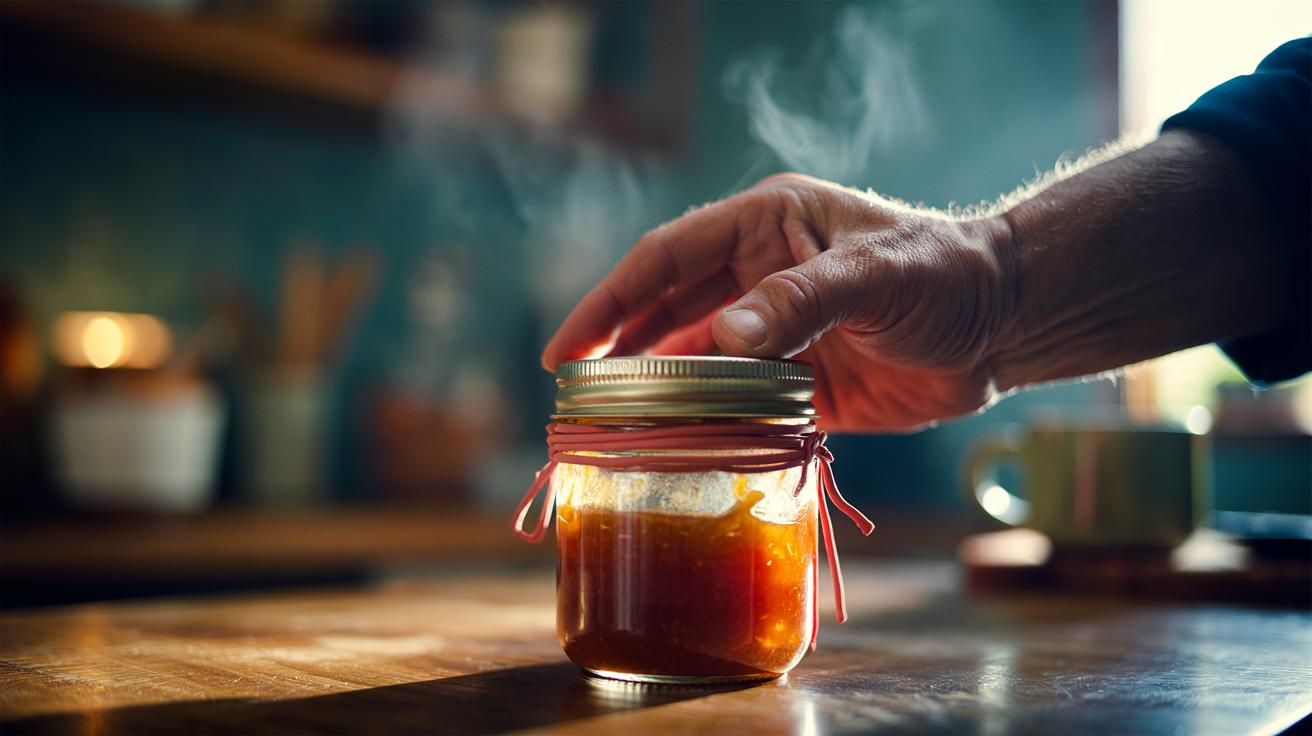
First, dry everything. Moisture slashes grip. A clean, dry surface can be the difference between struggle and a smooth, satisfying twist. Select a wide elastic band—postal red or thick stationery bands work brilliantly. Loop it twice around the lid’s knurled edge so it sits in the grooves, not across the top. If the lid is very shallow, push the band down until it hugs the vertical rim. That’s where your leverage lives.
Now stabilise the jar. Wrap a second band—or a tea towel—around the glass just below the lid. Hold the jar with your non-dominant hand, elbow tucked close for power and safety. With your dominant hand, place the heel of your palm on the banded rim and twist anticlockwise in a single, confident motion. Short, sharp torque is better than a long, weak heave. If it resists, rest for five seconds, re-seat your grip, and try again. Still stuck? Tap the lid edge lightly with a wooden spoon to nudge the seal, then repeat. No blades, no risky prying. Just physics on your side.
The Science in Numbers
Numbers cut through myth. The table below shows typical ranges that explain why a rubber band often feels miraculous. Values vary with temperature, band quality and lid finish, but the pattern is consistent: improve friction, win back torque.
| Surface Pair | Approx. Static μ | Setup Notes | Relative Torque Needed |
|---|---|---|---|
| Skin on Tinplate Lid | 0.25–0.35 | Dry hands, smooth lid | 100% (baseline) |
| Skin (Slightly Damp) on Tinplate | 0.15–0.25 | Condensation present | +30–60% effort |
| Rubber Band on Tinplate | 0.8–1.0 | Thick band, on rim | ≈40–60% effort |
| Silicone Grip on Tinplate | 1.0–1.2 | Purpose-made mat | ≈35–50% effort |
| Rubber Band on Painted Lid | 0.7–0.9 | Common on jars | ≈50–65% effort |
Consider torque. Many factory-sealed jars open between 2 and 6 N·m. Average adults can deliver roughly 6–10 N·m at the wrist; older adults, often 3–6 N·m. Raise μ, raise the ceiling. A rubber band can turn a borderline task into an easy twist without adding a single newton of strength. This is also why double-wrapping the rim helps: it increases contact and cushions micro-slips, keeping you in the static regime where grip is highest.
Everyday Edge: Accessibility, Cost, and Sustainability
For many households, this tiny fix is more than a party trick. It’s a practical assistive tool. People with arthritis, hypermobility or post-injury hands often struggle with pinch strength and pain. A rubber band redistributes the load away from fingertips to the palm and the larger forearm muscles, easing strain. Less pain, more control, and fewer risky improvisations with knives or hot water. It’s universally available too—no need to buy plastic widgets or stash bulky jar wrenches.
There’s a sustainability win. Reuse the bands that arrive around spring onions or through the letterbox with Royal Mail bundles. They cost pennies, last ages, and cut demand for single-use gripper mats. Keep a small band on the olive oil bottle, another on the jam jar, and one on your travel flask. The method isn’t magic, though. Cross‑threaded lids, warped seals or rusty rings may still need a reset: a gentle tap around the rim, or a brief run under warm water to expand metal marginally. But for the everyday, the band is brilliant—quietly effective, endlessly repeatable, and delightfully low-tech.
Beyond the Kitchen: Everyday No‑Slip Wins
The same principle travels well. Wrap a band around a stubborn tap handle for extra purchase, around a sleek torch for rainy walks, or on a screwdriver shaft to boost grip with oily hands. Cyclists loop bands on pump handles. Gardeners around hose connectors. Photographers around lens rings for precise tweaks in the cold. Wherever slipping steals effort, friction gives it back. The trick is placement: put the band where rotational force is highest—the outermost edge you can safely hold—and keep the surface clean.
Choose wisely. Wider bands (6–12 mm) spread pressure without cutting into skin; lightly textured bands grip best. Avoid perished rubber; if it cracks, retire it. Store spares away from sunlight and heat to preserve elasticity. For sensitive skin or latex allergies, silicone alternatives are widely available and offer similar grip without the proteins that cause reactions. The payoff is consistent: a tiny ring of elastomer, a dramatic lift in control, and fewer daily frustrations.
In a world crowded with overengineered fixes, the humble rubber band earns its keep by obeying the oldest rules in the book: contact, pressure, and friction. It takes seconds to deploy, costs virtually nothing, and rescues dignity at the breakfast table when a jar of marmalade digs in its heels. Small changes to surfaces can transform how power flows through our hands. Ready to put physics to work on your next stubborn lid—and what other everyday battles could a simple boost in grip quietly win for you?
Did you like it?4.5/5 (22)