In a nutshell
- 🔧 The salt corrosion trick uses sodium chloride plus a mild acid (vinegar or lemon) so chloride ions destabilise rust, making it easy to scrub off after a short soak.
- 🧪 Method: mix 1 tbsp salt : 1 cup vinegar, submerge or wrap metal only, leave overnight (shorter for light rust), then scrub, neutralise with baking soda, dry, and oil.
- ⏱️ Control exposure: for stainless steel limit to 2–3 hours to avoid pitting; keep wood dry, wear gloves, and never mix acids with bleach.
- 📊 Alternatives: salt + lemon juice for gentler action and salt + cut potato for spot treatment (oxalic acid), with times from 2–12 hours based on severity.
- 🛡️ Aftercare: apply camellia or mineral oil to steel, boiled linseed oil to handles, use moisture control in storage; routine cleaning and sharpening reduce future rust.
Rust creeps in quietly. One damp shed, one careless rinse, and the next morning your faithful spade or secateurs feel gritty, snagging on stems and soil alike. Here’s the counterintuitive fix gardeners are buzzing about: the salt corrosion trick. It uses humble sodium chloride—with an acidic partner—to strip oxidation as you sleep. The principle is simple. Chloride ions destabilise iron oxides, letting mild acids dissolve rust faster than water alone. No harsh chemicals, no bench grinders at midnight. Just a jar, a cloth, and patience. In the morning, with a quick scrub and oil, tools look refreshed, edges clean, and your workflow—restored.
Why Salt Helps Rust Removal
At first glance, salt and metal sound like sworn enemies. In the wild, they are. But in a controlled, short soak with a weak acid, sodium chloride becomes a rust-busting catalyst rather than a destroyer. Chloride ions penetrate the porous crust of rust and disrupt its protective hold on the underlying steel. Pair those ions with a mild acid—vinegar (acetic acid) or lemon juice (citric acid)—and you get a solution that dissolves iron oxides while leaving base metal intact when used briefly and responsibly.
Salt also adds micro-abrasion. The crystals help scrub softened rust from pits and edges once you rinse and brush. It’s chemistry and texture working together. That matters for garden tools, where pitting dulls cutting action and increases friction through soil. The trick is time and balance. You’re not bathing tools in brine indefinitely. Short exposure unlocks the oxide layer; rinsing and oiling lock in protection. Do it overnight, and the worst of the orange film often lifts with a few strokes of a wire brush.
Overnight Method: Step-by-Step
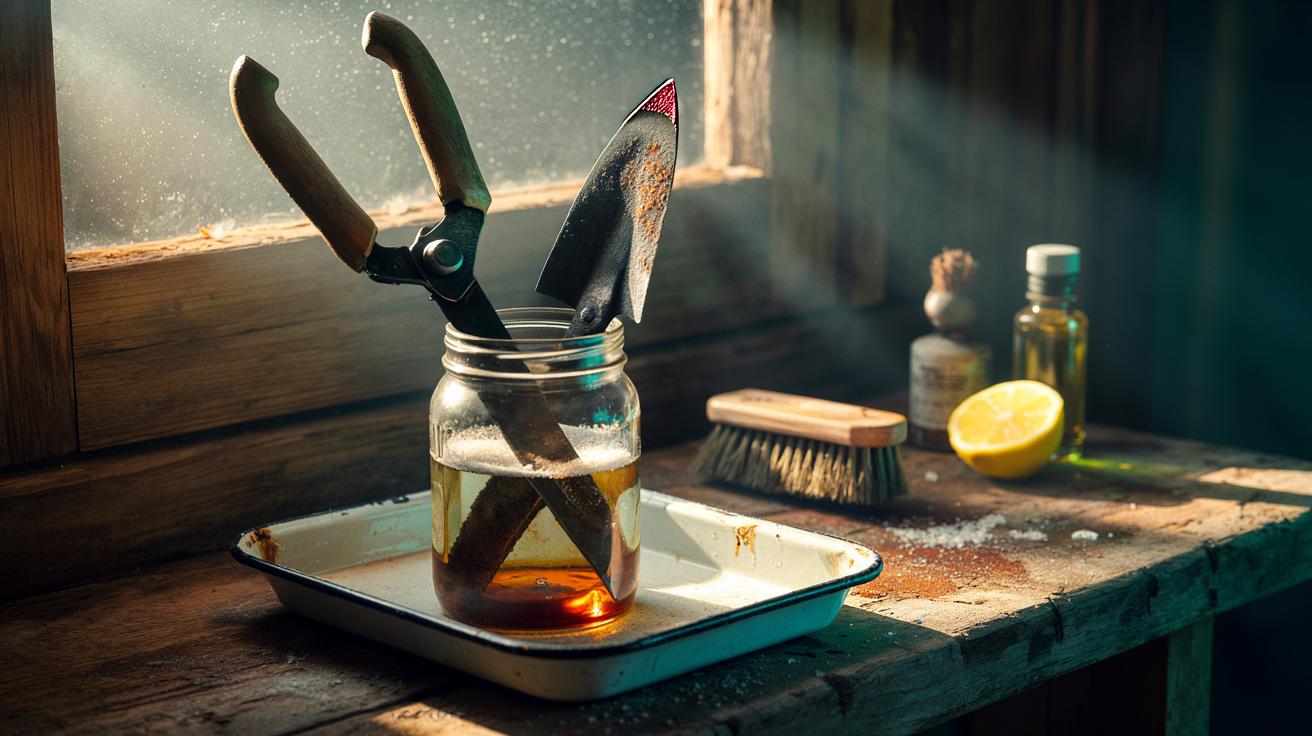
Mix your bath: 1 cup white vinegar with 1 tablespoon salt per tool, scaling as needed. Submerge small items (blades, trowels) or wrap larger ones in a cloth soaked in the same solution. Remove wooden handles or keep them dry. Wear gloves—acids, however mild, irritate skin. Leave the setup overnight in a ventilated space. For stainless steel, limit to 2–3 hours because chlorides can provoke pitting if left too long.
In the morning, scrub under running water with a wire brush or green pad. Rust should release in sheets or powder. Neutralise any residual acid with a quick rinse in baking soda solution (1 teaspoon per cup of water). Dry immediately with heat or a towel. Always follow with a thin coat of oil—camellia, mineral, or light machine oil—to seal the refreshed surface. Reassemble handles and test action. If staining lingers in deep pits, repeat the wrap method for a shorter spell, then polish. Never mix acid solutions with bleach.
| Mixture | Ratio | Soak Time | Best For | Notes |
|---|---|---|---|---|
| Salt + Vinegar | 1 tbsp salt : 1 cup vinegar | 6–12 hours | General carbon steel tools | Fast, economical; neutralise after |
| Salt + Lemon Juice | 1 tsp salt : 1/2 cup juice | 4–8 hours | Light rust, delicate edges | Milder smell; slower action |
| Salt + Cut Potato | Salt sprinkle on cut face | 2–6 hours | Spot treatment on blades | Oxalic acid aids stain lift |
What the Chemistry Says While You Sleep
Rust is not one thing but a family of iron oxides and oxyhydroxides—Fe2O3, Fe3O4, and FeO(OH). They cling to steel as brittle, porous crusts. Mild acids dissolve these oxides, releasing iron ions into solution. Chloride ions from salt complicate the rust layer, breaking up passivating films and improving the acid’s access to fresh oxide. The process accelerates without needing aggressive chemicals. It’s targeted, not scorched-earth cleaning.
During an overnight pause, diffusion does the heavy lifting. The brine-acid mix creeps into hairline pits, undermining the oxide matrix so mechanical scrubbing in the morning is quick and precise. There is a caveat: chloride ions can promote pitting corrosion on stainless steel if exposure is prolonged. That’s why time limits matter and why you should neutralise, rinse, and oil immediately after. Control the variables and you harness corrosion’s own tools against rust—then stop the reaction at the exact moment you’ve won.
Aftercare and Long-Term Protection
Once the rust is off, preservation begins. Dry thoroughly—warm air or sunlight works, but don’t bake handles. Apply a whisper-thin film of oil to blades, ferrules, and fasteners. Camellia oil resists gumming; mineral oil is inexpensive and reliable. For wooden handles, a wipe of boiled linseed oil restores grain and grip. Keep silica gel or a moisture absorber in the shed, and hang tools so air circulates. A blade guard or wax (beeswax, paste wax) adds a sacrificial barrier for high-use edges.
Routine matters more than heroics. After wet work, rinse mud, dry, and oil. Touch up edges with a fine file; sharp tools rust less because they cut cleanly and trap less moisture. If you must hose tools, point water away from pivots and springs. Dispose of used salt-acid solution down a well-flushed drain, never on soil or near plants. Short, smart maintenance prevents the long, slow rot that kills good steel.
Overnight, the salt corrosion trick turns a chore into a quiet reset. It’s cheap, reversible, and kinder to steel than aggressive grinding when rust is only skin-deep. In the morning, your trowel bites, your shears glide, and your day starts sharper. Keep the recipe, respect the clock, and always finish with oil. The shed becomes a workshop, not a graveyard. Which tool in your collection deserves this gentle rescue tonight—and what will you tackle first when it’s back to its best?
Did you like it?4.5/5 (20)