In a nutshell
- 🧂 Salt absorbs fast through capillary wicking, hygroscopic pull, and crystal geometry that forms briny channels, creating an osmotic gradient to draw wine out of fibres.
- 🍷 Red wine stains spread because of anthocyanins, tannins, and ethanol lowering surface tension; textiles differ in uptake, and heat sets stains by accelerating dye–fibre bonding.
- 🛠️ Practical protocol: blot—don’t rub, heap coarse salt to form a thirsty dome, wait 5–10 minutes, brush away, then flush from the back with cool water and a mild detergent (test colourfastness), repeating gentle cycles.
- 🧰 When salt isn’t enough, use tailored absorbents: baking soda (porous, mildly alkaline), bentonite cat litter (swells and wicks), or silica gel (strong adsorption) depending on the surface and spill.
- ✅ Key rules: absorb first, adjust pH only if safe, avoid heat and agitation, and finish with a colour-safe oxygen-based remover once the stain visibly fades.
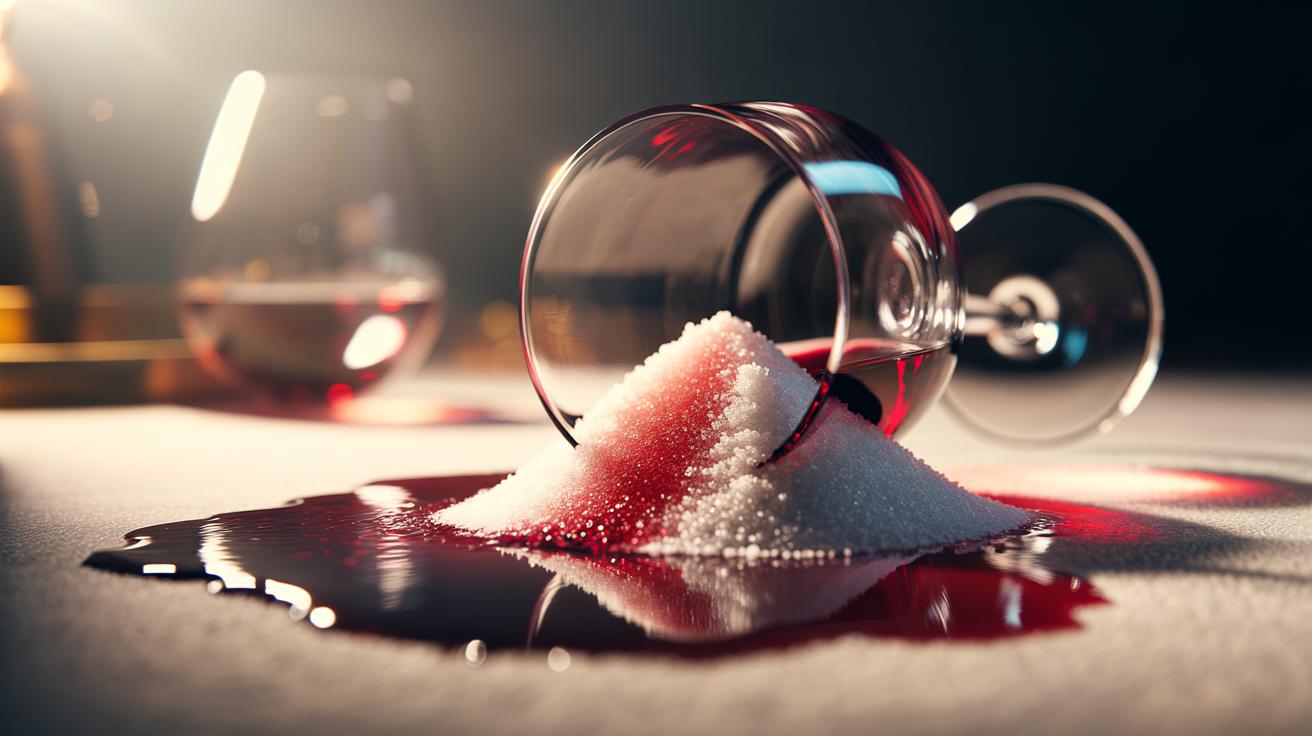
Spill a glass of claret on a pale carpet and panic sets in, fast. Then comes the folk wisdom: throw salt. It looks like magic when the crystals appear to drink the liquid on contact. In truth, it’s science you can see. The packed mound of salt builds a miniature reservoir that wicks wine away from fibres while starting a quick-and-dirty chemistry of brine. Speed is everything in this moment. The sooner you create a dry barrier, the less the wine can creep. Here is why those white granules act like a sponge with urgency, and how to deploy them without making the mess worse.
The Physics and Chemistry Behind Salt’s Speed
Salt’s instant response blends capillarity, hygroscopic behaviour, and crystal geometry. Pour crystals over a spill and you create a porous mound of sharp-edged grains with countless micro-gaps. Those voids form capillary channels that pull liquid along pressure and surface-tension gradients. The wine doesn’t vanish; it relocates from the fabric into the salt bed. By building a higher, drier pile, you force wine upward and out. Meanwhile, sodium and chloride ions on crystal faces hydrate. Water molecules cluster into hydration shells, beginning to dissolve the lattice and produce a thin brine. That dissolution lowers the local water activity, strengthening a short-lived osmotic gradient that nudges more liquid into the mound.
Grain size matters. Fine table salt seals tightly, limiting airflow and sometimes trapping pigment at the surface; coarse sea salt creates larger channels and wicks more aggressively. Temperature plays a role too: warmer wine dissolves salt faster, speeding brine formation and flow. Dry salt buys time by arresting spread, but it is not a full cleaning agent. It’s a tactical first step that prevents deeper penetration so proper rinsing can work.
Red Wine Chemistry: Why Stains Spread
Red wine is a mobile, pigmented solution built to stain. Its colour comes from anthocyanins, plant pigments whose hue shifts with pH. Tannins add astringency and binding power, happily latching onto proteins in wool or silk. Ethanol lowers surface tension, helping the liquid slip between cotton microfibrils with ease. The moment wine touches a porous fibre, capillary networks take over. They draw the liquid along tiny channels, extending the stain beyond what you saw at first glance. That’s why the halo grows even after the glass is upright again.
Different textiles respond differently. Cotton is hydrophilic and wicks; polyester resists water but can hold oils and dyes on its surface; wool’s protein structure invites tannin bonding. The longer the contact time, the deeper the penetration and the stronger the dye-fibre interactions. Heat is your enemy. Heat sets tannins and anthocyanins by accelerating bonding and shrinking fibres. Salt interferes early by removing free liquid and limiting diffusion, reducing the chance for dyes to find permanent footholds. Then water—cool, not hot—dilutes whatever remains, nudging pigment molecules back into solution where detergents or mild alkalis can defeat them.
From Spill to Salvage: A Practical Protocol
Act in stages. First, stop the spread. Blot, don’t rub, using white kitchen roll to lift free liquid without driving pigment deeper. Build a generous dome of salt—ideally coarse—over the entire damp area and a margin beyond. You’re creating a thirsty buffer that steals wine from the fabric’s capillaries. Leave it undisturbed for 5–10 minutes; you’ll see the crystals pinken as they load up. Brush away gently, then repeat once if the fabric still looks glossy with moisture.
Next, flush. Rinse from the back with cool water so the flow pushes pigment out the way it came in. Prepare a solution: a few drops of washing-up liquid and a pinch of bicarbonate of soda in a mug of cool water. Detergent surrounds hydrophobic bits; mild alkalinity coaxes anthocyanins towards blue forms that are easier to lift. Test on a hidden seam for colourfastness. Apply, wait a minute, then blot again. For wool or silk, use a specialised gentle detergent instead and skip the alkali. If the stain lightens, repeat cycles; patience beats scrubbing. Only once residual colour is faint should you launder as per the care label—never hot, never tumble-dry until you’re satisfied.
When Salt Is Not Enough: Alternative Absorbents
Some spills are aged, large, or mixed with syrupy liqueurs. In those cases, salt’s quick win may need reinforcements. You’re choosing the right tool for the fluid’s chemistry and the surface. Baking soda offers mild alkalinity and porosity; cat litter (bentonite) wicks oily residues; silica gel is extremely hygroscopic and excels on hard surfaces. Ground coffee? Smelly and brown—save it for the compost. The goal remains the same: reduce free liquid, prevent spread, then treat the residue with a fabric-safe cleaner.
| Absorbent | Primary Mechanism | Best For | Caveats |
|---|---|---|---|
| Salt (NaCl) | Capillary wicking + hydration shells | Fresh wine on textiles | Can crust; fine grains may cake |
| Baking Soda | Porous adsorption + mild alkalinity | Acidic stains; odour control | May lighten dyes; patch test |
| Bentonite Litter | Clay platelets wick and swell | Large floor spills; mixed fluids | Dusty; unsuitable for delicate fabrics |
| Silica Gel | Strong water adsorption | Hard surfaces; electronics nearby | Granules can scratch; avoid fabrics |
Rule of thumb: absorb first, adjust pH if safe, then cleanse. Avoid heat and agitation until the colour is mostly gone. If a halo persists, an oxygen-based stain remover (colour-safe) in cool water can finish the job; chlorine bleach is a last resort for white cotton only.
Salt is not sorcery. It’s a fast, physical intervention that harnesses capillaries, osmotic nudge, and dissolving power to halt a stain’s march. Used early, it buys you the crucial minutes to flush, lift, and launder without drama. That’s why bartenders keep a shaker near the ice and why your kitchen should too. Pair the granules with calm hands and a clear sequence, and even a bold Shiraz loses its menace. The next time a glass slips, will you reach for salt, or do you have an even smarter first move ready?
Did you like it?4.6/5 (23)