In a nutshell
- 🧂 Salt crystals create a thin hygroscopic micro‑brine that captures garlic’s volatile sulphur compounds; a mix of adsorption and absorption plus wood’s capillary action draws odours out and into the salt overnight.
- 🛠️ Method: sprinkle coarse sea/kosher salt, rub gently with a few drops of water, leave overnight, then brush and wipe; for stubborn notes, use bicarbonate of soda and finish wooden boards with food‑safe mineral oil.
- 🪵 Materials matter: end‑grain wood releases odours best; plastic (HDPE) benefits from abrasion and a dishwasher cycle; avoid acids on stone; choose coarse, non‑iodised salt for reliable texture.
- 📊 Evidence and limits: kitchen trials favour salted zones, but allyl methyl sulphide can persist; salt reduces smell yet is not a disinfectant—separate sanitising remains essential, especially after raw meat.
- 🌙 Everyday gains: the routine is cheap, quiet, and cumulative, preserving a board’s moisture balance and keeping flavours clean while you sleep, ready for breakfast prep.
Garlic is glorious in a pan and notorious on a chopping board. Those lingering notes cling to wood and plastic long after dinner. An old kitchen trick claims a cure while you sleep: a scatter of salt crystals rubbed into the surface, left overnight, and brushed away by morning. Simple. Cheap. Quietly effective. The science isn’t folklore either. Salt draws moisture, scrubs gently, and locks odour-active compounds in a thin film. Used correctly, it can noticeably reduce the smell by the next day. Here’s how crystal chemistry, capillary action, and good housekeeping combine to neutralise garlic odour without harsh cleaners.
Why Salt Works on Garlic Smells
Garlic’s punchy aroma comes from volatile sulphur compounds formed when cloves are crushed: allicin rapidly breaks down into molecules such as diallyl disulphide and allyl methyl sulphide. These migrate into the pores of wood and the micro-scratches of plastic boards. Salt helps in two complementary ways. First, it is mildly hygroscopic: in humid kitchens, crystals attract a whisper of moisture and create a micro-brine on the board’s surface. Odour molecules dissolve into that film and are held there, instead of off-gassing into the room. Second, the crystals act as a fine abrasive, lifting residue from the grain.
There’s a second layer of chemistry at play: adsorption vs absorption. Some compounds are physically trapped on the uneven faces of salt crystals (adsorption), while others are taken into the brine film (absorption). Wood aids the process. Its capillaries wick the brine, then release it as the surface dries, dragging odour-causing molecules back out. The result is a net movement of smell-makers from deep in the board to the salt you’ll sweep away. Add a drop of water and you amplify this effect. Leave it overnight, and time does the rest.
A Step-by-Step Night Routine for Odour-Free Boards
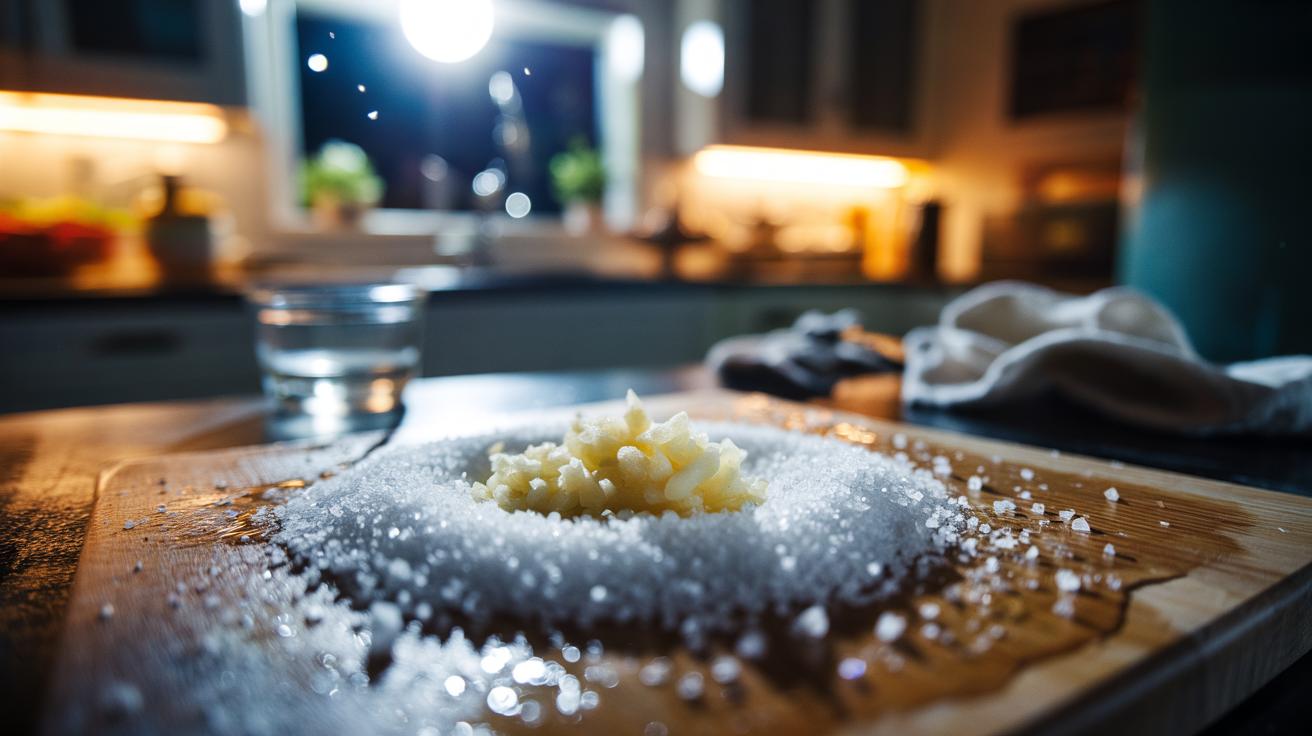
Work with a dry, clean knife-free surface. Sprinkle a thin, even layer of coarse sea salt or kosher salt over the garlic zone. A teaspoon per dinner’s chopping usually suffices. Use your palm or a folded tea towel to rub gently in circles. This creates the essential micro-brine and dislodges residue. If the board is bone-dry, flick on a few drops of water to wake the crystals. Do not soak. You want a damp sheen, not a slurry.
Leave the board overnight, uncovered, somewhere with air circulation. By morning, brush off the salt and wipe with a barely damp cloth. Smell-test. If a faint note remains, repeat quickly or finish with a wipe of bicarbonate of soda solution for stubborn cases. Dry thoroughly and, for wooden boards, apply a whisper of food-safe mineral oil to seal the grain and slow future odour uptake. Keep knives away during the salt rest to avoid corrosion on carbon steel. This routine tackles smell; you should still sanitise separately after raw meat work. Done right, the board smells neutral and feels refreshed.
Choosing the Right Board and Salt
Not all boards or salts behave equally. End-grain wood releases odours better than edge-grain, while plastic relies more on abrasion because it lacks wood’s capillaries. Coarse crystals grip and scour; fine table salt cakes too easily. Iodised vs non-iodised? Both work, but coarse non-iodised sea salt is gentler and more predictable in texture. A drop of water boosts brine formation; lemon is optional for freshness, yet skip it on marble or limestone where acidity can etch. Match the method to the material for consistent results. Use the guide below to calibrate your routine and reduce guesswork.
| Board Type | Best Salt | Water Needed | Overnight Time | Extra Care |
|---|---|---|---|---|
| End-grain wood | Coarse sea/kosher | 2–5 drops | 8–12 hours | Oil monthly to seal pores |
| Edge-grain wood/bamboo | Coarse sea/kosher | 5–10 drops | 8–12 hours | Light sanding if smells persist |
| Plastic (HDPE) | Coarse sea/kosher | Few drops or none | 8–10 hours | Dishwasher cycle to sanitise |
| Stone (marble/granite) | Coarse sea | Minimal | 6–8 hours | Avoid acids; wipe promptly |
Evidence and Limits: What the Science and Kitchen Trials Say
In home kitchens and professional prep rooms alike, salt has a track record as a low-tech odour sink. Its effectiveness rests on the chemistry of brine films and on mechanical cleaning. Trials are simple to run: chop garlic on marked zones, treat one with salt and leave the other as a control, then perform blinded smell checks the next morning. Repeatedly, the salted zone fares better. That said, not every molecule surrenders. Allyl methyl sulphide is stubborn and may require a second pass or complementary deodoriser such as bicarbonate or a vinegar rinse (avoid vinegar on porous stone).
Salt is not a disinfectant. It reduces odour, not risk. For raw meat contamination, use a dedicated board, hot water, detergent, and, for plastic, a dishwasher cycle. On wood, allow time to dry thoroughly; desiccation is a natural enemy of bacteria. Over-salting can dry wood excessively, so finish with a light oiling to maintain the board’s moisture balance. The big picture? Salt is a smart nightly habit: inexpensive, quiet, and cumulative in benefit. Combined with sensible hygiene, it keeps kit service-ready without harsh scents or heavy scrubbing.
By leaning on crystal absorption and light abrasion, a pinch of salt overnight turns a pungent board into a neutral canvas by breakfast. It’s chemistry doing housework while you sleep, and it rewards consistency: small amounts, short routines, steady results. Think of it as preventive maintenance for flavour. If you can keep garlic where it belongs—in your supper, not in your timber—you cook with a clearer palate and a cleaner conscience. Which twist will you try tonight: a simple salt rub, a salt-and-bicarb tandem, or a full reset with oiling to lock in that freshness?
Did you like it?4.5/5 (29)