In a nutshell
- 🧂 The hack pairs salt grains for mechanical abrasion with mild acids (white vinegar or citric acid) for chemical softening of limescale, delivering fast, visible results.
- 🔧 Method: a 10–20 minute vinegar + coarse salt soak with periodic agitation, light brushing with a pinch of salt, then rinse thoroughly and flush hot to clear debris.
- 🧪 Pick the right grain: coarse sea/kosher salt for scouring, fine table salt for pastes; avoid Epsom salt, and don’t neutralise acids with bicarbonate in the same step for maximum efficacy.
- ⚠️ Care matters: keep contact short on chrome, use gentler pastes on PVD, nickel, or matte black, protect natural stone, flex silicone nozzles, and never mix vinegar with bleach.
- ♻️ Aftercare: quick wipes post-shower, a weekly salt-and-vinegar swish, monthly deep soaks in hard-water areas, and consider a limescale filter to sustain clear jets and efficient spray.
Limescale clogs showerheads, dulls the spray, and leaves chalky scars on chrome. Many of us reach straight for harsh chemicals, but there’s a simpler route sitting in the cupboard: salt. Used smartly, those crystalline grains become a precision scrubber that scours away deposits fast while keeping costs low and smells minimal. The trick is pairing salt’s grit with a mild acid and a little agitation. Results can appear in minutes. It’s the sort of hack that feels improbable until you see clear jets returning and a faceplate gleaming again. Here’s how and why it works, with the steps, the science, and careful guidance for different finishes.
Why Salt Works on Limescale: The Science and the Sensation
Limescale is chiefly calcium carbonate, a stubborn mineral that binds to metal and plastic in hard-water regions such as London and East Anglia. Salt—sodium chloride—doesn’t dissolve limescale on its own the way an acid does. Instead, it plays a complementary role. Think micro-sandpaper. The angular edges of coarse sea salt or kosher salt create gentle abrasion that lifts softened scale once an acid, such as white vinegar or citric acid, has begun breaking the carbonate bond. Short contact times, then motion. That’s the winning formula.
In practice, a warm vinegar-and-salt bath around the showerhead face loosens deposits, while the grains themselves provide targeted scrubbing at the jets. You feel it: a faint rasping as crystals travel across the surface, dislodging crust from crevices. Never mix any vinegar solution with bleach or chlorine-based cleaners—dangerous fumes can form. Because salt is water soluble, residue rinses clean, leaving no waxy film or perfume. It’s cheap, biodegradable, and surprisingly precise. This is a low-tox method that rewards patience and touch rather than brute force.
Step-By-Step: The Salt Showerhead Hack
1) Prep. Switch off the shower. If the head is fixed, fill a sturdy food bag with 250–300 ml warm white vinegar and add 2–3 tablespoons of coarse salt. Secure it over the head with an elastic band so the nozzles are submerged. For a handheld head, unscrew and soak in a bowl with the same mix.
2) Soak and agitate. Leave for 10–20 minutes. Every five minutes, massage the bag or swirl the bowl, encouraging the salt to travel across the faceplate and through the nozzles. This light movement is the secret: it turns passive soaking into active scrubbing without scratching.
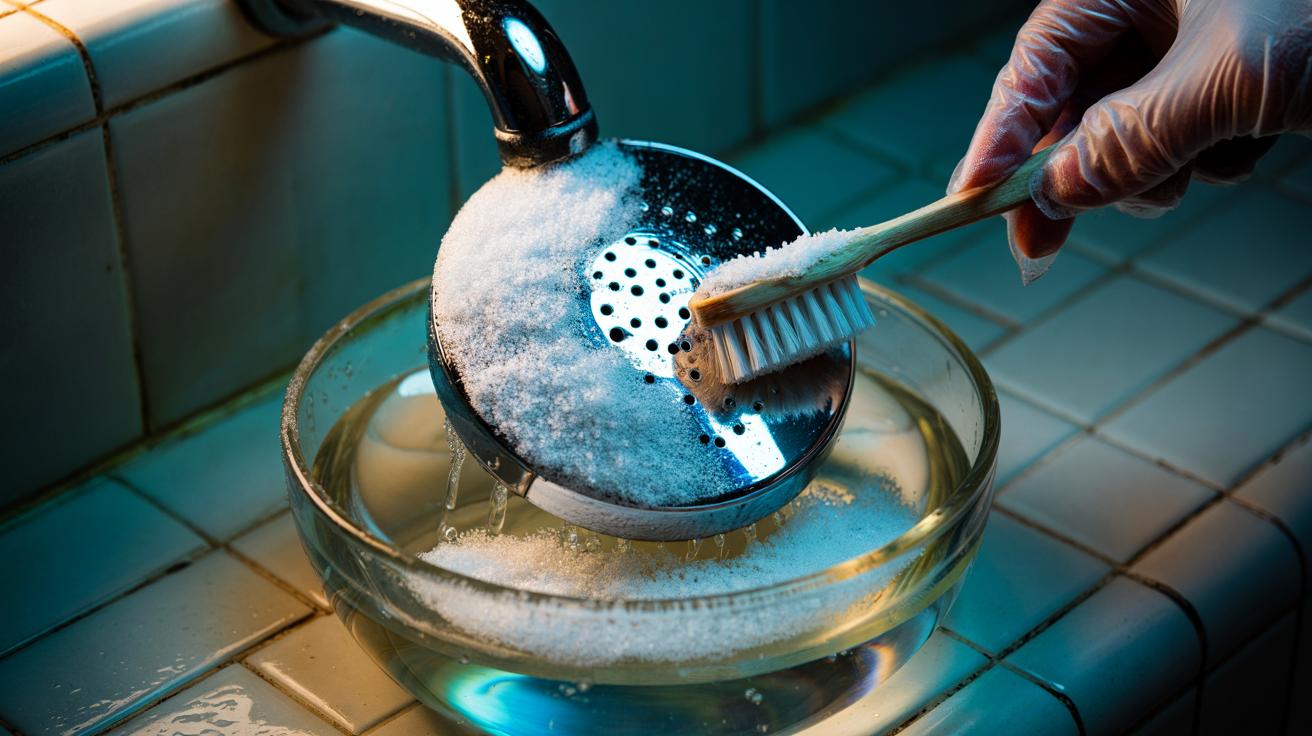
3) Targeted scrub. Remove the bag and dip an old toothbrush into a pinch of salt. Gently brush the faceplate and around the rubber jets. For clogged nozzles, flex them with your fingers or a wooden cocktail stick—never metal.
4) Rinse and flush. Rinse the head under warm water, then run the shower on hot for 60 seconds to purge loosened grit. Rinse thoroughly to protect chrome and internal parts from prolonged salt contact. Polish with a soft cloth. If deposits persist, repeat once with fresh solution rather than extending the first soak indefinitely.
Time-poor? Try a quick paste: one tablespoon fine table salt plus just enough vinegar or lemon juice to form a slurry. Dab on, wait five minutes, rub lightly, rinse. Simple. Effective.
Choosing the Right Grain and Smart Add‑Ons
Different salts feel different. Coarse sea salt or kosher salt offers a robust, grippy texture for exterior scouring. Fine table salt excels in pastes, packing into tiny creases without over-abrading. Epsom salt, despite the name, is magnesium sulfate; it dissolves slowly and can leave a film—skip it for descaling. What matters most is synergy: salt provides the mechanical lift, while mild acids provide the chemical softening. Use one, then make the other work harder with movement. Don’t combine acid and bicarbonate of soda in the same step; they neutralise each other and blunt the clean. Keep methods simple and sequential.
| Method | Ideal Salt | Partner | Contact Time | Best For | Notes |
|---|---|---|---|---|---|
| Bag soak + agitation | Coarse sea/kosher | White vinegar | 10–20 min | Heavy faceplate scale | Massage bag every 5 min for abrasion |
| Paste dab and rub | Fine table salt | Lemon or vinegar | 5–10 min | Targeted jets and crevices | Apply sparingly; rinse well |
| Dry sprinkle + brush | Coarse salt | Warm water | Immediate | Quick refresh | Use gentle pressure to avoid micro-scratches |
For very delicate finishes, opt for fine salt paste rather than dry rubs, and keep movement soft. It’s controlled cleaning, not scouring the decking.
Risks, Finishes, and Prevention Aftercare
Short, controlled contact is key. Chrome-plated brass tolerates this hack well, but extended salty soaks can eventually dull a shine. Limit soak times and rinse thoroughly to avoid corrosion risks and residue. Nickel, gold, and matte black PVD finishes deserve extra care—choose fine salt pastes, light strokes, and a shorter dwell. Silicone nozzles can be flexed gently to crack scale without tools; let the vinegar soften first so salt can finish the job. Avoid using salt near natural stone tiles, which can etch with acids; protect surfaces or remove the head to a sink.
Maintenance is where the real gains lie. Wipe the faceplate after steamy showers. Once a week, a 60‑second salt-and-vinegar swish keeps jets clear. Monthly, do a deeper soak if you live in a hard-water hotspot. Clear jets don’t just look good; they restore the design spray pattern, improving perceived pressure and helping you heat less water to feel the same warmth. Consider a limescale filter or in-line softener if build-up returns quickly. It’s the difference between firefighting and staying ahead.
Used thoughtfully, salt turns into a precise cleaning tool that works with, not against, your showerhead. There’s tactile feedback, immediate visual payoff, and no harsh fumes. Pair it with a mild acid, keep the contact brief, agitate gently, and rinse like you mean it. Your reward is a crisp spray and a mirror-bright faceplate without pricey descalers. Small habits—quick wipes, short soaks, light scrubs—prevent the big clean from ever becoming a slog. Will you try the grain-and-agitate method this weekend, or adapt it into a five-minute Friday ritual that keeps limescale at bay for good?
Did you like it?4.5/5 (30)