In a nutshell
- 🧪 Why vinegar works: 5% acetic acid dissolves alkaline films, limescale, and detergent residue, reducing surface tension for quicker, streak-free drying; use distilled white vinegar for a colourless, eco-lean clean.
- ⚡ 30-second method: Pre-dust with a microfibre, mist a 1:1 vinegar–water mix, wipe horizontally then vertically, flip to dry and buff; or pull a squeegee top-to-bottom, wiping the blade and chasing edges for a flawless finish.
- 🛠️ Ratios and tools: 1:1 for daily smears (20–30 sec), 2:1 for hard water, add one drop washing-up liquid for grease; keep two microfibres, a 25–30 cm squeegee, and consider distilled water in very hard-water areas.
- 🚫 Safety essentials: Avoid natural stone and electronics screens, don’t soak wood, label your bottle, and store out of children’s reach; ventilate or add a light lemon peel infusion to soften the scent.
- 🔧 Troubleshooting: Wash microfibres separately (no softener), adjust ratio/cloth/technique one variable at a time, warm and use 2:1 for mineral blooms, soften tape residue with a vinegar compress, and note condensation between panes signals a failed seal.
For a nation that knows a thing or two about rain-spattered panes, streaky windows are the bane of British mornings. The fix, though, sits in the cupboard next to the salt: distilled white vinegar. Spritzed, swiped, and squeegeed, it can turn smeary glass pristine with almost indecent speed. Yes, you really can clear a window in under 30 seconds. The trick is in the dilution, the cloth, and the motion. No proprietary perfumes. No aerosols. Just chemistry, a splash of technique, and the smug satisfaction of seeing the garden snap back into high definition.
Why Vinegar Works on Streaks
Vinegar’s edge is its mild acidity. At roughly 5% acetic acid, it dissolves alkaline films left by tap water, detergent residue, and airborne grime. That’s why homes in hard-water belts from Kent to the Midlands find it so effective; the acid quietly defeats limescale and mineral spots where neutral cleaners smear. It also reduces surface tension, helping liquid sheet off glass rather than bead into marks. The result: fast drying, fewer residues, and a clearer finish.
Go for distilled white vinegar. It’s colourless, inexpensive, and leaves no sticky sugars behind (unlike some culinary vinegars). The scent is sharp but brief; open a window and it’s gone within minutes. Because it’s solvent-light and rinses clean, it’s kinder on indoor air than many fragranced sprays. On plain glass, frames of uPVC or painted timber, and most mirrors, it’s safe. Avoid natural stone sills—marble and limestone dislike acid—and don’t soak wooden frames. Used correctly, vinegar is a simple, eco-lean alternative to glass cleaners packed with dyes and synthetic fragrance.
The 30-Second Cleaning Method
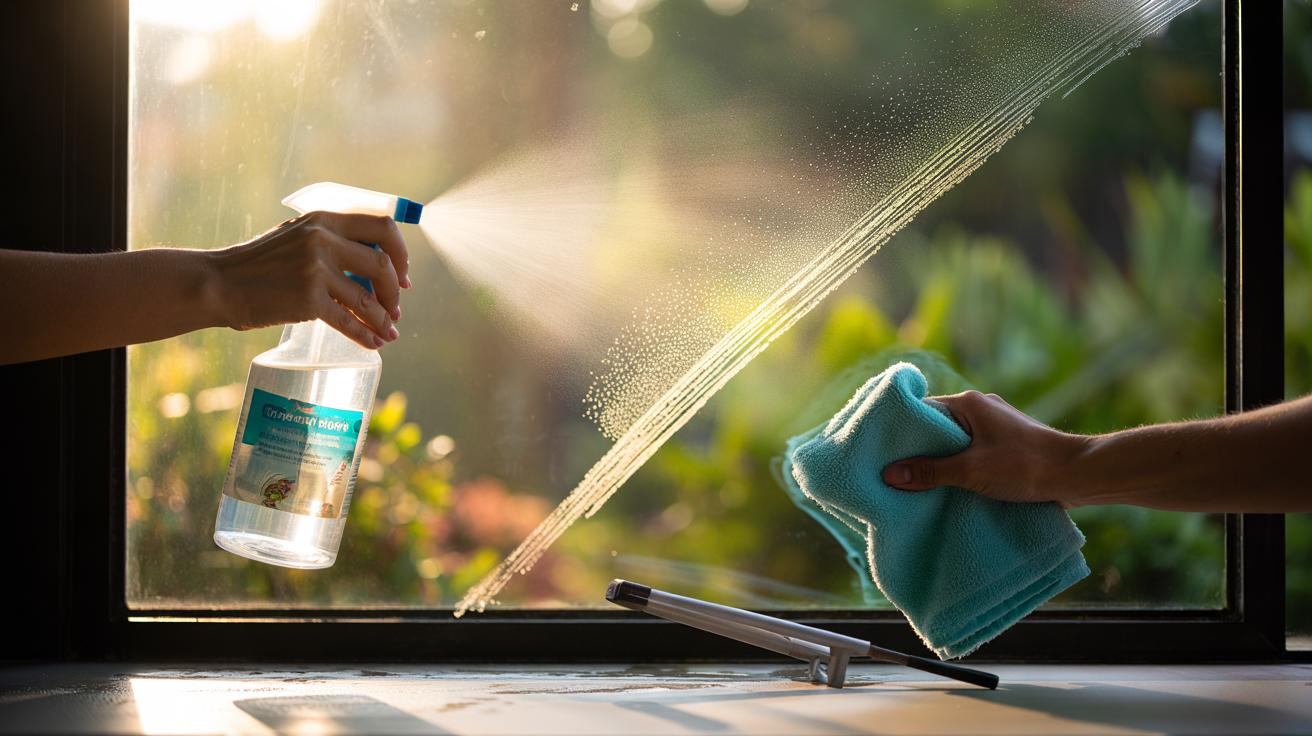
Time starts the moment the trigger clicks. Pre-dust the pane with a dry microfibre cloth to lift grit—five seconds, tops. Mist a 1:1 mix of vinegar and water across the glass; don’t drench it. Fold your cloth into quarters, presenting a flat, absorbent face. Two swift passes: one horizontal to loosen grime, one vertical to lift it. Flip to a dry face and buff. If you’ve a squeegee, pull straight lines from top to bottom, wiping the blade edge on a towel between strokes. Edges matter: chase the frame line to banish the tell-tale halo.
Work in shade or on cool glass; heat flashes liquid dry and sets streaks. For finger grease or cooker film, add a single drop of washing-up liquid to your bottle to boost slip—too much will add smears. Keep movements confident, pressure light. Most average panes—think 60 x 90 cm—fall inside the 30-second target with practice. Larger patio doors? Do them in halves. Finish by stepping sideways and checking from an angle; oblique light exposes any misses. If you see a ghost, a tiny spot-buff with the dry corner restores the view.
Ratios, Tools, and Quick Fixes
Getting the mix right prevents smears and saves time. Distilled water helps in very hard-water postcodes, but tap is fine for most households. Here’s a quick reference for common jobs and the tools that make them swift. Small adjustments in ratio can mean big gains in clarity.
| Solution | Ratio | Use Case | Typical Time |
|---|---|---|---|
| Vinegar + water | 1:1 | Daily dust, light smears | 20–30 sec/pane |
| Vinegar + water | 2:1 | Hard-water spots, greasy film | 30–45 sec/pane |
| Vinegar + water + washing-up liquid | 1:1 + 1 drop/litre | Kitchen glass, fingerprints | 30–40 sec/pane |
Keep a spray bottle, two microfibres (one for wet, one for buff), and a 25–30 cm squeegee in a caddy by the back door. Newspaper can work in a pinch but modern inks vary; microfibre stays safer and lint-free. For mirrors that fog, a final buff with a dry cloth reduces haze. Tip: label your bottle and store away from children and pets. Never use vinegar on natural stone or on electronics screens. If the smell bothers you, crack a window or add a drop of lemon peel infusion—subtle, not perfumey.
Troubleshooting Smears and Tricky Glass
Still seeing streaks? The culprit is often cloth contamination. Wash microfibres separately, no fabric softener; residue transfers to glass like an oil slick. If the pane is coated—think low‑E or privacy films—check the manufacturer’s care notes. Vinegar is fine for most but avoid aggressive scrubbing pads. When smears persist, change one variable at a time: ratio, cloth, or technique.
Mineral blooms that reappear are a hard-water hallmark. Warm your mix and step up to a 2:1 solution for the first pass, then revert to 1:1. Sticky tape ghosts or label glue? Soften with a warm vinegar compress for a minute, then lift gently with a plastic scraper. Condensation trapped between double-glazed panes signals a failed seal—no cleaner will fix that; it’s a glazing issue. For balcony doors and high panes, a squeegee on a pole speeds things and keeps footprints off the frame. Finish with a perimeter wipe to catch runs. Under angled winter sun, do a final side-glance test; raking light reveals what front-facing light hides.
Vinegar earns its keep because it’s fast, cheap, and ruthlessly simple—chemistry doing quiet work while you swipe and move on. One bottle, two cloths, thirty seconds, and the outside world snaps back into focus. For homes fighting limescale, it’s a small, daily victory over mineral maths. If you’ve been stuck in a spiral of smears and sprays, this is the reset: dilute, mist, glide, buff. Job done. What’s your most stubborn glass challenge at home—grease, hard water, or height—and which tweak will you try first to beat the streaks?
Did you like it?4.5/5 (23)