In a nutshell
- 🔬 The fast chemistry: baking soda (sodium bicarbonate, pH 8–9) triggers rapid neutralisation, mild micro‑abrasion, and adsorption, starting to lift fresh stains in about 30 seconds.
- 🧽 Rapid method: Blot first, sprinkle, then apply a quick paste (1 tsp baking soda + ½ tsp water), wait 30 seconds, and blot again; add one drop washing‑up liquid for greasy marks.
- 🍷 Why it works on common stains: tackles acidic coffee/tea, wine/juice, and tomato pigments, and begins to saponify oils; a light fizz can help push dyes out of fibres.
- ⚠️ Limits and care: avoid on delicate fibres (silk, wool), glossy plastics, aluminium, and polished stone; not ideal for protein stains; spot‑test and don’t neutralise its power by mixing big doses with vinegar.
- 🏠 Takeaway: keep a small jar handy; the mantra is act fast, blot smart, paste briefly, then rinse or launder—quick, cheap, effective stain control for everyday spills.
Spills happen. Tea sloshes, tomato sauce splatters, make-up smears across a sleeve just as you’re leaving the house. There’s a simple, inexpensive fix in most kitchen cupboards: baking soda. It’s not magic, it’s chemistry, and it can start lifting fresh stains in as little as 30 seconds. The trick is understanding why this gentle powder works so quickly, then applying it with speed and precision. Act fast and you can often prevent a stain from setting, saving your fabric, carpet, or worktop in under a minute. Here’s the science, the method, and the caveats every household should know.
The Fast Chemistry Behind Baking Soda’s Rapid Lift
Baking soda (sodium bicarbonate) is a mild alkali with a pH around 8–9 in solution. That slight alkalinity matters. Many common stains—coffee, wine, fruit juices, tomato sauces—carry acidic components. Touch them with a light baking soda paste and you get instant acid–base neutralisation, which reduces the stain’s grip on fibres. This begins immediately, which is why a 30‑second response can be enough to stop a spill from becoming a permanent blemish. At the same time, the powder’s fine particles provide micro‑abrasion, a gentle physical lift that dislodges pigments without shredding fabric.
The second boost is adsorption. Dry granules cling to moisture and oily residues, wicking them away from fibre surfaces. Add a drop of water and the paste thickens just enough to hold dyes at the surface so they can be blotted off. On acidic stains, tiny releases of CO₂ can occur as neutralisation happens, creating a soft, fizz‑like effect that helps push colourants out of the weave. For greasy marks, the alkalinity starts to saponify fatty acids, loosening them. The synergy—neutralise, lift, and wick—explains the speedy result. It’s subtle chemistry, but on a fresh spill it’s fast, visible, and effective.
How To Use It: Rapid Methods For Fabrics, Carpets, And Surfaces
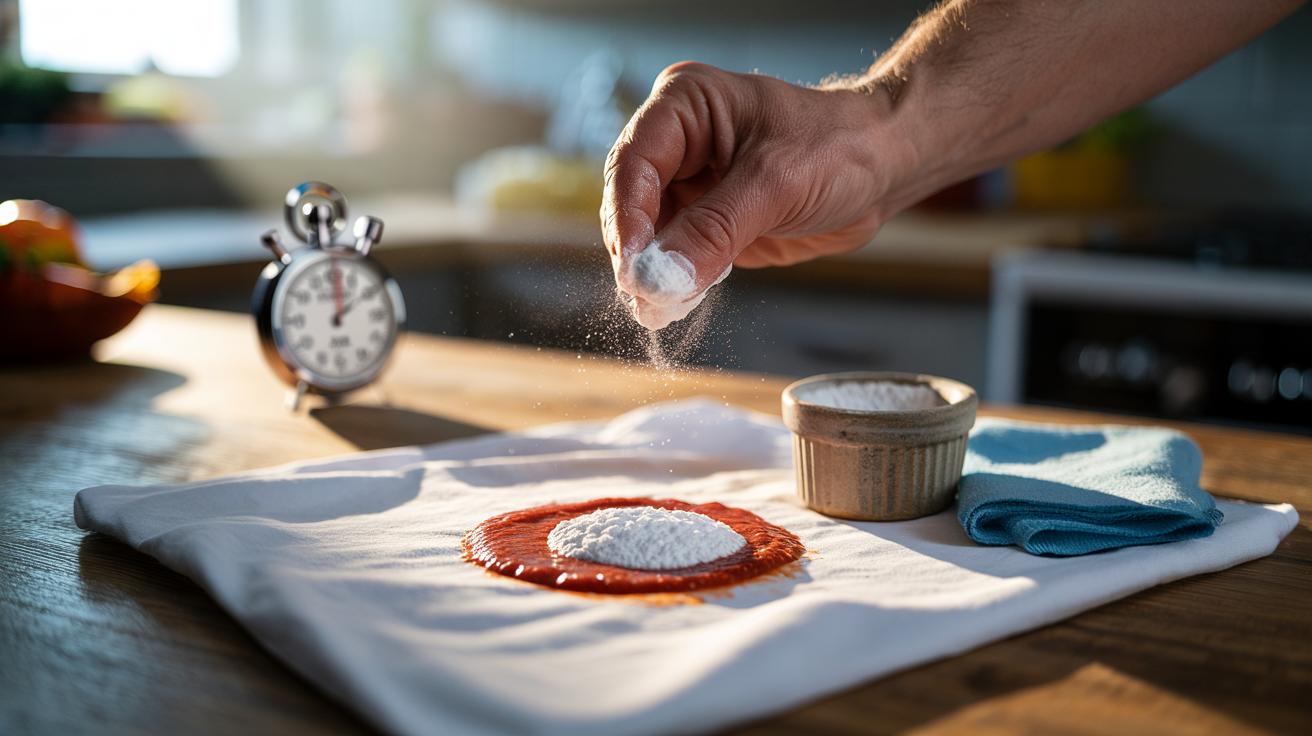
Speed wins. Blot first with clean, white tissue or a microfibre cloth. Don’t rub. Remove liquid; don’t drive it deeper. Sprinkle a pinch of baking soda over the damp mark. For dry stains, mist lightly with water first. Make a quick paste: about 1 teaspoon baking soda to ½ teaspoon water for a thick, spreadable layer. Tap it on with a finger or soft brush. Wait 30 seconds. Blot again. Short, firm dabs. You should see transfer.
Grease or lipstick? Upgrade the paste: add one drop of washing‑up liquid. The surfactant breaks surface tension while the mild alkalinity loosens oils. On coffee or wine, keep the paste simple; let the neutralisation do the work. For mugs, worktops, and tiles, apply paste, count to thirty, then wipe clean and rinse. On carpets, lift paste with a damp cloth, then press with dry towels to extract residue. If colour lifts onto the cloth, you’re winning—repeat once if needed.
| Stain Type | Why Baking Soda Works | 30‑Second Move | Notes |
|---|---|---|---|
| Coffee/Tea | Neutralises acids, mild abrasion lifts tannins | Blot, paste on, dab off | Repeat once for older rings |
| Grease/Make‑up | Alkalinity + surfactant saponify oils | Paste + 1 drop washing‑up liquid | Rinse out detergent |
| Wine/Juice | Adsorption and neutralisation of acids | Thick paste, 30 seconds, blot | Test for colourfast fabrics |
| Tomato Sauce | Alkali loosens pigments, gentle scrub | Paste, soft brush, blot | Avoid vigorous rubbing |
When It Shines—and When It Doesn’t
Baking soda excels on fresh, acidic, or lightly oily stains and on durable everyday fabrics like cotton, polyester blends, and most carpets. It’s friendly to ceramic, enamel, and glass. Its speed comes from acting before dyes set or oils polymerise. But it isn’t perfect. Protein stains—blood, milk, egg—respond better to cold water and enzymes; alkaline pastes can set them if heated. Deep dye transfers or set‑in stains may need longer dwell times or specialist removers. On delicate fibres—silk, wool, cashmere—bicarbonate’s mild grit can cause fuzzing. Always spot‑test hidden seams.
Be cautious on glossy plastics, lacquered finishes, and soft metals such as aluminium, where abrasion may dull the sheen. Natural stone like marble or limestone is alkali‑safe in pH terms, but the powder can mar a honed polish; treat carefully. Don’t mix large amounts with vinegar; the fizz looks dramatic but mostly neutralises cleaning power. The smarter move is sequence: apply baking soda first, then rinse, then use a separate cleaner if needed. In laundry, use the paste as a pre‑treat, then wash as normal. For odour‑laden stains, a second 30‑second cycle before laundering helps capture smells as well as colour.
Quick, cheap, effective: that’s the promise of baking soda when you pounce on a spill in the first minute. The science is simple and reliable—neutralise acids, loosen oils, lift pigments—while the method takes less time than finding a specialist spray. Act fast, blot smart, paste briefly, and you’ll rescue more fabrics than you expect. Keep a small jar and spoon by the sink, and you’ll never be scrambling. Which tricky household stain do you want a 30‑second plan for next, and on what surface or fabric are you battling it?
Did you like it?4.3/5 (24)