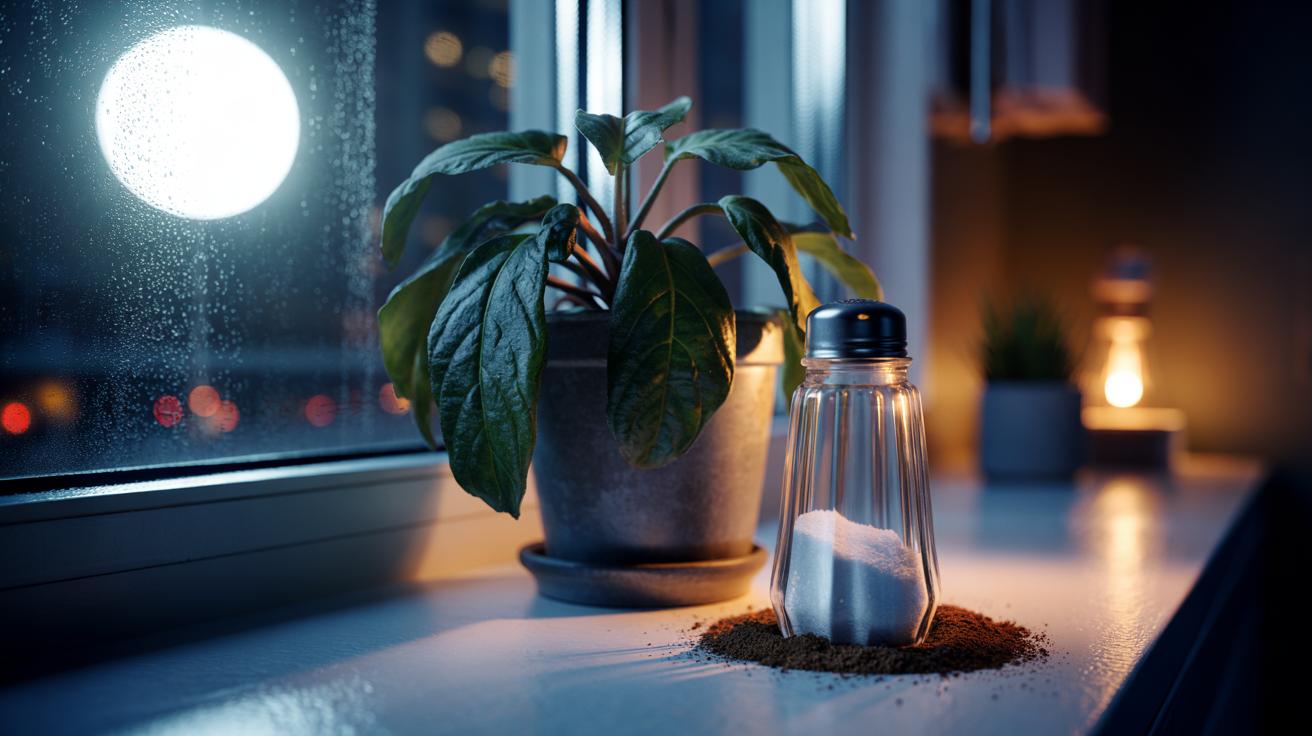
In a nutshell
- 🌙 Most “overnight recoveries” come from restored turgor pressure as transpiration drops at night, not from table salt, which often gets false credit.
- 🧂 In tiny doses, sodium can act as an osmoticum and briefly substitute for potassium in some plants, but it also triggers osmotic stress and chloride burn if overused.
- 🌿 Species are decisive: halophytes may benefit, while common houseplants (glycophytes) and many herbs suffer from salt build-up, stunted growth, and leaf-tip scorch.
- 📱 The myth endures because night-time rhythms and quick cosmetic changes mimic a cure, while hard tap water quietly accelerates salinity problems—correlation isn’t causation.
- 🛠️ Safer revivals: diagnose moisture and roots, bottom-water and drain, avoid NaCl; use balanced feed, targeted magnesium sulfate only for true deficiency, and flush or monitor with an EC meter.
It sounds like a miracle from the kitchen cupboard: a pinch of table salt in the pot and your droopy fern stands tall by morning. There’s a grain of truth here, and a bucket of caution. Sodium can influence plant water balance and cell pressure, but the result depends on species, dose, and timing. In many cases, plants “recover” overnight for reasons that have little to do with salt at all. The wrong sprinkle can scorch leaves, lock up roots, and quietly ruin soil. So what’s really going on while you sleep, and when—if ever—does sodium perk up your plants?
The Overnight ‘Perk-Up’: What Really Happens
When leaves flop, the usual culprit is a loss of turgor pressure—the internal water pressure that keeps cells plump and stems upright. Give a thirsty plant plain water in the evening and it often looks refreshed by morning, as cooler air and lower transpiration rates let roots rehydrate tissues. That recovery is natural. It’s also why the “salt miracle” gets credit it doesn’t always deserve. Night-time is a friend to wilted leaves, with or without sodium.
Where does sodium come in? In tiny amounts, sodium ions can act as a cheap osmoticum inside vacuoles, helping cells hold water. Some plants can even swap a little sodium for potassium, the element they normally rely on to manage water balance and open stomata. In certain grasses and succulents, that substitution can be briefly helpful. But there’s a flip side. Salt outside the roots draws water out of them—the classic osmotic stress problem. Add too much, and the soil solution becomes salty enough to dehydrate the plant, not revive it. This is why the same home remedy that seems to perk up one specimen can badly wilt another. The overnight effect is real sometimes, but it is not universal, nor reliably safe.
Sodium’s Role in Plants: Friend and Foe
Botanically speaking, sodium is not essential for most houseplants, often called glycophytes. Yet it’s “beneficial” in small doses for some C4 grasses and CAM succulents, and it’s positively welcome in halophytes—true salt-lovers adapted to coastal marshes and saline flats. These plants can store sodium in vacuoles, maintain enzyme function, and keep photosynthesis humming even when salt is around. For your peace lily or spider plant? Not so much. Their roots and leaf tips burn, and their potting mix accumulates salts that stunt growth over weeks. Most indoor plants do not want table salt anywhere near their roots.
The nuance matters. Sodium’s “perk” is context-dependent: species, concentration, and soil drainage make or break it. If you’re growing sea lavender or samphire, a very light saltiness can be part of normal husbandry. For kitchen basil on a windowsill, it’s a gamble with poor odds. Below is a snapshot to help separate the winners from the worriers.
| Plant Type | Example Species | Response to Small NaCl | Risk Profile |
|---|---|---|---|
| Halophytes | Salicornia (samphire), Limonium (sea lavender) | Often positive; sodium used for osmotic balance | Low risk if well-drained and carefully dosed |
| C4/CAM (some) | Kalanchoe, certain grasses | Sometimes beneficial at trace levels | Moderate risk; easy to overdo |
| Common Houseplants (glycophytes) | Peace lily, pothos, fiddle-leaf fig | Rarely helpful; often cosmetic at best | High risk of burn, salt build-up |
| Herbs/Vegetables in pots | Basil, lettuce, tomatoes | Usually harmful; reduces yield and vigour | High risk; avoid NaCl |
Why the Myth Persists: Night-Time Physiology and Quick Visual Wins
People love a fast fix. Water a droopy plant at dusk and it perks up by breakfast, so the last thing added—salt—gets the glory. Yet plants have nightly rhythms. Stomata close in the dark, transpiration slows, and cells recover water pressure, especially after modest watering. In some species, leaves move on a clock—prayer plants fold and unfurl—creating dramatic “before and after” photos. Correlation looks like causation on a phone screen.
There’s also a subtle placebo for the impatient gardener: small salt additions can tighten leaf tissues briefly without improving long-term health, a cosmetic effect explained by ion shifts. Social media thrives on that 12-hour transformation, not on the slow damage that follows—chloride burn at tips, wilting that returns, soil that crusts with residue. And because many UK homes have hard tap water already rich in minerals, one more soluble salt nudges pots toward salinity faster than expected. The myth sticks because it sometimes “works” for a night, not because it’s wise.
How to Revive Droopy Plants Safely
Start with diagnosis. Check the pot’s weight and the compost’s feel: dry mix needs a thorough soak; soggy mix needs air, not more water. Slide the plant out and inspect roots—creamy white is healthy; brown and mushy spells root rot. Shift the plant from direct midday sun. Trim dead material. Then rehydrate properly: bottom-water for 20–30 minutes so the entire rootball drinks, then drain. For most houseplants, the safest “overnight perk-up” is simply cool air, darkness, and fresh water.
If salt is tempting, don’t reach for NaCl. Choose targeted nutrition instead. Magnesium sulfate (Epsom salt) can green leaves starved of magnesium, but only when a deficiency is evident. Prefer balanced fertiliser at the label rate. If you suspect hidden salinity—leaf-tip burn, white crust on the surface—flush the pot: run clean water through the compost until at least a third of the pot’s volume drains out. For keen tinkerers, a low-cost EC meter shows whether salts are creeping up. Keep sodium for your chips. Never sprinkle table salt directly onto houseplant soil.
Here’s the take-away: sodium can nudge water relations in a narrow set of plants, in tiny amounts, under ideal drainage. That’s science, not sorcery. Yet for the average fern, fig, or philodendron, table salt is a shortcut to long-term stress, even if leaves look plumper by dawn. Focus on watering technique, light, temperature, and a sensible feeding schedule; those are the levers that last. As trends swirl through TikTok and allotments alike, what small, evidence-based tweaks will you try next to keep your plants bright-eyed by morning?
Did you like it?4.6/5 (20)