In a nutshell
- 🫖 Tea bags offer a fast, 10-minute colour-correct by depositing sheer tannin tint and smoothing cuticles, reducing brassiness and disguising patchy light spots.
- 🔧 Method: Brew strong (2–3 bags, 8–10 min), cool fully, strand test, apply to dry or towel-dried hair targeting patches, comb through, leave 10 minutes, rinse cool (no shampoo), light condition.
- 🎨 Choose your brew: Black tea mutes warm brunettes, rooibos re-warms coppers, chamomile adds soft gold to blondes; match undertone and layer for controlled depth.
- ⚠️ Limits and safety: Tea can’t lighten or fix banding/hot roots; it stains skin/towels and chamomile can trigger allergies; effects are temporary (1–3 washes).
- 💡 Pro tips: Pre-condition porous ends to prevent over-grabbing, assess in natural light, repeat gently over days, finish with a gloss or leave-in, and aim to blur contrasts rather than perfect.
You’ve rinsed, blow-dried, and then—disaster: patchy dye, hot roots, uneven ends. Before panic presses “book now” at the salon, a kitchen standby steps in with surprising poise. A humble tea bag can colour-correct and soften obvious contrasts in as little as 10 minutes. It won’t rewrite chemistry or replace a professional toner. Yet it can mute brassiness, mellow harsh light patches, and tie a too-warm crown to cooler lengths. Simple, quick, low-risk. The magic lies in tea’s plant pigments and gentle acidity, which behave like a soft-focus filter for hair. For minor blunders, tea offers a calm reset, buying time—and confidence—until your next proper appointment.
Why Tea Works on Botched Box Dye
Tea is loaded with tannins—plant polyphenols that cling lightly to the hair’s outer layer. Think of it as a whisper of stain rather than a heavy coat of paint. This sheer tint can neutralise warmth or deepen too-light streaks without the commitment of oxidative dyes. Tea also has a mildly acidic pH, which helps smooth raised cuticles, making frayed, over-processed patches appear glossier and less frizzy. That smoothness alone can make colour look more even because light reflects consistently across the surface.
The effect is deposit-only and temporary. It won’t lift colour, correct incorrect levels, or fix a harsh line of demarcation. But it can soften it. Black tea adds depth to light, warm browns. Rooibos enriches coppers. Chamomile brightens dingy blondes by adding a golden veil, not peroxide lift. Ten minutes is often enough to nudge tone the right way, especially on porous, patchy areas that grab pigment quickly. Always remember: the result is subtle, cumulative, and safe to repeat over a few days if you want more depth.
Step-by-Step: The 10-Minute Tea Fix
First, brew strong. Use 2–3 bags per mug and steep 8–10 minutes for a concentrated punch. Let it cool to room temperature; warmth opens the cuticle too much, while cold helps seal. Choose the right tea: black tea for brunettes, rooibos for copper or strawberry tones, chamomile for blondes seeking a soft golden cast. Do a strand test first: dab on a hidden section, wait 10 minutes, rinse, and check in natural light. If the tone feels right, proceed.
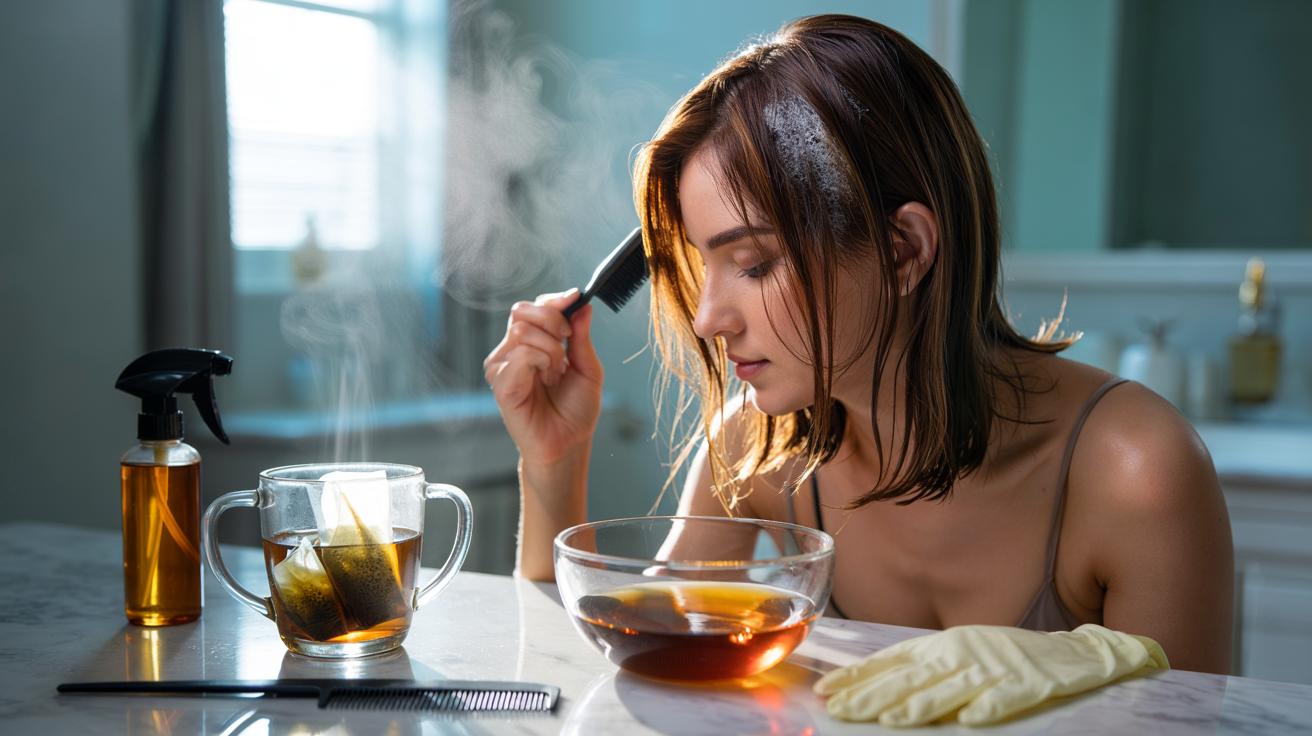
Apply to clean, towel-dried or dry hair. Dry hair grabs more; damp hair gives a softer veil. Use a bowl and brush, sponge, or spray bottle. Target lighter or brassy patches first, feathering into surrounding areas to avoid new lines. Saturation matters. Comb through with a wide-tooth comb for even distribution. Leave on for 10 minutes to start. Rinse with cool water only; skip shampoo. Finish with a light conditioner to seal the cuticle. Assess. Want more? Repeat tomorrow. A gentle, layered approach beats overdoing it in one go and keeps tone controlled.
Choosing the Right Brew for Your Tone
Pick tea like you’d pick a tint: by undertone. If your brunette has turned orangey, a cool, strong black tea helps nudge it neutral. For copper that’s faded patchy, rooibos reintroduces warm red-orange without clashing. Blondes with straw-yellow streaks benefit from chamomile, which adds a refined, sunlit gold rather than brass. Match the brew to the target, not the mistake. The right tea subtly steers tone; the wrong one may reinforce what you dislike. You can blend, too—half chamomile, half rooibos—for strawberry blondes needing warmth with restraint.
| Tea Type | Target Tone | Brew Strength (Steep Time) | Best For | Visual Effect |
|---|---|---|---|---|
| Black Tea | Cool to neutral brunette | 8–10 minutes, 2–3 bags | Orange/brassy browns, light patches | Mutes warmth, adds slight depth |
| Rooibos | Warm copper/red tones | 10 minutes, 2 bags | Faded coppers, patchy strawberry | Re-warms with red-gold sheen |
| Chamomile | Golden blonde | 6–8 minutes, 2 bags | Blonde brassiness, dull highlights | Softens yellow, adds glow |
Two pro tips. First, control porosity: a quick conditioner on ultra-porous ends before tea prevents over-grabbing. Second, lighting matters; inspect near a window. Tea tint is delicate, and harsh bathroom bulbs can mislead. When in doubt, start lighter and layer. It’s astonishing how a second pass the next day can perfect tone without tipping into murky.
Safety, Limits, and When to See a Pro
Tea is gentle, but not magic. It cannot lighten hair or erase banding. If your issue is severe—bleach banding, over-toned greys, hot roots several levels lighter—book a colourist. Tea also stains skin and towels; use gloves and an old T-shirt. Sensitive scalp? Patch-test on skin first. People allergic to plants in the Asteraceae family may react to chamomile, so choose wisely. Keep tea out of eyes. If it happens, rinse with cool water and stop immediately.
Manage expectations. Tea is a temporary, stain-like glaze that lasts 1–3 washes. That’s the beauty: quick course correction without commitment. Frequency? Once every few days until tone settles, then pause. If hair feels dry, add a pea of leave-in or a gloss later in the week. Don’t chase perfection. Aim to blur obvious contrasts so your colour looks intentional. When only a toner formula and developer will do, you’ll know. Until then, this low-stakes fix restores polish fast and keeps you camera-ready.
A tea bag won’t rewrite a dye job, but it can nudge tone, calm brass, and hide patchiness in minutes. It’s cheap, stealthy, and easy to control—ideal for the in-between days before a professional correction or your next routine appointment. By matching the brew to your undertone, layering gently, and rinsing cool, you’ll get a believable, satiny finish that reads more “salon gloss” than “kitchen hack.” Ready to put the kettle on and try a strategic stain, or will you hold out for a toner in the chair—what’s your move?
Did you like it?4.6/5 (27)