In a nutshell
- 🌱 Tannins from spent tea gently tweak soil pH, feed microbes, and add organic matter, improving nutrient availability and steady plant vigor—think subtle nudge, not fast fertiliser.
- 🍵 Safe use matters: choose plastic-free bags or recover leaves only, avoid milk/sugar and scented teas, apply light top-dresses or pale “tea water” every 2–4 weeks—prioritise dilution and moderation.
- 🌸 Best fits: acid-loving plants (blueberries, azaleas, camellias, some hydrangeas) respond well; avoid lavender, rosemary, thyme, seedlings, and go easy with brassicas.
- ⚠️ Myth-busting: tea isn’t a miracle feed; heavy doses may bind nutrients, caffeine can inhibit germination, and some bags leach microplastics—use as a soil drench, not a foliar spray, and observe and adjust.
- ♻️ Smart pairings: fold leaves into compost, tuck under mulch, combine with balanced feeds, and monitor pH; small, regular applications build reliable, cumulative benefits.
Britain’s love affair with tea doesn’t end at the mug. Gardeners across the country are rescuing spent tea leaves and turning them into a quiet engine of soil vitality, praising the way tannins seem to revive tired plants and coax out richer growth. The trick is simple, thrifty, and rooted in plant science: polyphenols from tea gently tweak soil pH, feed microbial life, and add a dusting of organic matter where roots need it most. One humble tea bag can nudge your beds toward the conditions many ornamentals crave. Used judiciously, this eco-friendly habit complements composting and reduces waste, all while giving containers and borders a subtle, sustained lift.
What Tannins Do in Soil
Tea contains a suite of plant-derived polyphenols commonly called tannins. In the garden, these compounds act in three useful ways. First, they provide a mild acidifying effect when rinsed through the soil, which can help unlock micronutrients such as iron in otherwise stubborn substrates. Second, they contribute tiny amounts of organic matter, improving structure and moisture retention around the rhizosphere where roots exchange gases and nutrients. Third, tannins interact with microbial activity, subtly shaping the soil community that breaks down residues and cycles nutrients. You won’t get a blast of nitrogen; tea leaves aren’t a quick-release feed. But you will get incremental improvements that matter over a season.
Think of tannins as a nudge, not a shove. A light, regular top-dressing with spent tea leaves can slightly lower pH around plants that prefer it on the sour side, while keeping the root zone evenly moist. Used in moderation, tea shifts the soil environment in ways that make nutrients more accessible without tipping the balance. Pair tea residues with mulches and a balanced feed, and you’ll see healthier foliage and steadier growth rather than sudden spurts that fade.
How To Use Spent Tea Bags Safely
Start with the bag itself. Many brands still seal with plastics; if yours isn’t certified plastic-free, tear it open and recover only the tea leaves, binning the mesh. Avoid bags that were brewed with milk or sugar, as residues can invite mold and gnats. Flavoured or scented teas may contain oils not ideal for soil. Aim for plain black or green tea. For indoor plants, err on the gentle side and wait until the potting mix is warm and actively growing. The golden rule is simple: clean leaves, light doses, and close observation.
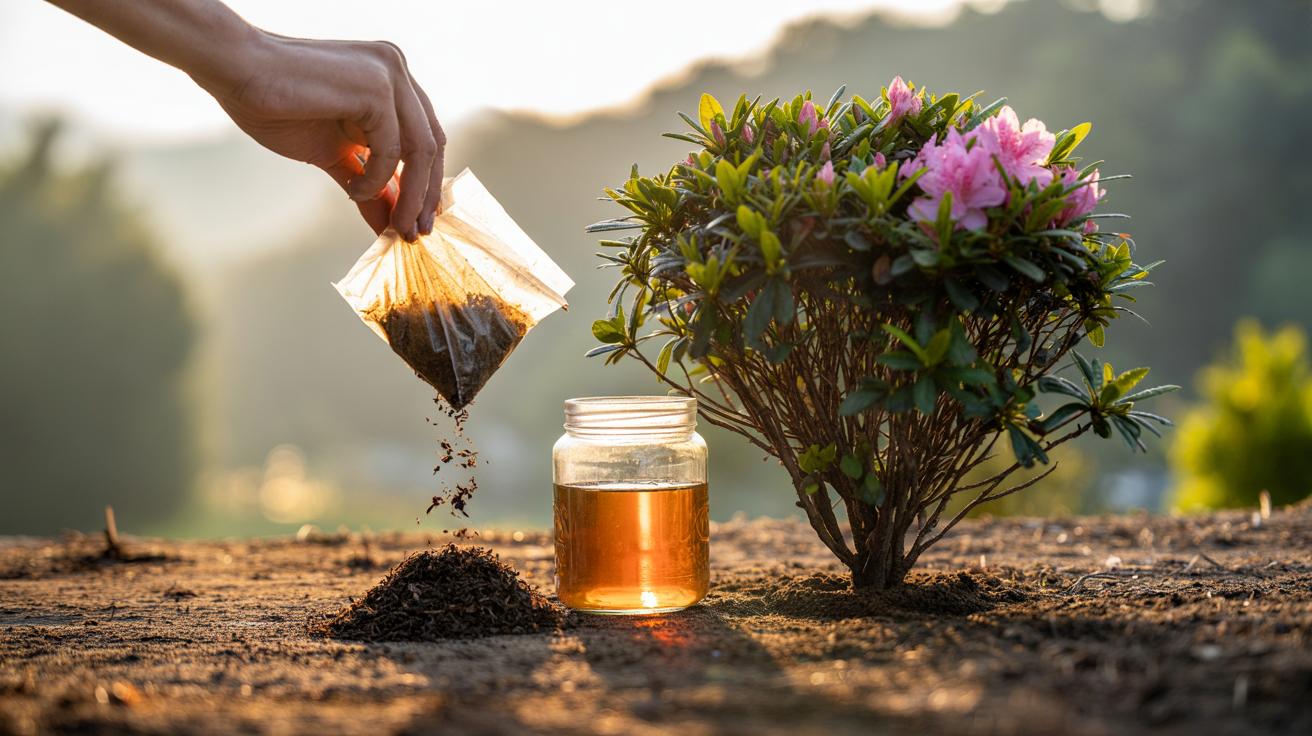
Three gardener-tested methods work well. For a top-dress, scatter a thin pinch of spent tea leaves around the root zone, then cover with mulch to prevent crusting. For a weak “tea water,” soak one used bag in 1 litre of rainwater for 12–24 hours until pale straw-coloured, then water around the base—no more than every 2–4 weeks. For composting, add leaves as a “green” alongside dry browns like shredded cardboard. Containers respond quickly but can be overdone: keep applications sparing and skip seedlings, which are sensitive. Rinse tools and avoid dripping hot brews onto soil. Dilution and restraint make the trick shine.
Which Plants Benefit Most (and Which Don’t)
Tea’s mild acidity suits acid-loving plants that sulk in alkaline ground. Blueberries, azaleas, camellias, rhododendrons, heathers, pieris, Japanese maples, and many ferns appreciate the slight pH drop and steady moisture. Hydrangeas can shift towards bluer tones where soil becomes more acidic and aluminium availability rises. Woodland borders respond handsomely when tea leaves are tucked beneath a leaf-mould mulch, maintaining a cool, springy root run. Caution with carnivorous plants: they love acidity but demand nutrient-poor media; even gentle inputs can be too rich for them.
| Plant Group | Response to Tea Leaves | Notes |
|---|---|---|
| Blueberries, Azaleas, Camellias | Positive | Mild acidification aids micronutrient uptake and colour. |
| Hydrangeas | Conditional | Can encourage blue tones in suitable soils. |
| Lavender, Rosemary, Thyme | Negative | Prefer alkaline, free-draining conditions; avoid acidifying inputs. |
| Brassicas (cabbage, kale) | Mixed | Best near neutral pH; excess acidity can hinder growth. |
| Seedlings, Carnivorous Plants | Risky | Sensitive to inputs; keep media clean and lean. |
Herbs from Mediterranean hillsides—lavender, rosemary, thyme, sage—resent extra acidity and dampness; keep tea away. Many veg beds thrive closer to neutral, especially brassicas, so use sparingly or not at all. On chalky soils, the tea effect is gentle and may be swiftly buffered, but in pots and raised beds you’ll notice it sooner. Let the plant list guide your hand: match the trick to species that actually want it.
Myth-Busting: Limits, Risks, and Smart Pairings
Tea isn’t a miracle fertiliser. It won’t replace a balanced feed or cure every chlorosis. Tannins can bind proteins and metals; at heavy doses they may impede rather than improve uptake. Caffeine—present in most teas—can inhibit germination at high concentrations. Some bags shed microplastics if composted whole. And stale, milky tea invites fungus gnats indoors. Used thoughtfully, tea is a nudge toward better conditions; used carelessly, it’s just mess and myth. Treat “tea water” as a gentle drench, not a foliar spray, to minimise disease risk from non-sterile liquids. When in doubt, dilute and observe.
The sweet spot is combination. Fold spent tea leaves into mature compost for a balanced carbon–nitrogen blend. Layer under bark or leaf mould to keep tannins near the root zone while protecting the surface from crusting. Add modest doses to worm bins; worms relish finely milled organic matter. For hungry crops, pair tea with a measured organic feed to supply the macronutrients tea lacks. Keep an eye on soil acidity with a simple pH test, especially in pots. Small, regular applications build cumulative benefits without tipping the system. That’s the quiet power of the tea bag trick.
Tea, in the garden, is less about dumping nutrients and more about tuning the environment—shading pH, moistening the micro-world, and feeding the smallest workers in the soil. Used sparingly, tannins from tea enhance plant resilience, deepen colour, and keep containers lively between major feeds. It’s the kind of low-cost, low-impact practice that adds up across a season. Will you trial a light tea-leaf top-dress on your azaleas or brew a pale watering for your ferns—and what changes will you watch for in leaf tone, vigour, and bloom over the next month?
Did you like it?4.4/5 (24)