In a nutshell
- 🧪 Tannic acid in black tea complexes dyes, loosening ink’s grip on paper so stains lift via gentle diffusion rather than bleaching or abrasion.
- ✍️ Use a freshly steeped, lightly damp black tea bag; blot, don’t rub, alternate with dry blotting paper, work from edges inward, then finish with a barely damp distilled water pass and press flat to dry.
- 📄 Paper chemistry matters: cellulose fibres, sizing, and buffering affect outcomes; tannic acid is mildly acidic, so repeated use can lower local pH—seek a conservator for valuable documents.
- 🔬 Ink compatibility: dye-based fountain and fresh ballpoint inks respond well; gel is mixed; permanent markers and waterproof pigment inks mostly resist; coated papers raise tide line risks.
- ⚠️ Risk control: spot test, choose black tea for higher tannins, keep sessions short, and stop at any fibre fuzzing or halos—aim for safe lightening, not total erasure.
Spilled thoughts are easy to fix on a screen. On paper, an errant pen mark feels final. Yet a damp tea bag can coax ink off the page with surprising finesse, leaving the sheet intact and legible. The quiet hero is tannic acid, a family of plant polyphenols abundant in black tea that bonds to dyes, breaks their grip, and lifts colour into the blotter. Used correctly, this trick exploits chemistry, not force. Blotting, not scrubbing, is the rule. Here’s the science behind the method, how to perform it safely, and when to stop before you damage precious paper.
Why Tannic Acid Lifts Ink Without Scarring Paper
Most everyday inks rely on aromatic dyes dissolved in oil or water. They love clinging to the paper’s cellulose via hydrogen bonds and van der Waals attractions, while seeping into fibres by capillary action. Tannic acid is a large, many-armed molecule. It can form multiple hydrogen bonds and π–π interactions with those dyes, effectively complexing them. Picture a molecular net wrapping around colour molecules, reducing their solubility in the fibre network and nudging them toward a new home: your damp tea bag. The tea does not bleach; it dislodges and immobilises.
The moisture matters as much as the molecule. A used tea bag provides a low, controlled water content, re-wetting dye-based and gel inks just enough to loosen them without flooding the sheet. That thin film of water supports diffusion: dyes migrate from the paper into the blotter where tannins latch on. Because cellulose bonds are weaker and easily re-formed as the sheet dries, the paper’s structure recovers. The process is gentle compared with alcohols or aggressive surfactants, which can swell fibres or redistribute stains. The chemistry targets the ink; the restraint protects the paper.
A Step-by-Step Tea Bag Method That Minimises Damage
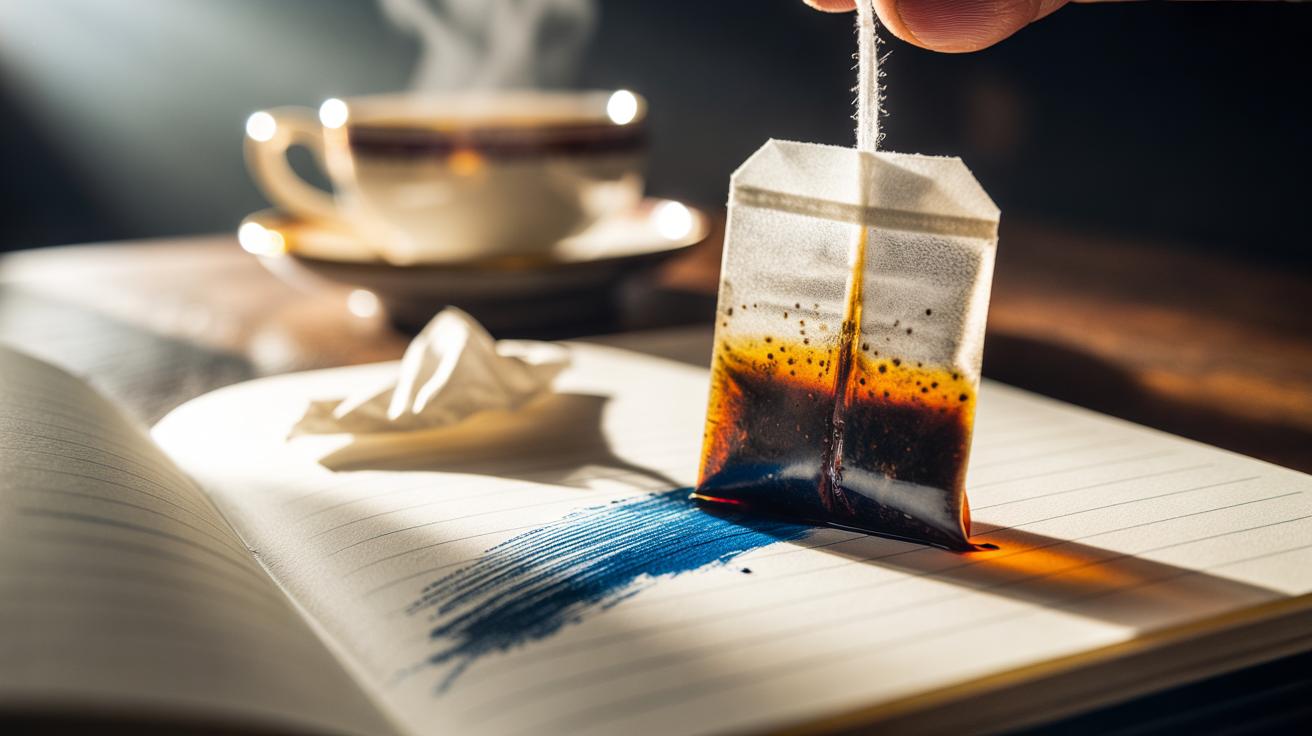
Start with a freshly used black tea bag. Rinse it briefly under cool water, then squeeze until only slightly damp—no dripping. Slip a clean sheet beneath the stained page to prevent transfer. Always test on a hidden corner. If no tide lines or colour bloom appear after a minute, proceed.
Hold the tea bag like a small poultice and blot the mark with light, repeated taps. Short contact times are key—five to ten seconds—then lift and replace with a dry blotting paper or kitchen tissue to wick away mobilised dye. Alternate: damp tea, then dry blotter. Work from the outside of the mark inward to stop halos. For stubborn lines, pause for thirty seconds to allow capillary action and complexation to continue, then blot again. Keep the area as flat as possible; a book beneath gives a firm bed.
If progress stalls, refresh with a new, lightly damp tea bag. Avoid rubbing; friction can burnish fibres and drive pigments deeper. When satisfied, press the sheet between clean papers under a weight for an hour to prevent cockling. A final pass with a barely damp pad of distilled water can remove residual tannins, followed by dry blotting. Stop at the first sign of paper fuzzing, colour spread, or staining.
Paper Chemistry, pH, and Long-Term Effects
Paper is a mat of cellulose fibres held by hydrogen bonds and surface sizing. Modern office papers are often alkaline-buffered with calcium carbonate; older stocks may be acid-sized. Tannic acid is mildly acidic. In brief, cautious use leaves little residue, but repeated applications can lower local pH and add brownish chromophores. That is why conservators prefer distilled water poultices or tailored chelators for archival materials. If the document is valuable, consult a paper conservator first.
Ink chemistry also steers outcomes. Dye-based inks respond because dyes are small, mobile molecules. Pigment-based or “waterproof” formulas contain larger particles bound with resins; these resist both water and tannins. Another wrinkle: coated papers and glossy stocks limit absorption, so moisture pools and creates tide lines. Work drier and shorter on these sheets. A brief neutralising rinse—one pass with barely damp distilled water after the tea treatment—can reduce any residual acidity, but keep it minimal to avoid cockling. Store documents flat, in a dry, dark place. Prevention beats cure: let ink fully dry before annotating margins.
When It Works, When It Won’t
Results vary with the pen, the age of the mark, and the paper. Fresh ballpoint scribbles, as well as many gel and fountain pen lines, often lighten dramatically. Aged ballpoint can be stubborn; its oily vehicles oxidise and bind more tightly over time. Permanent markers and “archival” inks rarely budge. Use the table below as a quick guide before you reach for the kettle.
| Ink Type | Carrier | Tea Bag Effect | Notes/Risk |
|---|---|---|---|
| Ballpoint (fresh) | Oil with dyes | Good lightening | Blot gently; avoid rubbing to prevent smearing. |
| Ballpoint (old) | Oxidised oil/dyes | Partial | Multiple cycles may help; risk of halos increases. |
| Gel pen | Water with pigments/dyes | Variable | Dye-heavy gels respond; pigment gels resist. |
| Fountain pen | Water with dyes | Often strong | Work fast to avoid feathering. |
| Permanent marker | Alcohol with resins | Poor | Solvent-based methods safer, but risk is high. |
| Waterproof pigment ink | Resin-bound pigment | Minimal | Likely no improvement; avoid over-wetting. |
Choose black tea for higher tannin content; green and herbal teas are weaker. Keep sessions short to avoid tidelines. If a shadow remains, accept “less visible” over “perfect.” For crisp erasure on pencil or graphite, a vinyl eraser is safer. For ink ghosts, a tannic acid poultice is a pragmatic compromise between chemistry and care. Know when enough is enough.
A tea bag will not rewrite history, but it can nudge a mistake toward invisibility without shredding the page. The trick is targeted chemistry—tannins complexing dyes—delivered with patience, light pressure, and disciplined drying. Use black tea, keep it barely damp, and finish with a quick distilled-water blot to limit residue. For heirlooms, caution beats cleverness every time. Now that you know how and why it works, what document on your desk would you dare to rescue first—and what’s your plan if the ink refuses to budge?
Did you like it?4.4/5 (21)