In a nutshell
- 🫖 Tea tannins gently chelate copper and zinc oxides, and mild acidity (around pH 5) lifts tarnish fast—often brightening brass in seconds without abrasives.
- 🧪 Method: brew strong black tea (4–6 min), dab or poultice for 10–30 seconds, wipe, rinse, optionally neutralise with a little bicarbonate, dry, then seal with a thin wax coat.
- 🛠️ Best for unlacquered, solid brass with light/moderate tarnish; not effective on heavy verdigris or beneath failed lacquer—always patch test and watch for pinkish de-zincification.
- 🌿 Eco-friendly and low-cost alternative to harsh polishes (ammonia, solvents), with minimal odour and waste; time-to-shine ranges from under a minute for small items to a few minutes for larger pieces.
- ⚠️ Practical cautions: mask porous materials, avoid mixing with bleach or ammonia, identify plated parts to prevent rub-through, and dispose of oxide-laden cloths in household waste.
Here’s a household fix that feels like newsroom magic: a simple tea bag can lift dull, tarnished brass back to a handsome glow. The trick isn’t folklore; it’s chemistry hiding in plain sight. Packed with tannins, tea binds to oxide films and loosens grime, letting metal shine without elbow-grease or harsh fumes. It’s quick, cheap, and oddly satisfying. Heat helps. So does patience. But the technique is surprisingly forgiving, and the results can be startling. For light tarnish, you’ll often see a brighter surface in seconds. Here’s why it works, when to use it, and how to get a professional-looking finish from the contents of your mug.
The Chemistry: Why Tannins Cut Through Tarnish
Brass is an alloy of copper and zinc. Left to air, copper forms oxides and carbonates that dull the surface: reddish cuprous oxide, black cupric oxide, and, with moisture and CO₂, the familiar greenish carbonate corrosion. Zinc can oxidise too, leaving a pale haze. The brown stain you wipe away is essentially that thin film. Tea, particularly black tea, contains plant polyphenols known as tannins (think catechins, theaflavins, and galloyl groups). These molecules can chelate metal ions—grabbing them at multiple points—so the film loosens and disperses.
There’s also a pH nudge. A strong brew registers mildly acidic (often pH 4.9–5.5). That gentle acidity softens superficial oxides without gouging the underlying metal, unlike more aggressive acids. Heat increases reaction rates, while the water acts as a carrier, lifting oxidation products into the cloth. The result is a light-touch clean that favours chemical finesse over abrasion. Importantly, the tea’s colour doesn’t stain brass; the pigment rinses off with water. What you see is the metal’s reflectivity returning as the oxide film thins and breaks.
One more effect helps: tea’s polyphenols can behave like mild surfactants, improving wetting so the solution reaches micro-pits where grime hides. That’s why brief contact followed by a confident buff can be so effective. You’re not dissolving the brass. You’re unhooking what sits on top of it.
The Brew-and-Polish Method, Step by Step
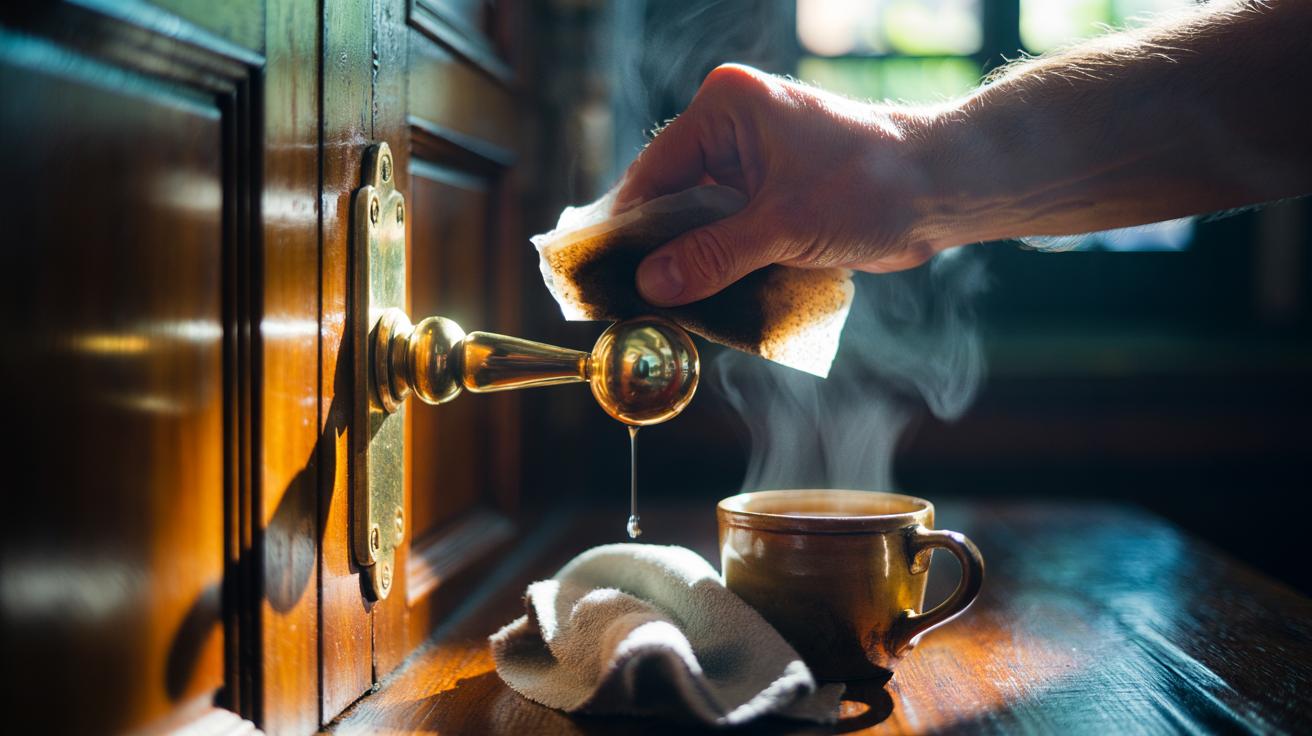
Start clean. If the piece is greasy, wash with warm water and a drop of washing-up liquid, then dry. Brew one to two bags of plain black tea in 200–250 ml boiling water for 4–6 minutes; you want a robust infusion rich in tannins. Let it cool to comfortably warm so you don’t scorch fingers or finishes. Always test on a discreet patch first. Dab the warm tea onto the brass with a lint-free cloth or use the soaked bag as a gentle poultice for 10–30 seconds. Wipe. Tarnish should transfer onto the cloth. Repeat as needed.
Once bright, rinse lightly with clean water to remove residues. For belt-and-braces, a splash of weak bicarbonate-of-soda solution (quarter teaspoon in a mug) will neutralise remaining acidity; rinse and dry. Finish by buffing with a microfibre cloth for sheen. To slow future tarnish, apply a whisper-thin layer of beeswax or microcrystalline wax and buff again. That sacrificial coat buys you months.
| Tea Type | Approx. Tannin | Steep Time | Best For | Notes |
|---|---|---|---|---|
| Black (Assam, Ceylon) | High | 4–6 min | General tarnish | Fast, reliable, strong colour but rinses off |
| Oolong | Medium | 3–5 min | Gentler clean | Smoother action, slightly slower |
| Green | Lower | 2–3 min | Very light haze | Less bite; safer on mixed materials |
| Decaf black | Medium | 5–7 min | Odour-sensitive spaces | Works; allow longer contact |
If you can polish in good daylight, do. Subtle residues hide under artificial light and dull the final shine. And keep separate cloths: one for applying, one for drying, one for final buffing. Cross-contamination just rubs loosened oxides back onto the metal.
When It Works, When It Doesn’t
Tea excels on unlacquered, solid brass with light to moderate oxidation—door handles, latches, candlesticks, cabinet knobs, instrument fittings. It’s less effective on heavy, crusted verdigris (the green, waxy carbonate/hydroxide build-up). That demands mechanical removal or a stronger acid system, followed by careful neutralising. If the brass is lacquered, the tarnish you see is under a clear coat; tea won’t touch it until the failing lacquer is stripped. Be wary with brass-plated steel or zinc die-cast parts: aggressive rubbing can breach the thin plating and expose the base metal.
Porous inlays—leather, wood, felt—can darken with tea contact. Mask them or remove hardware first. On antiques, surface colour can be intentional patina; polishing may reduce value or erase history. Test a small, hidden zone and stop if you see uneven colour or pinkish patches (a sign you’ve thinned the zinc-rich phase or hit plating limits). Magnets can help identify imposters: if it sticks, it’s likely steel under a brass finish.
Mind the environment. Tea is gentle, but residues mixed with copper oxides are still metal-containing; dispose of cloths in household waste rather than compost. Do not mix this method with chlorine bleach or ammonia cleaners on the same session; clean, rinse, and start fresh. The rule is simple: mild chemistry, clean water, soft hands.
Smarter than Harsh Cleaners: Costs, Time and Sustainability
Commercial polishes work—no dispute—but often rely on ammonia, petroleum distillates, or fine abrasives. They smell, they smear, and sometimes they over-polish edges, sharpening highlights unnaturally. A teabag approach sits in the sweet spot between soap-and-water and industrial chemistry. It re-wets the oxide layer, chelates metal ions at the surface, and wipes clean without scouring. In practice, a door handle or nameplate can brighten in under a minute. Larger pieces, five to ten minutes. Cost? Pennies per session, and the spent bags can be composted if they’re plastic-free.
It’s not a miracle cure. Heavier corrosion will outmuscle tea’s mild acidity, and fingerprints will return if you don’t seal with wax. Over-brewing won’t damage brass, but it may leave more sticky residue; that just means a more thorough rinse. The upside is control: you decide how far to take the shine, from a gentle refresh to a crisp polish. And because the process is low-risk, you can repeat little-and-often maintenance instead of traumatic annual scrubs that strip character.
For households minding cost and carbon, this is a thrifty, low-tox, low-waste win. Keep a small jar labelled “polish tea” under the sink, brew fresh as needed, and pair it with dedicated soft cloths. The combination becomes a habit—quick, quiet, effective.
Tea proves that clever chemistry can be elegant, not aggressive: plant polyphenols, a hint of acidity, and a warm wipe to release shine from tired metal. It won’t rewrite the laws of corrosion, but used judiciously it delivers handsome results with minimal fuss. Next time you clock a sallow door knob or a lifeless letterbox, try the brew before the bottle. You may be surprised how far a single bag goes. What piece of brass in your home is begging for a tea-powered revival, and what finish would you aim for—subtle glow or show-home gleam?
Did you like it?4.5/5 (20)