In a nutshell
- 🧠 Redefines “detox” as supporting the liver, kidneys, and gut with fibre, steady hydration, and polyphenols—no restrictive cleanses or pricey supplements.
- 🥗 Outlines a 7‑day food plan centred on oats, legumes, colourful plants, and lean proteins, targeting 30g+ fibre, 2–2.5 litres of water, and limiting alcohol, added sugar, and ultra‑processed foods.
- 🧘 Recommends daily habits—7–9 hours’ sleep, a 30–45 minute walk, mindful chewing, one morning coffee, and a 12‑hour overnight fast—to amplify gut and metabolic reset.
- 🛒 Emphasises budget tactics: frozen veg and berries, tins of beans and fish, bulk lentils/oats, batch‑cooking, and flavour from herbs, citrus, and olive oil.
- ✨ Promises practical benefits—steadier energy, calmer digestion, brighter skin—and urges keeping the most helpful habits while skipping perfectionism.
If your body’s been whispering that it needs a reset, there’s good news: the smartest “detox” doesn’t come in a bottle. It’s built from ordinary food, water, sleep, and steady habits that work with your biology. UK dietitians I’ve spoken to champion a simple seven-day programme that cuts noise, not calories, and dials up nourishment. You don’t need expensive powders, teas, or complex protocols to feel lighter, clearer, and more energised. This plan focuses on whole plants, lean proteins, gentle movement, and a calm digestive rhythm. It’s doable in a busy week, cheap to shop for, and flexible enough to fit around real life.
What ‘Detox’ Really Means, According to Nutritionists
Strip away the trend-speak and “detox” means supporting your body’s built-in clearance systems: the liver, kidneys, gut, skin, and lungs. They’re working already. Food and routine either help or hinder. The aim is to ease workload and supply raw materials. That means more fibre to bind by-products in the gut, steady hydration to carry waste away, and colourful plants brimming with polyphenols that signal liver enzymes to do their jobs. The plan is not about starving or purging; it’s about giving physiology a cleaner runway.
Nutritionists emphasise basics: regulate blood sugar with protein and slow carbs; prioritise cruciferous veg (broccoli, cabbage, kale) that feed phase II liver pathways; include omega-3 sources for a calmer, less inflamed terrain. Think oats, beans, berries, onions, garlic, herbs, seeds. Simple, everyday choices. Crucially, avoid ultra-processed foods for a week to reduce additives, excess salt, and emulsifiers that can irritate the gut. No theatrics, just method. You’ll likely notice steadier energy and better digestion within days, which is the real refresh most people are seeking.
The 7-Day Food and Hydration Plan
Here’s a pragmatic structure. Breakfasts are oat-based or protein-rich; lunches lean on soups, big salads, or grain bowls; dinners are veg-forward with a lean protein or legumes. Snacks? Fruit, nuts, yoghurt, or hummus with crudités. Aim for 2–2.5 litres of water or unsweetened herbals per day, plus one cup of coffee or tea if you like. Alcohol, fizzy drinks, and added sugars take the week off to let your gut and liver breathe.
| Day | Focus | Key Foods | Hydration Target |
|---|---|---|---|
| Mon | Reset & Fibre | Oats, apples, lentil soup, broccoli | 2–2.5 litres |
| Tue | Plant Colour | Berry bowl, chickpeas, peppers, kale | 2–2.5 litres |
| Wed | Protein Balance | Eggs or tofu, quinoa, salmon or tempeh | 2–2.5 litres |
| Thu | Gut-Friendly | Live yoghurt, kefir, onions, garlic | 2–2.5 litres |
| Fri | Cruciferous Hit | Cabbage, cauliflower, mustard greens | 2–2.5 litres |
| Sat | Omega-3s | Sardines, mackerel, walnuts, flax | 2–2.5 litres |
| Sun | Rest & Prep | Tray-bake veg, bean stew, citrus | 2–2.5 litres |
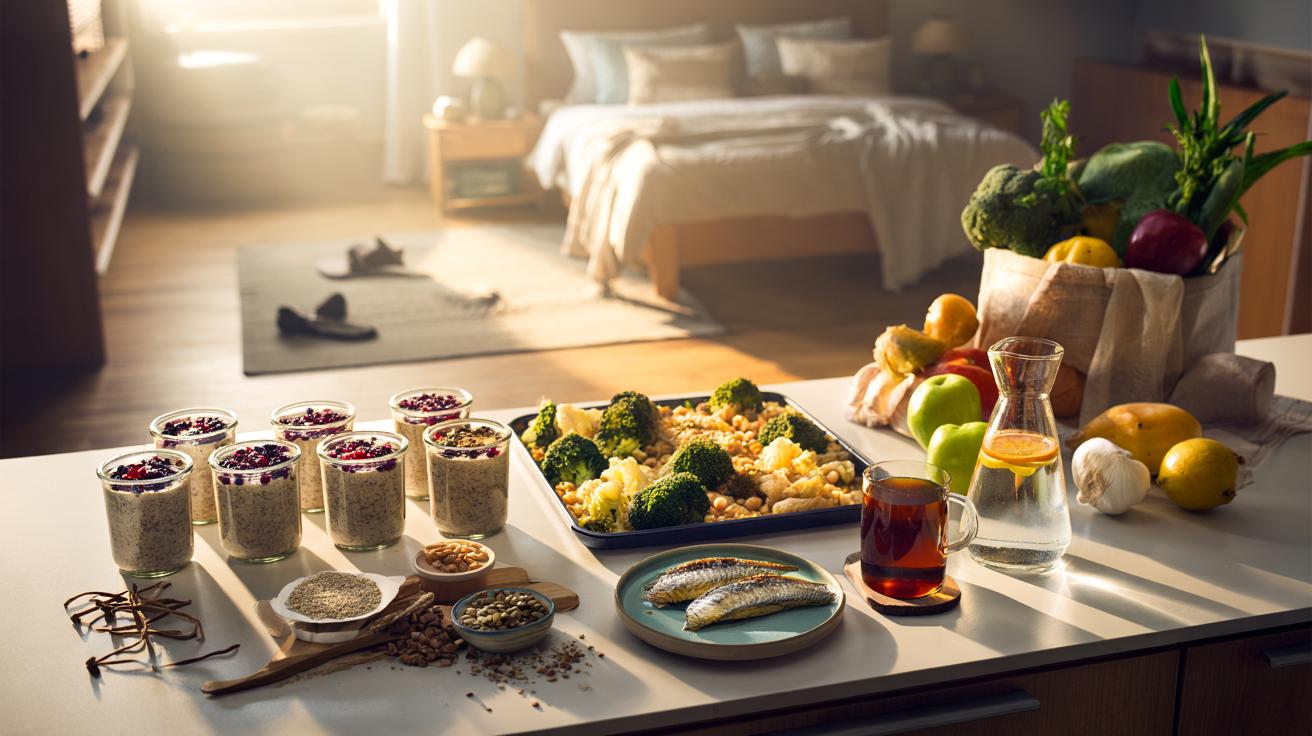
Example day: porridge with cinnamon, flaxseed, and berries; a hearty vegetable and lentil soup; a tray bake of cauliflower, carrots, and chickpeas with tahini-lemon dressing. Add a palm-sized serving of fish, tofu, or chicken at one meal if desired. Season boldly with herbs, citrus, and olive oil. Fibre sits at the centre: target 30g or more. Chew slowly, stop before stuffed, and finish eating two to three hours before bed for a calmer night and fewer reflux flares.
Daily Habits That Supercharge the Reset
Sleep is the most powerful, free “detox” tool you have. Aim for 7–9 hours with a consistent lights-out, cool room, and dimmed screens after sunset. Movement matters too. Walk 30–45 minutes daily—brisk if possible—to stimulate lymph flow and insulin sensitivity. Add light mobility or yoga to ease bloating and improve gut motility. Try a five-minute breathing drill before meals; longer exhales nudge the nervous system into “rest and digest”.
Sweat, don’t stress. A gentle sauna session or a hilly walk in a jumper does the job if you’re healthy. Keep caffeine to one cup before midday, then switch to herbal infusions. Go phone-free at meals and eat without a laptop—mindful chewing reduces gas and improves satiety. Finally, set a 12-hour overnight fast—say, 7pm to 7am—so your gut lining and liver can clear the decks. Small, repeatable habits turn a seven-day reboot into a lasting upgrade.
Shopping, Batch-Cooking, and Cost-Saving Tips
This is a budget plan by design. Buy frozen vegetables and berries—nutrient-dense, cheaper, no waste. Choose tins of beans, tomatoes, and sardines; stock up on oats, brown rice, and wholemeal pasta. A bag of dried lentils becomes multiple meals. Pick versatile flavour-builders: onions, garlic, lemons, olive oil, paprika, cumin, turmeric. You’re investing in ingredients that work hard all week, not in short-lived supplements.
Batch-cook once, eat three times. Make a double pan of roasted crucifers on Sunday; fold into salads, soups, and bowls. Cook a large pot of lentil and tomato stew; garnish differently each day with herbs, yoghurt, or chilli. Prep overnight oats in jars with chia or flaxseed. Keep a transparent container of chopped veg at eye level in the fridge to nudge better snacking. For flavour without fuss, stir a spoon of miso into broths, finish veg with lemon zest, and sprinkle toasted seeds for crunch. Good planning is the cheapest detox of all.
By the end of seven days, many people report brighter skin, less puffiness, steadier appetite, and more reliable energy. That’s not magic. It’s the cumulative effect of fibre, hydration, fewer ultra-processed snacks, and kinder routines. Keep what worked—colourful veg at two meals, an earlier dinner, a daily walk—and relax the rest. No perfectionism, just progress. If you try this refresh, which habit do you suspect will make the biggest difference for you next week—and what’s your plan to lock it in?
Did you like it?4.4/5 (29)