In a nutshell
- 🧽 A spray-and-squeegee microfibre routine is replacing mops, using less water, tighter control, and leaving floors almost dry without the grimy bucket.
- 🚿 Method: mist a low-residue solution, glide with a squeegee wrapped in microfibre, then finish with a dry towel—most floors dry in 3–7 minutes.
- ✅ Beats mops on water use, streaking, and hygiene—soil is captured and lifted, allergens are reduced, and costs fall thanks to reusable microfibre.
- 🧭 Practical steps: vacuum first, mix simple recipes (water + a little washing-up liquid, alcohol, or vinegar), maintain cloths properly, and stay safe—do not mix bleach with acids or alcohol; avoid vinegar on natural stone.
- 🇬🇧 Built for UK floors: protects laminate, LVT, hardwood, and tile by minimising moisture in joints and grout, delivering faster, cleaner results for busy homes.
Brits are quietly ditching the sloshing bucket and stringy heads for a smarter, faster trick. The buzz? A spray-and-squeegee microfibre routine that lifts grime, leaves floors almost dry, and sidesteps that familiar grey soup you end up smearing back across the kitchen. It’s the sort of everyday hack that feels obvious once you’ve tried it: less water, less mess, more control. From rented flats with delicate laminate to Victorian tiles that hate being drenched, households are discovering a low-effort, high-result approach that’s kinder to surfaces and schedules alike. Here’s how the technique works, why it’s surging, and the small tweaks that make it unbeatable in real-world homes.
What Is the Spray-and-Squeegee Microfibre Method?
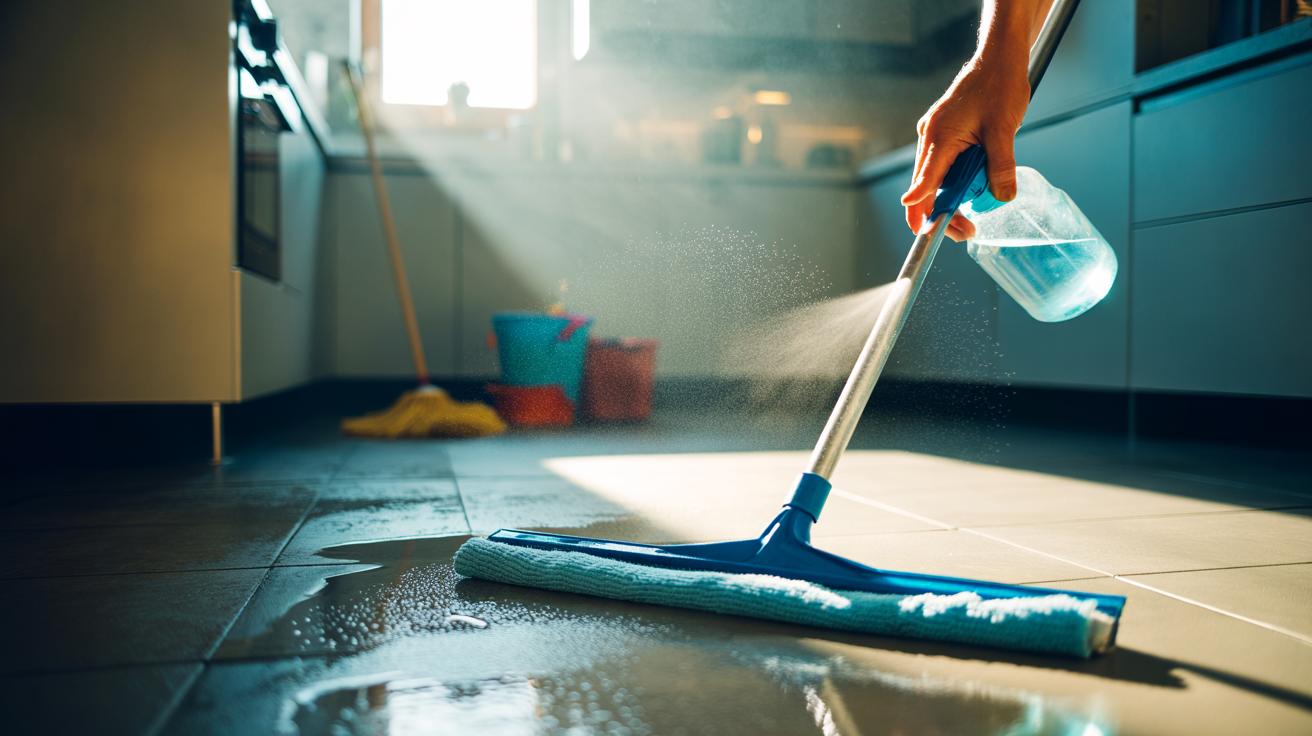
At heart, the method is simple: you swap the wet bucket for a targeted spray, swap the heavy mop for a gliding squeegee, and let a microfibre towel do the capturing. Dampen a quality microfibre cloth, wrap it around a floor squeegee or a flat broom head, and lightly spritz the floor ahead of your path. The fine mist loosens soil; the squeegee edge agitates and corrals it; the microfibre traps the particles. Then, a quick pass with a dry towel or pad wicks away leftover moisture. No bucket. No sludge. No lingering damp.
For the spray, mix 500 ml warm water with either 1 teaspoon washing-up liquid and 1 teaspoon isopropyl alcohol, or 1 tablespoon white vinegar (never blend vinegar with bleach). The alcohol speeds evaporation on sealed floors; the vinegar cuts light limescale on tiles. Microfibre’s split fibres create millions of edges that grip dirt mechanically, reducing reliance on harsh chemicals. Because you’re not flooding the surface, edges, corners, and thresholds clean evenly, and sealed wood or laminate avoids swelling. The rhythm is quick: mist, glide, collect. Most floors dry in under five minutes, even in winter.
Why It Beats Traditional Mops on UK Floors
The UK’s mix of laminate, LVT, hardwood, and ceramic demands careful moisture control. Traditional mops often push dirty water into grout lines and plank gaps, where it lingers. The spray-and-squeegee approach uses minimal liquid, so there’s less wicking into joints and fewer streaks on matte finishes. Because you remove rather than recycle the soil, the result is consistently brighter, especially near kickboards where grease accumulates. It’s faster, too: targeted spritzing means you only wet what you clean. And it’s frugal. A reusable microfibre towel costs pennies per use, and the homemade solution is gentle on varnishes and sealers when used correctly. Cleaner floors, quicker turnarounds, fewer consumables—that’s the win.
| Feature | Traditional Mop | Spray-and-Squeegee Method |
|---|---|---|
| Water Use | High; bucket required | Low; fine mist only |
| Drying Time | 10–30 minutes | 3–7 minutes |
| Soil Removal | Often redistributed | Captured and lifted |
| Streak Risk | Moderate to high | Low on sealed floors |
| Ongoing Cost | Refills and heads | Reusable microfibre |
There’s a health angle, too. Microfibre physically traps fine particles, so allergens don’t smear about, and alcohol or a no-rinse neutral cleaner can add light sanitising on hard, non-porous surfaces. Always patch-test, especially on oiled wood. Never mix bleach with acids or alcohols. Used wisely, this method is a clear upgrade for busy British homes.
Step-by-Step: Mix, Glide, and Dry in Minutes
Clear debris first with a vacuum or soft broom so the spray can target film rather than grit. In a clean bottle, blend your chosen low-residue solution: for everyday maintenance on sealed floors, try 500 ml warm water with a teaspoon of washing-up liquid and a teaspoon of isopropyl alcohol. For tiles, swap alcohol for a tablespoon of white vinegar; skip vinegar on natural stone. Lightly dampen a microfibre towel, wrap it around your squeegee head, and spritz a one-metre lane. Work in straight, overlapping strokes, pulling soil toward you so the blade agitates and the fibres capture.
Swap to a dry microfibre towel for a quick finish pass, especially along edges, thresholds, and under appliances. For sticky spots—tea rings, hob splatter—spritz, pause 30 seconds, then glide. Rinse cloths under hot water as they load up; wring thoroughly. Launder microfibre at 40–60°C with non-bio detergent, no fabric softener, air-dry or low heat. If a surface clouds, you’ve over-applied solution—use less, move faster. On oiled wood, stick to water-only or the manufacturer’s cleaner. With practice, a standard kitchen takes under six minutes, start to finish, and the floor is traffic-ready almost immediately.
There’s something refreshing about a cleaning upgrade that doesn’t hinge on a pricey gadget. The spray-and-squeegee microfibre routine uses tools you may already own, yet it resets the rhythm of housework: lighter, leaner, sharper. It respects materials, trims waste, and delivers the crisp, quick-dry finish busy households crave. Once you feel the glide, it’s hard to return to a slopping bucket. Precision beats puddles, every time. Will you retire the mop and test this faster, drier approach on your own floors—or do you have a twist you’re itching to add to the method?
Did you like it?4.5/5 (26)