In a nutshell
- 🧪 The science: sodium bicarbonate in boiling water creates a mildly alkaline bath that emulsifies fats, swells starches, and loosens proteins; adding acid off-heat generates CO₂ foam that drives debris free.
- 🍳 The method: scrape, add water, use 1 tbsp baking soda per litre, simmer 5–10 minutes, switch off heat, dust more soda, splash vinegar or lemon for foam, then sweep with a non-scratch tool and rinse.
- 🫧 Why it works: heat lowers viscosity while bubbles agitate; foam acts like micro-plungers and reduced surface tension helps liquid creep under burnt-on layers for rapid lift-off.
- ⚠️ Safety and cookware: avoid acid during a rolling boil and mind steam; limit alkali on aluminium and tin-lined copper, skip soda boils on seasoned cast iron, and go gentle with non-stick surfaces.
- 🔁 Smart alternatives: for dairy scorch, simmer plain water then add soda off-heat; for limescale, use citric acid or vinegar alone; for polymerised grease on stainless steel, try oxygen-based cleaners tailored to the mess.
There’s a kitchen hack that feels like science class and spring clean rolled into one. Take a filthy pot, some baking soda, and boiling water, and watch stubborn grime loosen as foam races to the surface. In minutes, not hours. It’s cheap, low-tox, and curiously satisfying. For home cooks weary of scorched milk, caramelised starch, and polymerised oil, the method is a reset button. This simple pantry method often outperforms pricey cleaners. Below, I unpack why sodium bicarbonate works, how to do it safely, and when to tweak the formula for delicate cookware. Ready to bring dulled pans back to bright, without breaking a sweat?
What Really Happens When Baking Soda Meets Boiling Water
At heart, sodium bicarbonate changes the rules of the mess. Dissolved in hot water, it creates a mildly alkaline solution (pH ~8.3). That shift helps break the bonds in sticky residues. Fats begin to emulsify. Starches swell and release. Protein crusts loosen their grip. Heat accelerates everything, so the liquid can creep under burnt layers and lift them from the metal. The pot becomes its own cleaning bath, doing the heavy lifting while you stand back.
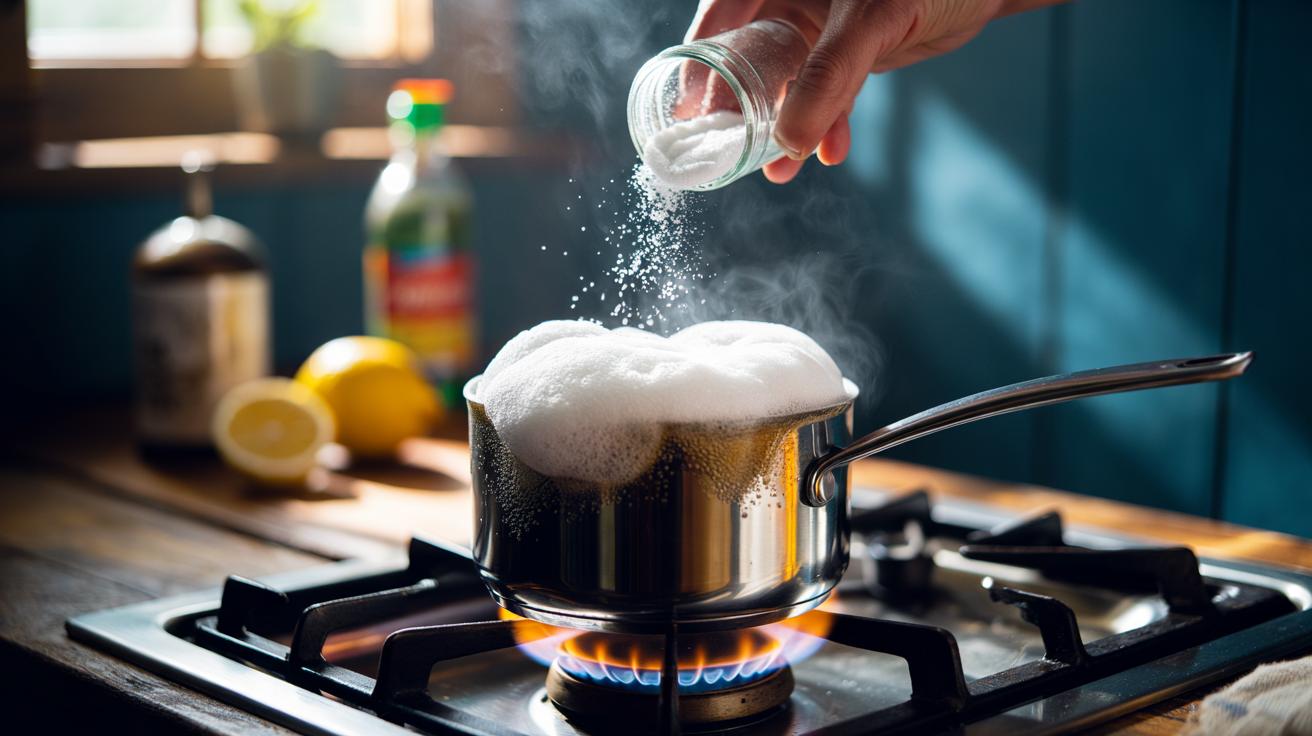
As the solution approaches a rolling boil, mechanical agitation joins chemistry. Rising bubbles bump against carbonised patches, nudging edges free. Some bicarbonate gradually converts to carbonate at high heat, nudging alkalinity further and improving the degreasing effect. If you add a splash of acid after turning off the flame, you get instant CO₂ foam that scurries into cracks, expanding and collapsing like micro-plungers. Think of it as controlled fizz that pushes loosened debris towards the surface. Foam isn’t just theatre; it’s movement, and movement dislodges.
The visible result is quick: cloudy water, flecks of brown, a cleaner base metal peeking through. Not magic. Just shrewd chemistry and heat working in tandem.
Step-By-Step: The Fast Foaming Clean
Scrape out loose bits first. Fill the pot with enough water to cover the worst of the residue, add 1 tablespoon of baking soda per litre, and bring to a lively simmer or gentle boil for 5–10 minutes. Stir occasionally with a wooden spoon to encourage circulation. Switch off the heat. Sprinkle a little extra bicarbonate directly onto the crusty areas, then add a modest splash of vinegar or lemon juice. Foam blossoms fast. Do not add vinegar while the pot is at a rolling boil—you want action, not splatter.
Let the fizz subside for 2–3 minutes. Use a silicone spatula or a non-scratch pad to sweep up the softening film; it should slide rather than fight back. Rinse, reassess, and repeat the simmer if necessary for severe burnt-on patches. For everyday cleanup, the first go usually does it. Safety matters: keep hands out of steam, crack a window, and take care with aluminium or thin copper—limit time in alkaline solution to avoid dulling. Short, hot, and controlled beats long, harsh, and hopeful.
| Item | Guideline |
|---|---|
| Ratio | 1 tbsp baking soda per litre of water |
| Boil Time | 5–10 minutes, heat off before acid |
| Acid Boost | 1–2 tbsp vinegar or lemon for foam |
| Best For | Starch, milk scorch, polymerised oils |
| Tooling | Silicone spatula, non-scratch pad |
Why It Works on Burnt-On Starches, Proteins, and Oils
Messes differ, but bicarbonate meets them where they live. Starches (think pasta water rings and rice scorch) absorb alkaline liquid, swell, and lose cohesion, so sheets of gunk detach in satisfyingly large pieces. Milk proteins and eggy films denature further in warm alkali, breaking hydrogen bonds that made them cling. Polymerised oils—those gummy, amber layers—are coaxed into emulsions as the alkaline bath encourages fatty acids to unhook and disperse into the water.
Heat keeps viscosity low so the solution penetrates edges and pores. The later CO₂ foam from adding acid after the boil creates a wave of micro-bubbles. As they form and burst, they tug on loosened fragments and lift them. Foam acts like a legion of tiny jackhammers, only gentler and far more controllable. There’s also a wetting effect: bicarbonate reduces surface tension slightly, helping the liquid slide under lacquered grime. The combined chemical and physical action explains why this method works faster than a cold soak with washing-up liquid, yet remains kinder than abrasive scouring that can haze steel.
When To Skip the Soda Boil and Alternatives
Not every pot loves an alkaline spa day. Bare or thin aluminium can tarnish if left in strong alkali too long; use shorter boils and avoid aggressive scouring. Tin-lined copper? Keep it gentle and brief. Non-stick (PTFE) coatings tolerate mild alkalinity, but high heat and hard pads will shorten their life—stick to a warm soda soak rather than a boil. Seasoned cast iron is the big caveat: boiling with baking soda can strip seasoning. If you cherish that patina, skip the soda boil.
Alternatives are simple. For caramel or sugar burns, hot water plus time works—then a dash of washing-up liquid for glide. For heavy dairy scorch, simmer plain water first, then add a teaspoon of bicarbonate and let it sit off-heat. For limescale rims in kettles or pans, use citric acid or vinegar without soda to avoid neutralising your cleaner. Stubborn polymerised grease on stainless? A brief soak with an oxygen-based cleaner (sodium percarbonate) followed by a rinse restores shine. Choose the chemistry that matches the mess, not the other way round.
In practice, the baking soda boiling pot grime remover earns its keep because it combines speed, safety, and results. A handful of pantry powder, some heat, and optional fizz, and the worst kitchen accidents become recoverable. It feels thrifty. It looks dramatic. And on stainless steel and enamel, it’s remarkably consistent. Let the liquid do the labour while you mind the steam. The next time dinner clings on for dear life, will you reach for harsh abrasives—or give chemistry, heat, and a touch of foam a chance to set your pans right?
Did you like it?4.6/5 (26)