In a nutshell
- 🐶 Bicarbonate of soda is vet-approved for carpets: it neutralises odours via mild alkalinity and adsorption rather than masking, is gentle on most fibres, and should be used with pets out and good ventilation.
- 🧹 Method that works: blot, vacuum, sprinkle ~40–60 g/m², work in lightly, allow a dwell time of 3–12 hours, then slow vacuum with a HEPA machine; repeat if needed and avoid essential oils or acid mixes.
- 🧪 For urine and set-in smells: use an enzyme-based cleaner first to digest organics and uric acid crystals, let dry completely, then apply bicarbonate; patch-test wool and watch for underlay contamination.
- ⚠️ Prevention and safety: weekly HEPA vacuuming (twice for heavy shedders), prompt accident response, litter/training upkeep, vet checks for new accidents, remove pets during treatment, and empty the vacuum outside.
- 🛠️ Call professionals if odours persist—underlay or subfloor may be saturated; pros can lift sections, replace pads, perform hot-water extraction, and apply odour-sealing primers; bicarbonate is the reliable first line, not a universal cure.
Pet smells cling to carpets. They linger in a way that feels personal, even a bit embarrassing, and they outlast every scented spray in the cupboard. Vets, who see the problem from the source, often recommend something unglamorous yet brilliantly effective: a simple bicarbonate of soda sprinkle. It’s cheap. It’s safe for most households. And it works because it neutralises what the nose actually detects, not just the air above it. Used correctly, bicarbonate can erase pet odours from carpets for good. Here’s the science, the method, and the pro-level tweaks that turn a pantry staple into a dependable, vet-approved odour fix.
Why Bicarbonate Works on Pet Odours
Pet odours are complex. They’re a mix of fatty acids, urine salts, bacterial by-products, and moisture that migrates deep into pile and backing. Bicarbonate of soda tackles this on two fronts. As a mild alkaline buffer, it helps neutralise acidic molecules that register as sharp, sour smells. At the same time, its crystalline structure offers high surface area, which means it can adsorb volatile compounds and hold them until you vacuum them away. It doesn’t perfume the room; it removes the chemistry that causes the stink.
There’s a practical bonus: bicarbonate remains dry during use, so it won’t drive stains deeper by capillary action, a risk with over-wetting. It’s also non-bleaching and, in normal amounts, safe on most synthetic carpets and many wool blends. The caveat is dust: animals and people with respiratory sensitivities may react to very fine powders. Always keep pets and children out of the room while the powder sits, and ventilate. Compared with sprays that mask odours or oxidisers that can fade fibres, bicarbonate offers a gentle, targeted route to truly fresher carpets.
The Vet-Approved Sprinkle Method, Step by Step
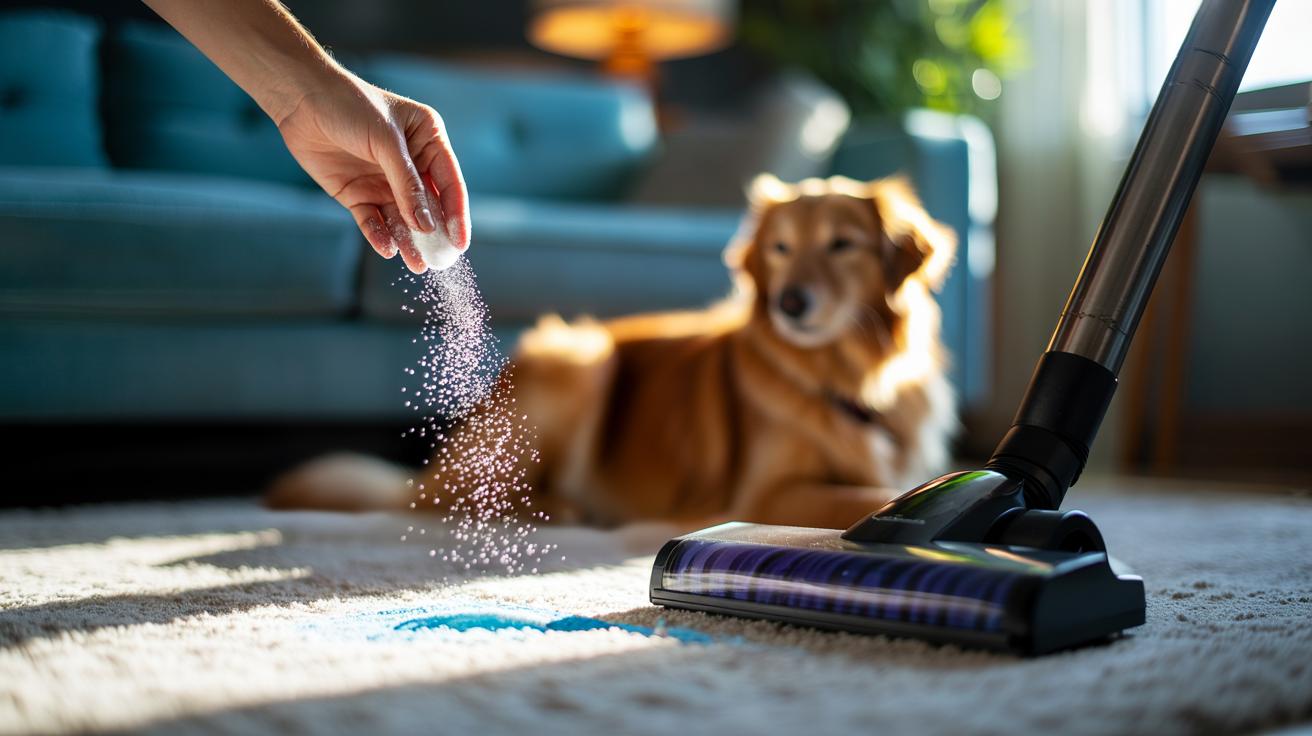
Start dry. Blot any recent accident until the towel lifts no more moisture. Then vacuum thoroughly to remove hair and grit; odour molecules cling to debris, so this step matters. Sprinkle bicarbonate of soda generously across the affected area, creating a thin, even veil rather than dunes. Work it lightly into the pile with your fingertips or a soft brush—no scrubbing—so it reaches the zones where odour compounds live. Leave it undisturbed long enough to do the chemistry: at least 3 hours, ideally overnight for stubborn smells.
When time’s up, vacuum slowly on the highest safe setting with a clean filter. Two passes at different angles help lift powder from the base of the pile. If a faint smell persists, repeat once. Resist the urge to add essential oils; they can be irritants for cats and dogs. A light, optional twist: mix one part bicarbonate with one part plain cornflour to improve flow on dense pile, especially in damp weather. Never mix bicarbonate directly with acidic liquids on carpet; fizzing seems satisfying, but the moisture can push residues into the underlay.
| Item | Amount per sq m | Dwell Time | Purpose | Notes |
|---|---|---|---|---|
| Bicarbonate of soda | 40–60 g | 3–12 hours | Neutralise and adsorb odours | Patch-test on wool; keep area ventilated |
| Soft brush (optional) | Light agitation | — | Distribute powder into pile | Do not scrub; avoid fuzzing fibres |
| HEPA vacuum | 2 slow passes | — | Remove powder and trapped smells | Empty bin after use; check filters |
Tackling Stubborn Urine Spots and Set-In Smells
Urine is tricky. Its urea breaks down into ammonia, while uric acid crystals bind deep in fibres and underlay. For dried-in stains, first use an enzyme-based cleaner designed for pet accidents to digest the organic matter. Apply as directed, blot gently, and allow it to dry fully. Only then bring in bicarbonate. Sprinkle, rest, and vacuum as per the method above. This two-step approach—enzymes, then bicarbonate—mirrors what many vet clinics suggest for kennels and mats. Remove the source, then remove the smell.
On wool, always patch-test; wool is acid-loving and can react unpredictably to strong alkalinity, though bicarbonate is mild. If you suspect the underlay is contaminated, lift a corner or call a professional; persistent dog or cat urine can wick from the pad every time the room gets humid. For recurring spots, place a small fan to keep air moving while bicarbonate sits. Dry air speeds adsorption and prevents microbial bloom. Repeat applications are fine—safe and cumulative—until the nose says job done.
Prevention, Safety, and When to Call the Pros
Odour control begins with routine. Vacuum weekly (twice if you have shedders) using a HEPA-filtered machine to capture dander that feeds bacteria. Deal with accidents immediately: blot, then enzyme, then, once dry, bicarbonate. Keep litter trays pristine and accessible; check puppies’ or seniors’ toilet schedules; rule out medical causes of new accidents with your vet. Healthy habits make every sprinkle more effective. For safety, remove pets while powder rests, avoid airborne plumes, and empty the vacuum outside afterwards, especially if anyone in the home has asthma.
Sometimes you need reinforcements. If odours survive multiple cycles, the underlay or subfloor may be saturated. Professionals can lift sections, treat or replace pads, and use hot-water extraction with rinse agents balanced for wool or synthetics. They’ll also deploy odour-sealing primers on subfloors where needed. Reserve oxidising agents or ozone treatments for specialist use; misapplied, they can damage fibres or aggravate lungs. The beauty of bicarbonate is its simplicity, but recognising its limits ensures you never chase a smell for months.
In a world of flashy sprays and perfumed powders, the humble bicarbonate of soda quietly does the heavy lifting, leaving carpets genuinely fresher and homes calmer. It’s frugal, kind to fibres, and, when paired with enzymes and good housekeeping, a match for even the most stubborn pet odours. The real magic is consistency: apply it well, let it work, then vacuum like you mean it. Will you try the vet-approved sprinkle tonight—or adapt the method to your home’s trickiest trouble spot and share what worked best for you?
Did you like it?4.6/5 (23)