In a nutshell
- 🧪 The dryer sheet works via anti-static chemistry and cationic surfactants; its soft nonwoven texture lifts grit and fingerprints, reducing dust resettling and preventing smears.
- 🧭 Use a used dryer sheet dry, sweep in overlapping strokes, add a breath of moisture for spots, keep minimal pressure, then buff lightly for crisp clarity.
- ⚠️ Avoid excess water, Do not mix with ammonia or alcohol, protect silvered edges, spot-test coatings, and pre-dust very dirty glass to sidestep streaks.
- 🔄 Compare tools: dryer sheet for dust and fingerprints; microfibre for stubborn smears; paper towels risk lint. Balance New vs used sheets to limit residue and finish with an optional microfibre buff.
- ✨ Expect fast, tidy results: static reduction keeps mirrors cleaner longer, delivering smear-free clarity with a simple routine—dry pass, targeted lift, final buff.
It sounds like a hack from the laundry basket, yet the humble dryer sheet can polish a bathroom mirror to newsroom-ready clarity. The trick lies in texture and chemistry. Its soft nonwoven fibres lift grit gently, while conditioning agents coax greasy fingerprints to release instead of smear. You don’t need sprays, just patience and a light touch. Static reduction keeps dust from boomeranging back. In small bathrooms or rented flats where streaks show under harsh LEDs, this approach is fast, tidy, and surprisingly reliable. Below, we break down why it works, how to do it cleanly, and when to choose a different cloth.
Why Dryer Sheets Remove Grime Without Streaks
Dryer sheets are engineered around cationic surfactants and anti-static agents. On clothing they tame cling; on glass they do something similar, settling a whisper-thin layer that neutralises static so dust won’t resettle instantly. That tiny reduction in charge is the difference between a mirror that stays clear and a mirror that seems to magnetise fluff minutes after you’ve cleaned it. The fabric itself is a soft nonwoven web, which glides across glass without scoring it. Crucially, the fibres are slightly textured. They grab micro-particles the way a lint brush snags fibres, lifting grit that would otherwise smear when pressed by a wetter cloth.
The chemistry helps with oils. Cationic molecules are mildly lipophilic, so they coax sebum and hand cream to detach from the surface rather than skate across it. Use a pre-used sheet if you can: it carries fewer conditioners, reducing any risk of residue while preserving anti-static benefits. Work dry first, then, for stubborn spots, very lightly dampen a corner. One pass dislodges, one pass collects, one pass buffs—minimal pressure, maximum clarity. Unlike paper towels, which can shed lint, dryer sheets leave the glass crisp and clean.
Step-by-Step Method and Common Pitfalls
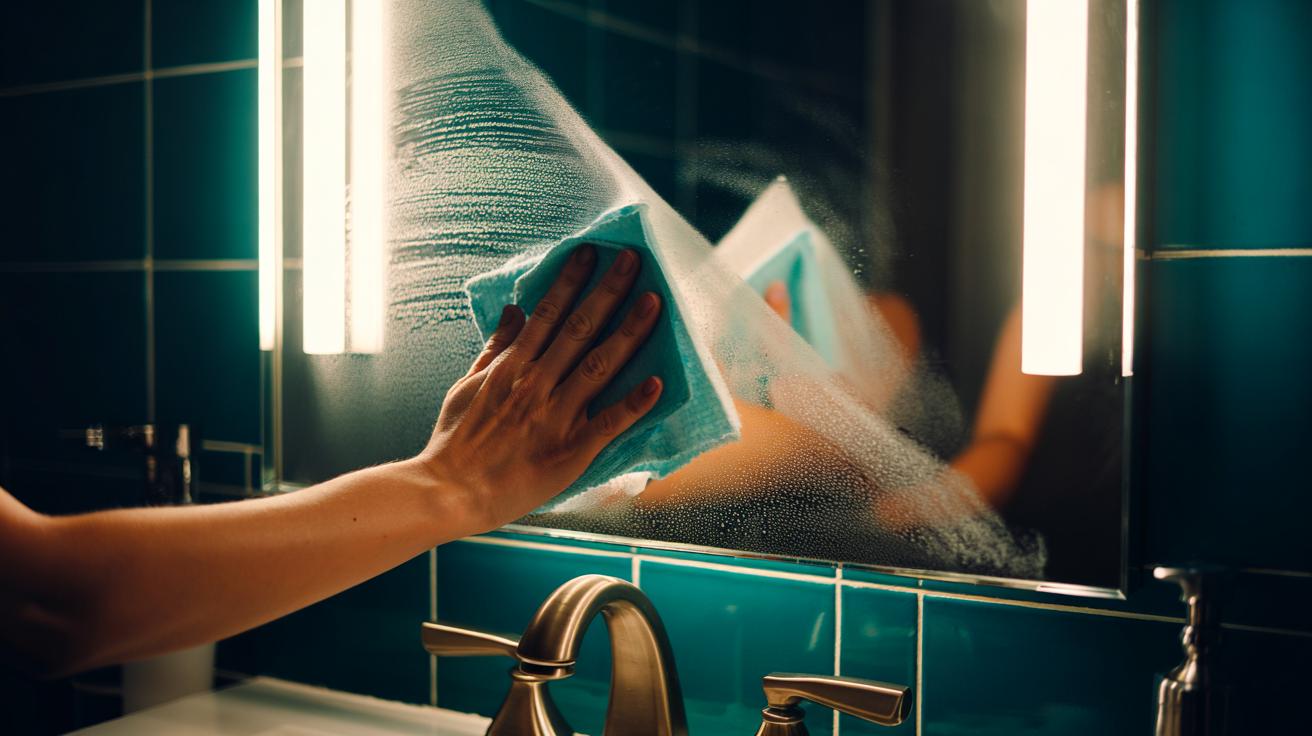
Start with a dry, used dryer sheet. Hold the sheet flat and sweep from top left to bottom right in overlapping strokes, allowing the fibres to pick up dust rather than pushing it around. Pause to check against the light; shallow angles reveal smears before they become stubborn. For makeup splatters or toothpaste flecks, breathe lightly onto the patch to add a hint of moisture, then use a corner of the sheet to coax it free. Keep pressure low: let the texture, not force, do the work. Finish with a clean, dry edge of the sheet to buff the glass until it snaps into focus.
Avoid these traps. Don’t drench the mirror; excess water dilutes the conditioning agents and encourages streaks. Do not pair the sheet with ammonia or alcohol cleaner on the same pass—chemistry clash can leave a film. If your mirror has an aged, silvered edge, keep moisture away from the backing to prevent tarnish creep. For anti-glare or specialty coatings, spot test in a corner first. If a room is very dusty, pre-dust with a feather duster or a barely damp microfibre so the dryer sheet isn’t overwhelmed. Small, deliberate strokes beat random swipes every time for a smear-free finish.
Comparing Materials: Dryer Sheet vs Microfibre and Paper
Every material has a signature. The dryer sheet excels at dust deterrence thanks to anti-static power; microfibre wins on deep polishing with no added chemistry; paper towels are fast but prone to lint and streaks. The best choice depends on the mess. For a post-shower haze and fingerprints, the dryer sheet is fast and clean. For heavy toothpaste or hairspray overspray, microfibre plus a mist of water or glass cleaner may be superior. Think of the dryer sheet as your first responder, not your only tool. Use it to prevent re-soiling, then elevate shine with a quick microfibre buff if you want that editorial gleam.
| Material | Primary Action | Best For | Streak Risk | Aftercare |
|---|---|---|---|---|
| Dryer Sheet (Used) | Anti-static lift; gentle oil capture | Fingerprints, light haze, dust | Low | Optional quick buff |
| Microfibre Cloth | Mechanical polish; capillary uptake | Stubborn spots, heavy smears | Very low | Wash separately, no fabric softener |
| Paper Towel | Absorption; fast wipe | Spills, quick clean-up | Medium to high | Follow with microfibre |
One more nuance: new vs used sheets. Fresh sheets hold more conditioners, which can help on stubborn grease but risk faint film under bright light. Used sheets balance grip and cleanliness. If in doubt, test a small area, then scale up once you’re happy with the reflectivity.
What begins as a laundry-room hack becomes a tidy, repeatable routine: dry pass for dust, targeted lift for marks, quick buff for brilliance. The secret is in the synergy of soft texture and anti-static chemistry, delivering a mirror that stays cleaner longer and resists the tell-tale comet tails of poor wiping. It’s thrifty, fast, and kinder to your surfaces than frantic scrubbing. Will you keep a used dryer sheet near the bathroom sink for your next touch-up, or will you pit it against microfibre in your own side-by-side test to see which shines under your lights?
Did you like it?4.4/5 (29)