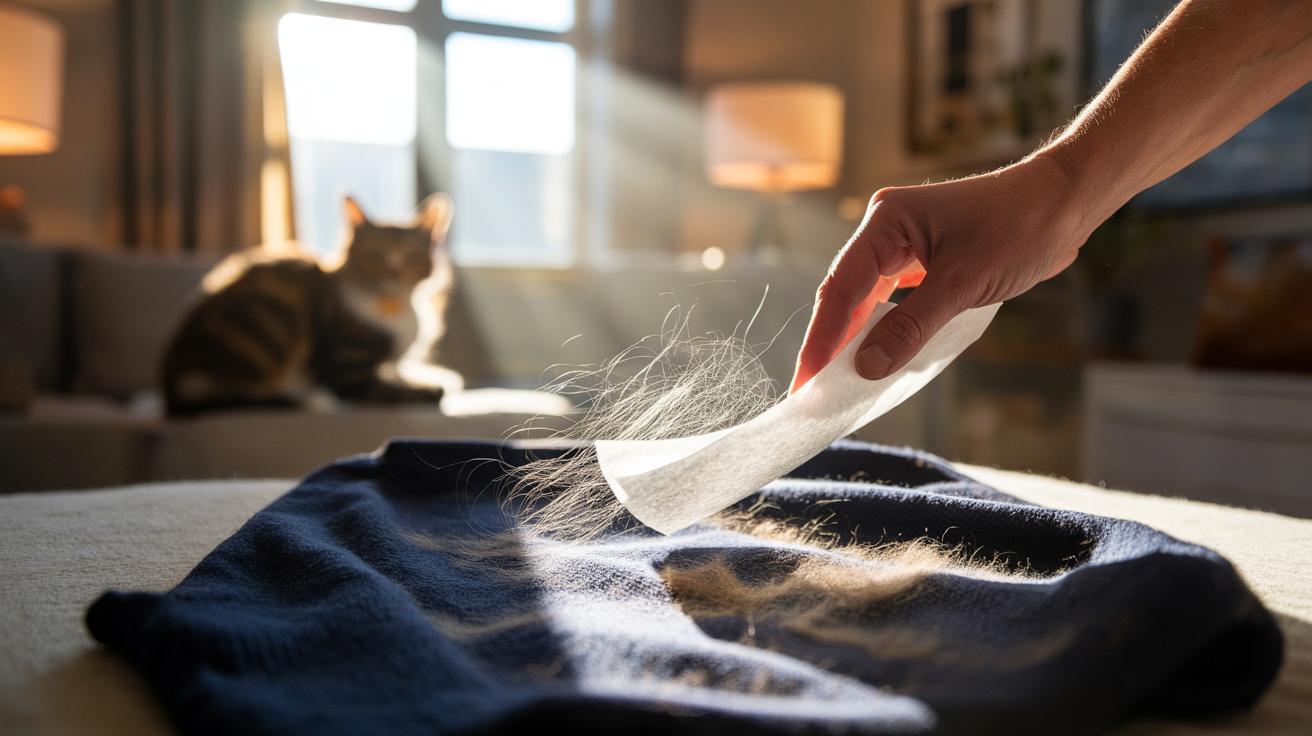
In a nutshell
- 🧼 Dryer sheets remove pet hair fast by cutting static and friction; cationic surfactants coat fibres so strands of fur detach and cling to the sheet instead.
- 🧥 How to use: keep fabrics dry, glide the sheet in long strokes with the weave, use gentle circles on high-shed spots, and on sofas work from seams outward; a 5‑minute tumble plus a sheet moves hair to the lint filter.
- 🔬 The science: high-static fabrics in the triboelectric series attract hair; quaternary ammonium compounds neutralise static cling while the sheet’s texture snags loosened strands.
- ⚠️ Caveats: avoid on flame-resistant or technical gear, pick unscented if sensitive, test hidden hems, keep products away from pets, and fold the sheet to reuse clean surfaces.
- 🌱 Eco-friendly alternatives: wool dryer balls reduce static, a microfibre cloth plus anti-static spray performs similarly, and a slightly damp rubber glove corrals hair before a final sheet pass.
Pet owners know the scene: a pristine jumper becomes a magnet for dander as soon as the dog curls up or the cat strolls by. Enter the humble dryer sheet, a surprising pet hair remover that’s stunning clean freaks for its speed and simplicity. Swipe, dab, or tumble—fur loosens and vanishes. The trick isn’t magic, it’s materials science, and it works on clothes, upholstery, lampshades, even car seats. In seconds, static is tamed, fibres turn slick, and stray hairs leap to the sheet. If your lint roller is empty or your vacuum is buried in a cupboard, this pocket-sized fix is the practical shortcut you’ll actually use.
How Dryer Sheets Pull Fur From Fabric
When you rub a dryer sheet over a textile, two things happen. First, a thin film of cationic surfactants coats the fabric’s fibres, reducing friction so embedded strands of pet hair lose their grip. Second, that coating helps neutralise charge imbalances created by rubbing—what we know as static cling. The result is counterintuitive yet visible: hair detaches and either clings to the sheet or falls away, ready to be brushed off. The sheet acts as both an anti-static agent and a soft brush, so the fur leaves the garment rather than burrowing deeper.
Different materials play along differently. Knits heavy with microfibres or acrylic build more static and shed more, so the effect appears dramatic. Smooth cotton releases quickly; wool may need a gentler touch. A single sheet often covers a whole outfit, but high-shed situations—think moulting season—benefit from a fresh one mid-clean. The fabric-softening film also gives sleeves and sofa arms a slight glide, so the next wave of fluff doesn’t stick as aggressively. That’s why some people tuck a spare sheet in handbags and glove boxes: quick swipe, instant reset.
Step-By-Step: Use This Trick on Clothes and Sofas
Start dry. Moisture cancels the anti-static edge and smears the softening agents. Lay the garment flat, then smooth the dryer sheet in long, light strokes following the weave. Switch to small circular motions on high-shed zones—shoulders, cuffs, the belly of jumpers where cats nap. Avoid pressing hard; let the chemistry do the heavy lifting while the texture lifts the fur. On upholstery, work from seams and crevices outward, corralling hair to one side before picking it up with a clean section of the sheet.
For laundry-day rescue, toss one sheet in the tumble dryer with a hairy throw or cushion cover on a cool setting for five minutes. The combination of airflow and anti-static coating frees clingy hairs, which then get trapped by the lint filter. Empty that filter immediately—clogged screens lose suction and re-deposit fluff. Tip for black fabrics: finish with a quick once-over of a fresh sheet to remove any pale lint. For delicate items, wrap the sheet over your hand like a mitt and dab gently. If in doubt, test a hidden hem first.
What Science Says About Static and Fibres
Static arises when two surfaces rub, swapping electrons and leaving one positively charged and the other negative. Fabrics such as polyester sit high in the triboelectric series, so they eagerly hoard charge; hair and fur interact strongly with them. Dryer sheets use quaternary ammonium compounds and lubricants that both neutralise excess charge and add a low-friction finish. That’s the double win: no electrostatic clamping, less mechanical grip. Remove the charge and you remove the cling, which is why hair suddenly “jumps” away.
There’s more at play. The sheet’s slightly textured surface creates micro-snag points, catching loosened hairs like a reversible brush. At the same time, softened fibres stop acting like Velcro. On a microscopic level, fewer fibre hooks are available, so stray hairs can’t reattach. Some users notice a faint fragrance; those perfume molecules don’t aid removal, but they do signal where you’ve wiped. In lab terms, you’re engineering a lower-energy surface: hairs prefer the path of least resistance, which—thanks to the sheet’s coating—becomes the sheet itself.
Costs, Caveats, and Eco-Friendly Alternatives
For the price of a coffee, a box lasts weeks. A single dryer sheet can handle multiple garments, especially if folded to present fresh faces as it loads up with fluff. Still, a few caveats matter. Skip dryer sheets on flame-resistant sleepwear and technical gear; the softening film can impair performance finishes. Scented varieties may irritate people or pets with sensitivities, so choose unscented or plant-based options. If waste bothers you, consider “preloading” a reusable cloth with a spritz of anti-static spray for a similar effect on sofas and car seats.
| Scenario | How to Use | Result | Notes |
|---|---|---|---|
| Clothes on the go | Light strokes, top to bottom | Hair lifts fast | Keep a sheet in your bag |
| Sofa cushions | Work from seams outward | Fur gathers, easy pickup | Vacuum after for dust |
| Tumble refresh | 5 minutes with one sheet | Hair moves to lint screen | Clean filter immediately |
| Eco-leaning swap | Microfibre cloth + anti-static spray | Comparable results | Fragrance-free available |
Prefer a greener path? Wool dryer balls reduce static through physical separation and airflow; add a drop of pet-safe essential oil to one ball if you like scent. A slightly damp rubber glove swept in one direction also corrals hair, then the dryer sheet finishes the fine lint. Test any method on a hidden corner, and keep products away from curious chewers. However you choose to de-fluff, the key principles remain: reduce static, reduce friction, and collect efficiently.
Clean freaks love a habit they can rely on. A single sheet, a few strokes, and the cardigan is camera-ready again. The science is simple, the payoff instant, and the routine easy to share with housemates, partners, even teens racing for the door. Keep one on the hallway console; another beside the sofa. Small tricks change messy mornings into manageable ones. Which fabrics or furry trouble spots do you want to conquer first, and how will you put this quick, low-effort hack to the test in your home this week?
Did you like it?4.3/5 (29)