In a nutshell
- 🧼 Dryer sheets lift stubborn soap scum fast by using positively charged cationic surfactants (quats) that disrupt mineral‑grime bonds; warm water and brief contact time do the heavy lifting.
- ⏱️ Quick method: dampen, wipe in overlapping strokes, let sit 60–90 seconds on tough spots, rinse thoroughly, then buff dry; expect a 2–4 minute routine for most showers.
- 🪟 Best surfaces: shower glass, chrome, acrylic/fibreglass, and glazed tile; avoid or patch‑test natural stone, unsealed grout, and matte black fixtures to prevent residue or dulling.
- 🧤 Safety & eco: choose unscented sheets, ventilate, wear gloves if sensitive, and never mix with bleach or acids; reuse sheets or try a microfibre with a dash of diluted fabric softener for a greener twist.
- 🚿 Maintenance tip: finish with a quick rinse, squeegee, and occasional light wipe to slow build‑up—consistency beats intensity and helps you skip harsh descalers.
There’s a household hack doing the rounds that sounds suspiciously like wishful thinking: wipe away stubborn soap scum and cloudy film with a single dryer sheet, no scrubbing required. Yet the trick stands up to scrutiny. It’s quick. It’s oddly satisfying. And it rests on straightforward chemistry that bathroom cleaners have relied on for years. The sheet’s cationic softeners loosen mineral-bonded grime; the fabric’s gentle texture helps lift it. Add warm water and a few minutes of contact time and the residue releases. It isn’t magic; it’s chemistry meeting convenience, turning an annoying chore into a two-minute turnaround.
What Makes Dryer Sheets Dissolve Soap Scum
Soap scum is stubborn because it isn’t just “soap”. It’s a hard film of calcium and magnesium salts bound to body oils and detergent residues, often reinforced by limescale. Glass and acrylic surfaces hold a static charge that encourages the film to cling. Dryer sheets are loaded with cationic surfactants—the same anti‑static agents that tame laundry—typically quaternary ammonium compounds (“quats”). These positively charged molecules are drawn to negatively charged residues, disrupting the bond between scale and surface. Once that bond is weakened, even light wiping can lift the film without scouring or harsh alkalis.
The sheet’s non-woven fibres add a mild, fabric-soft abrasion that agitates the loosened scum without scratching glass or glazed tile. A little warm water is crucial: it softens fatty deposits and improves surfactant mobility, accelerating the breakaway. New sheets contain more conditioner for faster action; used sheets still work, delivering control with fewer perfumes. Either way, the result is the same—less elbow grease, more glide. The clever bit is contact time: leave the damp sheet on the worst patches for a minute and the film simply lets go.
Step-by-Step: Minute-By-Minute Method
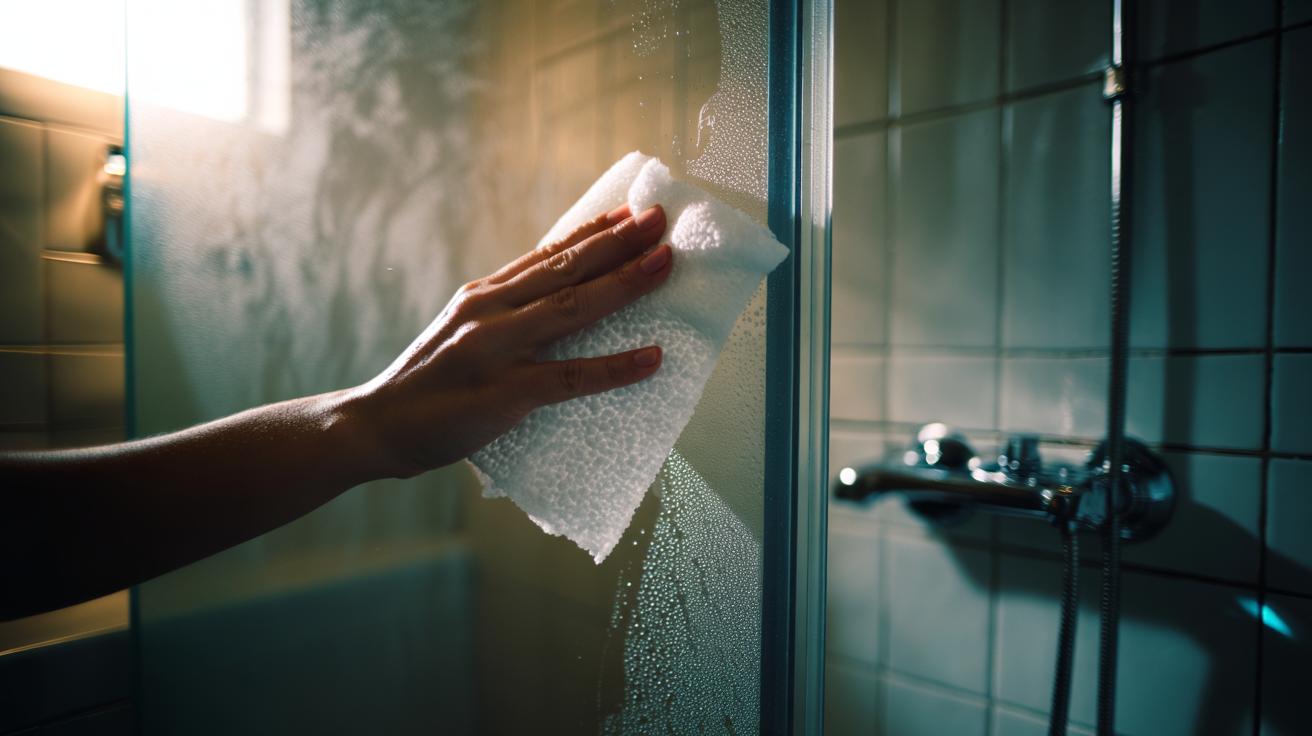
Start simple. Run warm water over the dryer sheet until damp but not dripping. Wipe the sheet across the glass door or taps in slow, overlapping strokes. No pressure. Just contact. In corners or along the waterline, press the sheet flat and let it sit for 60–90 seconds. This brief dwell time is the difference between effort and ease.
Return with the same sheet and make small circles over hazy patches. You’ll see a slick sheen appear as the cationic surfactants break the residue. For heavy buildup, fold the sheet to expose a fresh face and repeat. Then rinse thoroughly with warm water to carry away the loosened film and any conditioner left behind. Finish with a dry microfibre to polish. The glass clears; the taps pop. Expect a two- to four-minute routine for most showers, not a weekend battle.
Two additional tips save time and streaks. First, try an unscented or used sheet if you’re sensitive to fragrance or wary of smears; it still contains enough active agents to work. Second, follow with a quick squeegee pass after each shower to slow future build-up, extending that just-clean look for days.
What to Use It On (And What to Avoid)
This hack shines on smooth, sealed, non-porous surfaces. Think shower glass, chrome fixtures, acrylic or fibreglass trays, glazed ceramic tile, and stainless steel splashbacks. The sheet glides, the residue releases, and a rinse completes the job. Where it falters—or risks harm—is porous or reactive stone, matte-coated metals, and some delicate finishes. When in doubt, test a discreet corner first and check for any darkening, residue, or loss of sheen.
| Surface | Safe to Use? | Notes |
|---|---|---|
| Shower glass, mirrors | Yes | Excellent on haze; rinse and buff dry to avoid streaks. |
| Chrome, stainless steel | Yes | Wipe with grain; rinse to remove conditioner film. |
| Acrylic, fibreglass | Yes | Gentle action; avoid gritty particles trapped on sheet. |
| Natural stone (marble, limestone) | No | Porous and sensitive to residues; use pH‑neutral stone cleaners. |
| Unsealed grout, matte black fixtures | Caution | Patch test; possible discolouration or film. |
Remember: the sheet is a helper, not a cure-all. Hard-water lines etched into glass need a specialist descaler or polish. If a mark doesn’t shift after two passes and a rinse, switch tactics rather than scrubbing harder.
Safety, Cost, and Eco-Savvy Swaps
It’s a thrifty trick. One dryer sheet often cleans an entire cubicle; a used sheet from your laundry is effectively free. Rinse well and you’ll avoid any lingering film. Concerned about odours? Choose low‑fragrance or unscented sheets and ventilate the bathroom. Those with skin sensitivities should wear lightweight gloves, as quats can be mildly irritating. Never mix this method with bleach or acidic descalers in the same session; clean, rinse, then switch products.
For a greener angle, look for plant‑based, biodegradable sheets or reuse a single sheet several times until it’s spent. You can mimic the effect by dampening a microfibre cloth with a teaspoon of diluted fabric softener, though the non‑woven sheet’s texture does give a slight advantage on glass haze. To prevent rapid re‑build, finish with a quick water rinse and a final buff. Small steps, big results. Consistency beats intensity—light, regular wipes keep heavy scrub-jobs off your weekend.
The dryer sheet hack earns its reputation because it leverages solid chemistry to do the heavy lifting while you barely lift a finger. It rescues cloudy glass, brightens taps, and shortens cleaning time, all with a tool you likely own already. The key is gentle application, brief dwell time, and a thorough rinse. That’s it. Simple, cheap, effective. Turn the trick into a weekly habit and you may never need a harsh descaler again. Ready to test it on your shower, or will you try it first on a tap to watch the film slide away in seconds?
Did you like it?4.6/5 (22)