In a nutshell
- 🌿 Adopt green microbreaks: keep a small plant within reach and give it one focused minute twice daily to lower stress, steady breathing, and reset a frazzled nervous system.
- ⏱️ Practice the 60-second Tend-and-Attend—Look–Touch–Breathe–Adjust—a quick, sensory ritual that engages gentle attention and compounds benefits with consistency.
- 🧠 Grounded in Attention Restoration Theory and Stress Recovery Theory, plus behavioural activation, these micro-doses of nature restore focus and dampen physiological arousal.
- 🪴 Choose low-fuss plants—pothos, snake plant, spider plant, ZZ, peace lily, or aromatic rosemary/mint—for tactile leaves, visible growth cues, and forgiving care.
- 🔁 Make it stick with habit stacking, smart placement, a tiny watering jug, and ultra-light tracking, creating a reliable sensory return point that boosts mood and productivity.
There is a deceptively simple way to steady your mood without an app, a supplement, or a pricey gadget: keep a small plant within reach and give it one minute of your attention, twice a day. Psychologists call these green microbreaks. They are tiny but restorative. The ritual is quick, tactile, and quietly absorbing. It anchors your breathing, slows your pulse, and nudges your focus away from rumination. Sixty seconds can be enough to reset a stressed nervous system. In a country where many of us work under strip lights and screen glare, this easy indoor plant trick offers a low-cost, evidence-backed buffer against burnout.
The 60-Second Tend-and-Attend Ritual
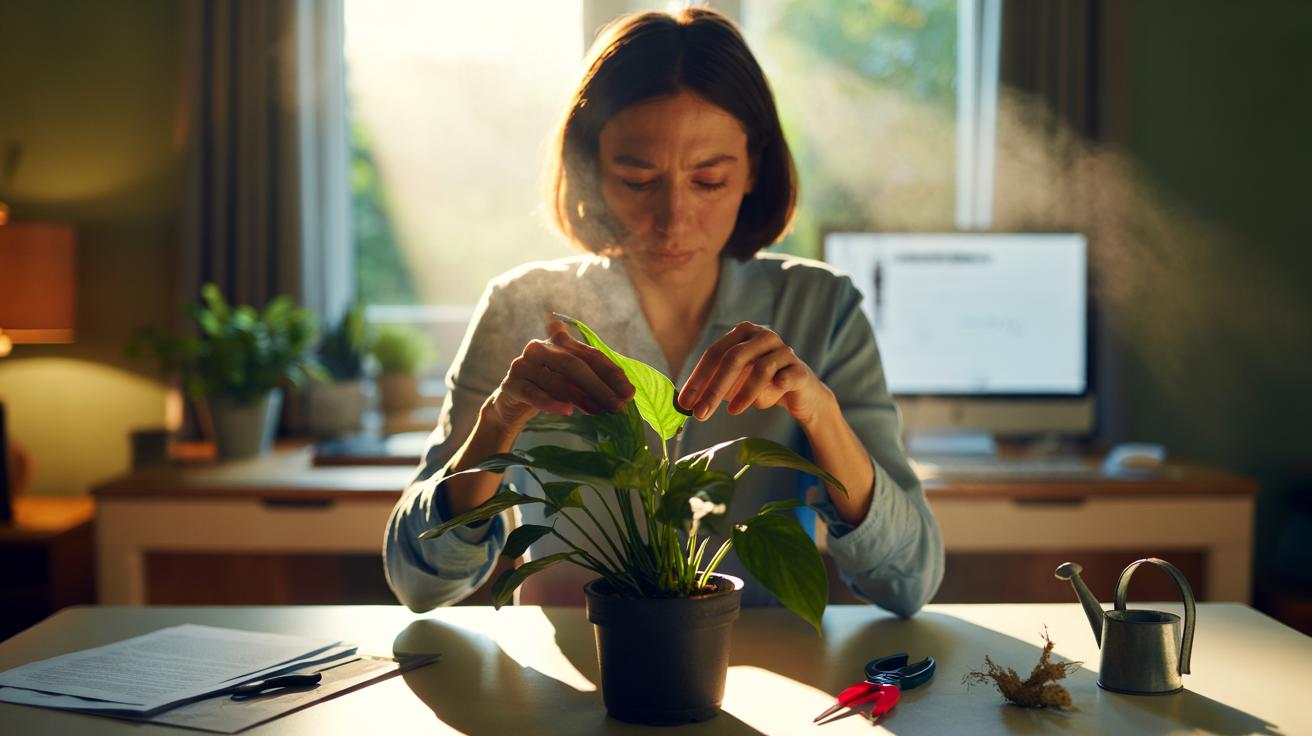
Here’s the core habit. Place a small, resilient plant on your desk or kitchen counter. Twice daily, pause for one minute and perform a four-part routine: 1) Look closely at the leaves and new growth; 2) Touch the soil or a leaf to feel texture and temperature; 3) Breathe a slow 4-6 count while you look; 4) Adjust one tiny thing—rotate the pot, snip a brown tip, or top up water. That’s it. No elaborate journaling. No tech. This micro-ritual creates a reliable sensory cue that tells your brain, “You are safe; you can soften”. It’s brief enough to fit between emails, yet varied enough to keep your attention.
Why it works: the act of tending uses gentle directed attention, which research shows can replenish tired cognitive resources. The soft-fascination of a leaf unfurling or a pattern of variegation engages curiosity without demanding effort. Touch gives grounding feedback. Breathing slows the sympathetic surge tied to alerts and deadlines. Over days, these micro-interactions compound, nudging sleep, patience, and task-switching in the right direction. Miss a day? No drama. Return tomorrow. Consistency beats intensity.
Why Psychologists Back Green Microbreaks
Therapists and occupational psychologists lean on two big ideas here. The first is Attention Restoration Theory: natural stimuli invite gentle fascination that restores mental bandwidth. The second is Stress Recovery Theory: views of greenery dampen physiological arousal. Office studies in Japan report that even a few minutes of gazing at a desk plant can lower pulse rate and anxiety in workers. UK research from the University of Exeter links modest indoor greenery to better mood and sharper productivity. Short, regular nature doses often outperform rare, heroic wellness efforts. That’s the quiet power of microbreaks. They fit real lives.
Clinicians also note how plants facilitate behavioural activation—small, meaningful actions that counter low mood. Watering, pruning, turning a pot toward the light: each is a tiny task with immediate visual feedback. This matters when motivation is thin. Even the act of noticing a new leaf is a micro-reward that reinforces the habit loop. Importantly, the intervention sidesteps willpower theatrics. You don’t need to “be in the mood.” You only need a minute and a leaf to look at.
Choose Low-Fuss Plants That Do the Work
Not all greenery is equal for beginners. You want plants that tolerate missed waterings, variable light, and central heating. Look for tactile leaves, visible growth cues, or pleasant scent—features that reward attention. Snake plant (Sansevieria) stands tall and stoic. Pothos trails elegantly and tells you when it’s thirsty. Spider plant produces baby offshoots—tiny wins you can see. ZZ plant thrives on neglect. Peace lily droops dramatically when dry, then springs back after a drink, a live demonstration of cause and effect. For a sensory lift, a small rosemary or mint pot offers scent on demand. Choose one plant you like, not the one the internet says is perfect. Affection fuels consistency.
| Plant | Light | Watering | Wellbeing Bonus |
|---|---|---|---|
| Pothos | Low–medium | When top inch is dry | Visible new vines encourage progress tracking |
| Snake Plant | Low–bright | Every 2–3 weeks | Architectural leaves aid calm visual order |
| Spider Plant | Medium | Weekly | Propagating “spiderettes” delivers quick wins |
| ZZ Plant | Low–medium | Every 2–4 weeks | Glossy leaves invite touch-based grounding |
| Peace Lily | Medium | Weekly | Dramatic perk-up illustrates cause-and-effect |
| Rosemary | Bright | When surface dries | Herbal scent supports mindful breathing |
Make It Stick: Tiny Design Tweaks
Habits live or die by friction. Reduce it. Put your plant within your natural sightline, ideally at a 45-degree angle to your screen. Set a small saucer and 2 dl watering jug beside it so you never hunt for tools. Tie the ritual to an existing anchor—first coffee, last email, post-lunch slump. That’s habit stacking. Behaviour that’s easy happens more often, and what happens often changes how you feel. If your desk shifts light across the day, rotate the pot a quarter turn at the same time to make the cue unmistakable.
Track how it helps without turning it into homework. A sticky note with three words—“stressed, neutral, lighter”—before and after the minute will do. Consider a Sunday leaf check: wipe dust with a damp cloth, trim a brown tip, celebrate a new shoot. If you work hybrid, keep a second plant at home to prevent habit gaps. And if you travel, choose a drought-tolerant species or a self-watering insert. The goal isn’t horticultural perfection. It’s a reliable, sensory return point when your day frays.
In an age of complex mood hacks, the humble indoor plant delivers an elegant counteroffer: touch, look, breathe, adjust. You can start today with a £6 pothos and a minute on the clock. In a week, the ritual feels natural. In a month, you’ll notice patience where there was static. Small, repeatable acts often reshape our days more than grand resolutions. Which plant will you place within arm’s reach, and what will your first 60-second Tend-and-Attend ritual look like tomorrow morning?
Did you like it?4.5/5 (29)