In a nutshell
- 💧 Crushed eggshells act as a micro-mulch that reduces evaporation, cools the soil by reflecting light, and improves water infiltration for steadier moisture.
- 🧪 Eggshells provide slow-release calcium carbonate (plus trace minerals), supporting strong cell walls and healthier roots when paired with consistent watering.
- 🛠️ Simple prep: rinse, dry, and crush; apply a thin surface layer for moisture control or blend fine powder into topsoil for long-term feeding, especially in containers.
- 🌹 Best fit plants: tomatoes, peppers, brassicas, and roses; avoid or limit for acid-lovers like blueberries and where potato scab is a risk.
- ♻️ A low-cost, low-waste practice that complements compost and regular watering, while debunking the myth that shells reliably deter slugs.
Gardeners often look for tricks that cost pennies but pay out for seasons. Crushed egg shells offer exactly that: a humble kitchen by-product that can help your beds stay damp longer and keep roots well-fed. The white shards don’t hold water like a sponge, yet they change the soil surface in clever ways that slow evaporation and improve infiltration. Over time, they add a gentle dose of calcium, a nutrient linked to strong cell walls and healthy growth. Used as a light mulch or mixed into the topsoil, egg shell mulch is tidy, sustainable, and deceptively effective. Handled correctly, shells become a water-wise ally that fits any frugal, climate-smart garden routine.
Why Crushed Eggshells Help Soil Hold Water
The magic isn’t in absorbency. It’s in physics and light. A thin scatter of crushed shells across the soil surface acts like a micro-mulch that breaks up crusting, so water doesn’t shear off during showers or hose sessions. Instead, it sinks where roots can sip it. Those pale fragments reflect heat, lowering the temperature of exposed soil on fierce summer days. Evaporation slows. Moisture lingers. Crushed shells create tiny gaps that interrupt capillary rise, the process that wicks water to the surface where it vanishes into hot air.
In heavier soils, shells add a gritty structure that helps water travel down rather than puddle and run. In sandy beds, they help curb wind-driven drying and reduce splashback that spreads diseases onto lower leaves. Do they replace compost or bark mulch? No. Think of shells as an amplifier, not a substitute, for good organic matter. Pair them with compost to improve overall moisture retention and nutrient exchange. A light, even layer — just enough to cover the brown — keeps the effect tidy and functional without smothering seedlings or blocking irrigation.
Calcium, Trace Minerals, and Root Health
Eggshells are about 95% calcium carbonate with traces of magnesium, phosphorus, and proteins. That makes them a slow, steady source of calcium, the element plants use to build robust cell walls and resilient new growth. It matters most at the growing tips, where deficiency shows up as distorted leaves or, in fruiting crops, the notorious blossom-end rot. The catch is timing. Calcium moves into plants via the water stream, so even perfect nutrition fails without consistent watering. Shells help by encouraging moisture to stay around, while gradually feeding the rhizosphere.
They won’t shift pH overnight, nor will they solve acute deficiencies within days. Powdered shells break down faster than chunky shards, especially in biologically active, slightly acidic soil. Partner them with organic matter and microbial life; both speed the slow mineral trickle. As for “egg shell tea,” the soluble yield is tiny unless the shells are ultra-fine and steeped hot for hours. It’s simpler to grind fine and apply to the top few centimetres, then water regularly. This is a long game: steady moisture plus slow-release calcium equals calmer, healthier roots.
How to Prepare and Apply Eggshells Without Smell or Pests
Start in the kitchen. Rinse shells as you cook to remove albumen that attracts pests. Air-dry in a bowl for a week, or oven-dry on a tray at a low heat for 10–15 minutes to crisp and sanitise. Brittle shells crush cleanly. Use a rolling pin for coarse mulch, or a blender for powder that mineralises faster. Finer particles deliver nutrients quicker; larger chips excel at reflecting heat and interrupting crusts.
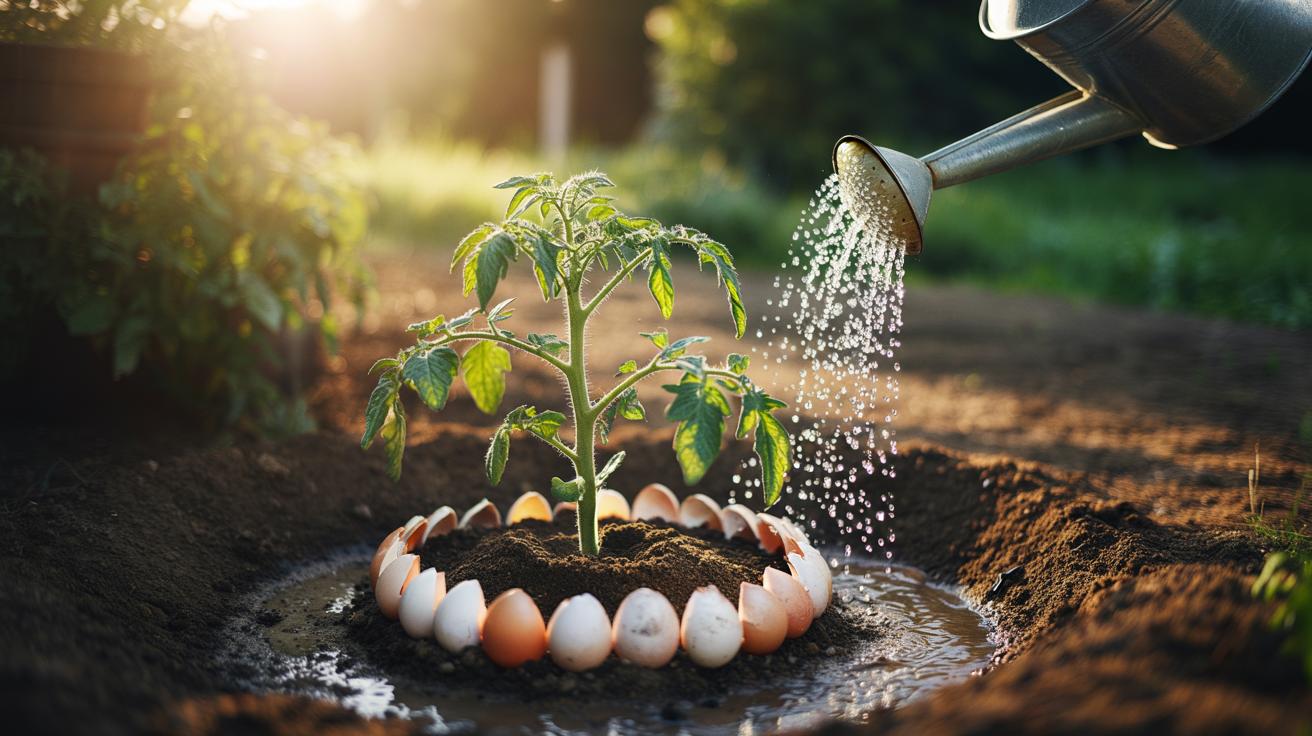
For a moisture-saving top-dress, spread a thin, even layer around plants, staying a finger-width from tender stems. For long-term feeding, mix a small handful of powder into the top 5 cm of soil or compost per planting hole. In containers, sprinkle a teaspoon across the surface every month during the growing season, then water in. Keep the look neat by covering with a veil of compost if you prefer a natural finish. Always store spare shells dry and sealed; cleanliness keeps rodents uninterested. Consistency beats quantity — little and often integrates better than dumping a bucket in one go.
Plants That Benefit — And When to Avoid Shells
Not every bed is a candidate for more calcium. Fruiting veg like tomatoes and chillies, leafy brassicas, and roses appreciate the gentle feed and cooler, slower-drying surface. Houseplants that hate soggy compost also profit from the thin reflective mulch, especially on sunny sills. But acid-lovers such as blueberries, camellias, and rhododendrons prefer low pH soils; piling on shells risks nudging their comfort zone the wrong way. Potatoes in scab-prone plots may also fare better without alkaline nudges. Match the practice to the plant and your pH.
| Plant/Crop | Benefit | Notes |
|---|---|---|
| Tomatoes, Peppers, Chillies | Slow calcium, steadier moisture | Supports blossom-end rot prevention with consistent watering |
| Brassicas (Cabbage, Kale) | Cell wall strength, cleaner surface | Combine with compost for best effect |
| Roses | Gentle calcium feed, reduced splash | Maintain a thin, neat shell mulch |
| Blueberries, Rhododendrons | Generally avoid | Prefer acidic soils; shells can drift pH upward over time |
| Potatoes | Use with caution | Skip shells if potato scab is a known issue |
One myth to park: sharp shells don’t reliably stop slugs. Use barriers or wildlife-friendly controls instead. Let shells focus on water and nutrients; they excel there.
The beauty of crushed egg shells is their quiet, cumulative power: a brighter soil surface, cooler microclimate, and a slow mineral trickle that supports resilient roots through dry spells. It’s frugal, low-waste gardening that feels almost alchemical, yet rests on simple physics and plant physiology. Start small, observe your beds, then adjust the grind and application to suit each crop. Blend shells with compost, keep the watering steady, and patience will do the rest. Which part of your garden — containers, veg patch, or borders — feels like the best testing ground for an egg shell makeover this season?
Did you like it?4.4/5 (22)