In a nutshell
- 🥚 Use eggshell calcite (Mohs ~3) to polish glazed spouts (Mohs 6–7), lifting tannin stains in seconds without scratching.
- 🔁 Step-by-step: rinse and dry shell, crush to fine grit, add with warm water, swirl 10–20 seconds, then rinse clear; avoid on silver/gilding.
- 🔬 Cleaning science: micro‑abrasion and tribology with slightly alkaline particles; pre-soak limescale with vinegar, but don’t mix vinegar during the polish.
- 🌿 Zero‑waste and frugal: no chemicals or microplastics; one shell powers many polishes—works for mugs and coffee carafes too.
- ⚠️ Practical cautions: test antiques/crackle glazes, use a light touch, store grit dry and labeled, alternate descale cycles in hard water areas.
Tea leaves a calling card. Brown crescents on a teapot spout, a dullness where there should be gleam. Old hands swear by salt, others by soda. Yet one thriftier trick shines through: eggshell. Crush it, swirl it, rinse. The calcite crystals in a shell give glazed ceramic a gentle polish that feels almost alchemical. It isn’t magic. It’s micro-abrasion balanced with chemistry. Because calcite is softer than glaze, it scours stains without biting the surface. In seconds, not hours, your pourer recovers that eggshell sheen that speaks of care, of ceremony, of a proper brew poured cleanly and without residue.
Why Calcite Works on Ceramic Stains
Your teapot’s glaze is hard. Porcelain and stoneware glazes sit around Mohs 6–7, a tough glassy skin. Eggshells, by contrast, are overwhelmingly calcium carbonate—calcite—at Mohs 3. That gap matters. The softer mineral rubs against the harder glaze, lifting tannin films and embedded grime yet sparing the surface from scratches. Think of it as a tiny, well-mannered polishing pad that knows when to stop. The abrasive quits before the glaze does, which is precisely the point.
Stains inside a spout are stubborn not because they’re strong but because they’re sheltered. Brushes can’t reach the curve; cloths snag. Calcite grit flows where bristles fail, riding with water into the tightest bend. As you swirl, the particles shear off residues, converting a patchy brown film into a harmless haze that rinses away. Add the shell’s slightly alkaline nature and you also nudge acidic tea deposits toward release. The result is practical physics at the sink: low-risk abrasive action applied exactly where it’s needed.
There’s nuance. Heavy limescale—also calcium carbonate—responds better to a short acid soak. Yet even then, a final pass with eggshell tidies the last stains and brightens the lip. Think of calcite as a finisher for the spout, not a sledgehammer.
How to Use Eggshell for a Spout Polish, Step by Step
1) Save a clean shell. Rinse it thoroughly after cooking to remove albumen, then air-dry. Hygiene matters in tight spaces. 2) Crush the shell to a fine, sandy grit; a rolling pin under baking paper or a quick pulse in a grinder works. Aim for particles smaller than pepper flakes. Consistency is your friend: fine grit polishes; coarse grit can jam.
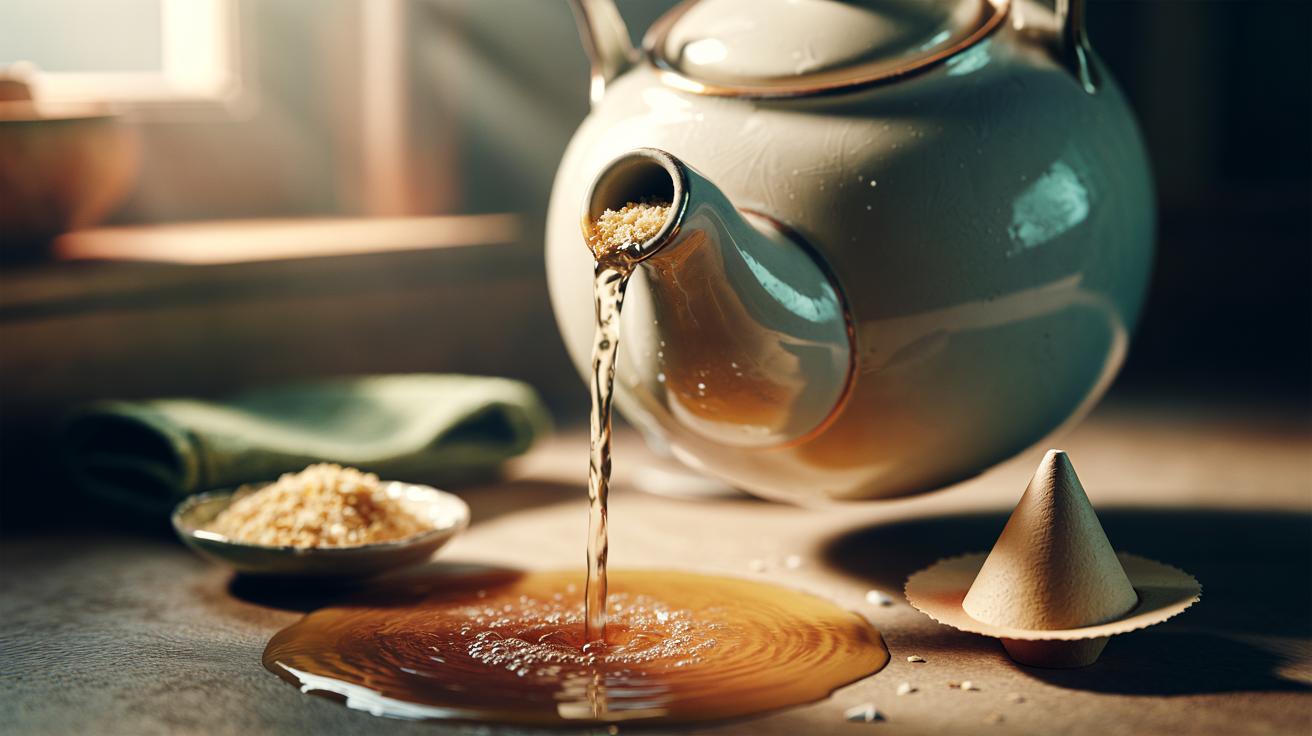
3) Dampen the spout with warm water. Sprinkle in a pinch of shell powder—use a small paper funnel if needed. 4) Put your thumb over the tip and the lid opening, add a sip of water, and shake or swirl for 10–20 seconds. Short, sharp rotations help the particles track the inner curve. You’ll feel the drag turn smooth as the film loosens. 5) Rinse thoroughly until the water runs clear. Repeat once if stubborn marks remain, but keep it brief; you’re polishing, not grinding.
Finish by wiping the outer lip with a damp cloth and a dust of remaining powder, then rinse again. Avoid this method on silver-plated trim, soft gold leaf, or unglazed decorative clays—use a soft cloth only. If your pot is antique or hand-painted, test on a hidden patch before committing to a full swirl. Done right, you’ll see a fresh, quiet gleam and a cleaner pour line, without chemical tang or lingering odours.
The Science in a Teacup: Abrasion, Chemistry, and Time
Cleaning is contact science. Calcite particles apply innumerable tiny forces to the stain layer—shearing, rolling, and sliding. The stain is weak; the glaze is strong. Because calcite is softer than the glaze, particles fracture and round off quickly, self-limiting their bite and preventing scratches. This self-sacrifice of the abrasive is what keeps your teapot safe. Meanwhile, warm water lowers viscosity and improves flow through the spout, allowing even coverage. If limescale is present, a brief pre-soak with warm vinegar dissolves it. Rinse, then use eggshell for the polish pass. Avoid mixing vinegar with eggshell during the polish—acid will dissolve the abrasive before it can work.
| Material/Factor | Typical Value | What It Means |
|---|---|---|
| Calcite (eggshell) hardness | Mohs ~3 | Soft enough to be gentle |
| Glazed ceramic hardness | Mohs ~6–7 | Hard, polishable surface |
| Shell particle size | 50–500 µm | Flows into tight curves |
| Polish time | 10–30 seconds | Quick, low effort |
| pH effect | Slightly alkaline | Helps release acidic films |
In practice, you’re harnessing basic tribology—the study of friction and wear—with kitchen leftovers. And it’s tactile. The moment the spout interior goes from gritty to glassy, you know it’s working. Stop when it feels smooth; that tactile cue is your built-in timer.
Sustainability and Kitchen Pragmatism
Household cleaning often defaults to bottled chemistry. Here’s a rare inversion: a zero-waste abrasive that arrives free with breakfast. No microplastics, no perfume, no residues to haunt your next Darjeeling. Air-dry shells in a jar; one egg fuels dozens of polishes. The habit scales—from teapots to coffee carafes and stained mugs—without the cost or clutter of single-purpose products. It’s frugal, fast, and delightfully circular.
Practical notes keep it safe. Avoid prolonged rubbing on soft metals or decorative gilding; use only gentle swirls and quick rinses. For matte or crackle glazes, go lighter still—those textures hold particles, so rinse with patience. Store crushed shell dry to prevent smells, and label the jar clearly. If your water is very hard, alternate between an occasional vinegar descale and eggshell polish to maintain an easy, consistent sheen. Above all, treat the spout like a lens: minimal force, clean media, brief contact. You’ll preserve patina where you want it—the pot’s body—while restoring the lip that greets every pour.
In the end, the eggshell trick is a reminder that good housekeeping can be ingenious rather than industrial. Kitchen science, not kitchen sink drama. A few seconds of swirl, a rinse, and the spout catches the light again, ready for company or a quiet solo brew. The polish is subtle, the satisfaction isn’t. As you lift the pot and watch a clean stream arc into the cup, you might ask: what other humble leftovers are waiting to do clever, gentle work around your home?
Did you like it?4.6/5 (29)