In a nutshell
- 🔬 The “rice hack” lowers surrounding humidity via humidity gradients, giving superficial overnight drying—but rice is a weak desiccant and often only fixes minor damp.
- 🛠️ First moves matter: Power off immediately, remove case/SIM, blot gently, avoid heat and charging, then place the phone in a sealed container for 8–12 hours.
- 🧰 Better options beat rice: use silica gel or similar desiccants, add gentle airflow if possible, and remember desiccant volume should exceed the phone’s volume several times.
- 🧪 For salt or sugary spills, prioritise an IPA rinse to displace water and neutralise residues, followed by professional inspection where feasible.
- ⚠️ Risks persist: LCIs can trip, corrosion may develop days later, rice dust can clog ports—so back up immediately if it powers on and seek repair if issues remain.
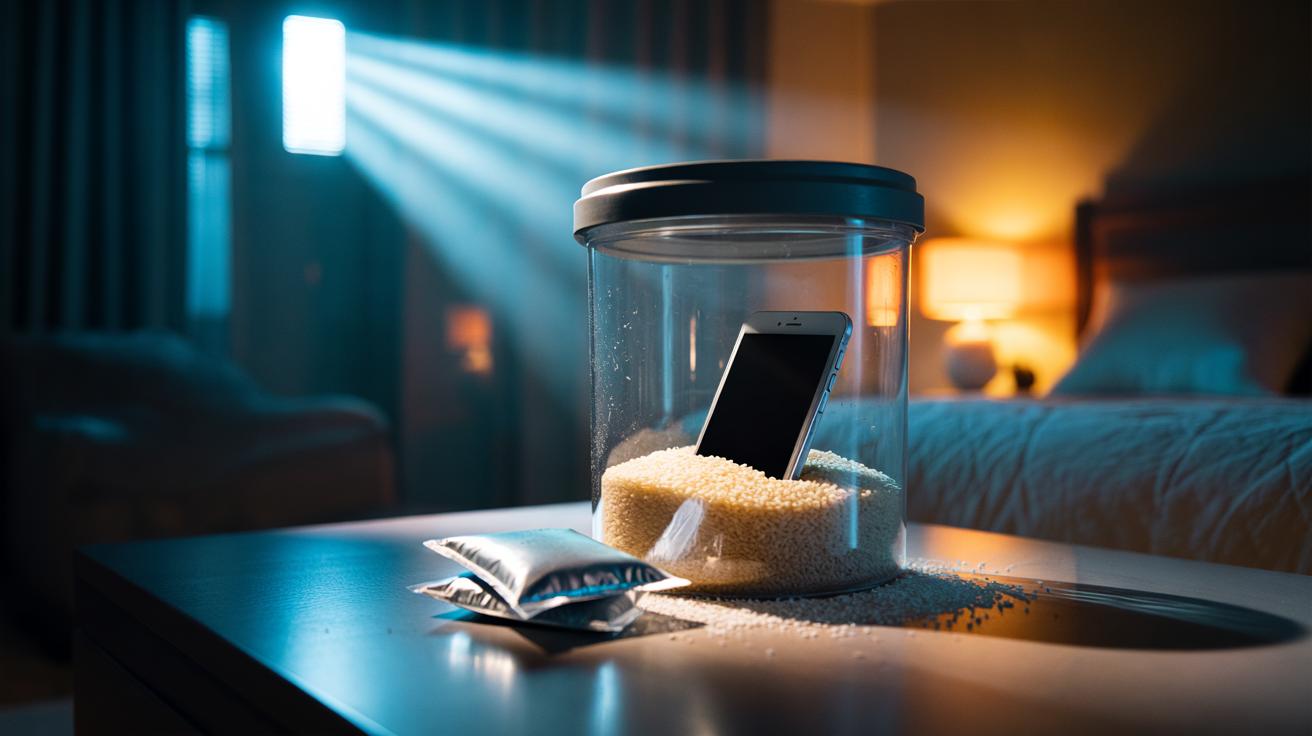
Spill a drink, drop a phone, panic. Then the old internet wisdom kicks in: bury it in rice and sleep on it. The so‑called rice phone hydration hack has the reassuring simplicity of a folk remedy, promising a revival by morning without tools, training, or tears. But what actually happens during that short night’s sleep? In a world of sealed phones, delicate connectors, and tiny channels where moisture hides, the answer is nuanced. Here’s the science, the real‑world method, and the honest limits. Used properly, a desiccant can buy you time; used badly, it can cost you a device.
Why Rice Seems to Work Overnight
The trick relies on humidity gradients. Wet electronics create a microclimate where the air inside and around the device contains water vapour. Put the phone into a container with a thirsty medium and the surrounding air’s relative humidity drops. Moisture migrates from wet surfaces to drier air, then into the desiccant. Rice, although weak as a desiccant, still lowers humidity slightly, which can be enough to dry ports, grills, and the edges of gaskets while you sleep. That superficial drying often restores buttons, microphones, and speakers by morning, creating the impression of a miracle.
The less visible truth is harsher. Capillary spaces under shields and inside connectors can trap liquid for days. Electrolysis and corrosion can begin within minutes if the phone is powered. The single biggest saver is switching the device off immediately and leaving it off. Rice doesn’t neutralise salts, sugars, or minerals either; those residues can keep attracting moisture long after the handset looks dry. So yes, rice sometimes “works” overnight, but often by luck and shallow evaporation, not comprehensive recovery.
A Step-by-Step Night Routine
First, kill the power: hold the buttons to shut down, then leave it off. Remove the case, SIM tray, and any cards. Blot visible wet patches with a lint‑free cloth, tilting the device so water drains away from ports and speaker holes. Resist the hairdryer. Heat drives moisture deeper and warps adhesives. Do not charge, do not press buttons repeatedly, and do not test the torch or speakers “just to check”. Every powered moment risks shorting and accelerates corrosion.
Now control the environment. Place the handset in a sealed container with the best desiccant you can find: silica gel is ideal; fresh clay or molecular sieve is better still. If rice is all you have, use a generous volume so air around the phone stays drier than the phone itself. Keep the container in a warm (not hot) room with stable airflow outside the box, so the desiccant can work steadily. After 8–12 hours, inspect for condensation, muffled audio, or fog under the lenses. If it’s been exposed to salt water or a sugary drink, the overnight step should be followed by a professional clean or an isopropyl alcohol (IPA) rinse performed with care.
What Works Better Than Rice
Rice is accessible, but it is not the champion. Purpose‑made desiccants pull far more moisture from the air, faster, and without leaving dust in your charging port. Use what you have, but upgrade when you can. If recovery matters, your odds improve dramatically with proper desiccants and patience. The table below compares common options and their practicality for a short night’s dry‑out.
| Method | How It Works | Pros | Cons | Overnight Outcome |
|---|---|---|---|---|
| Rice | Weak humidity absorber | Cheap, available | Dust, slow, inconsistent | May fix light damp in 6–12h |
| Silica Gel | High‑capacity desiccant | Fast, clean, reusable | Need sufficient quantity | Good chance in 8–12h |
| Fan + Ventilation | Airflow aids evaporation | No dust, gentle | No deep wicking | Helps ports overnight |
| IPA Rinse | Displaces water, cleans residues | Neutralises salts/sugars | Needs care, flammable | Best paired with silica gel |
Whichever route you choose, combine it with power‑off discipline and time. Desiccant volume matters: aim for several times the phone’s volume, sealed, so the gradient works for you all night long.
Risks, Myths, and When to Seek Help
The greatest myth is that any drying medium guarantees success. It doesn’t. Liquid contact indicators (LCIs) flip red with surprisingly small exposure, and corrosion can creep under chips unseen. Another myth: the hairdryer fix. Blast air at a modern handset and you’ll likely push moisture past gaskets and break adhesives; warm, steady ambient conditions are safer. And then there’s the rice problem: kernels fracture, dust migrates into ports, and you end up with a charging error right when you think you’ve won.
So, draw some lines. If the phone took on salt water, sewage, or a sugary drink, treat rice as triage, not a cure. Prioritise an IPA clean and professional inspection. If the device won’t boot after an overnight dry‑out, or the battery gets hot, stop and seek repair. Don’t assume a morning victory either; back up immediately if it powers, because latent corrosion can cause delayed failure days later. These are unglamorous truths, but they save photos and wallets.
The rice hack endures because sometimes, frankly, it works just enough. As a quick, accessible way to stabilise a damp phone while you sleep, it’s better than doing nothing, but weaker than silica gel and nowhere near a proper clean. The real magic is the combination of fast power‑off, controlled drying environment, and patience. Use rice if you must, then upgrade the method and back up your data the moment the screen lights. When disaster strikes again, what will your emergency plan look like—and which tools will you keep ready for that inevitable splash?
Did you like it?4.5/5 (24)