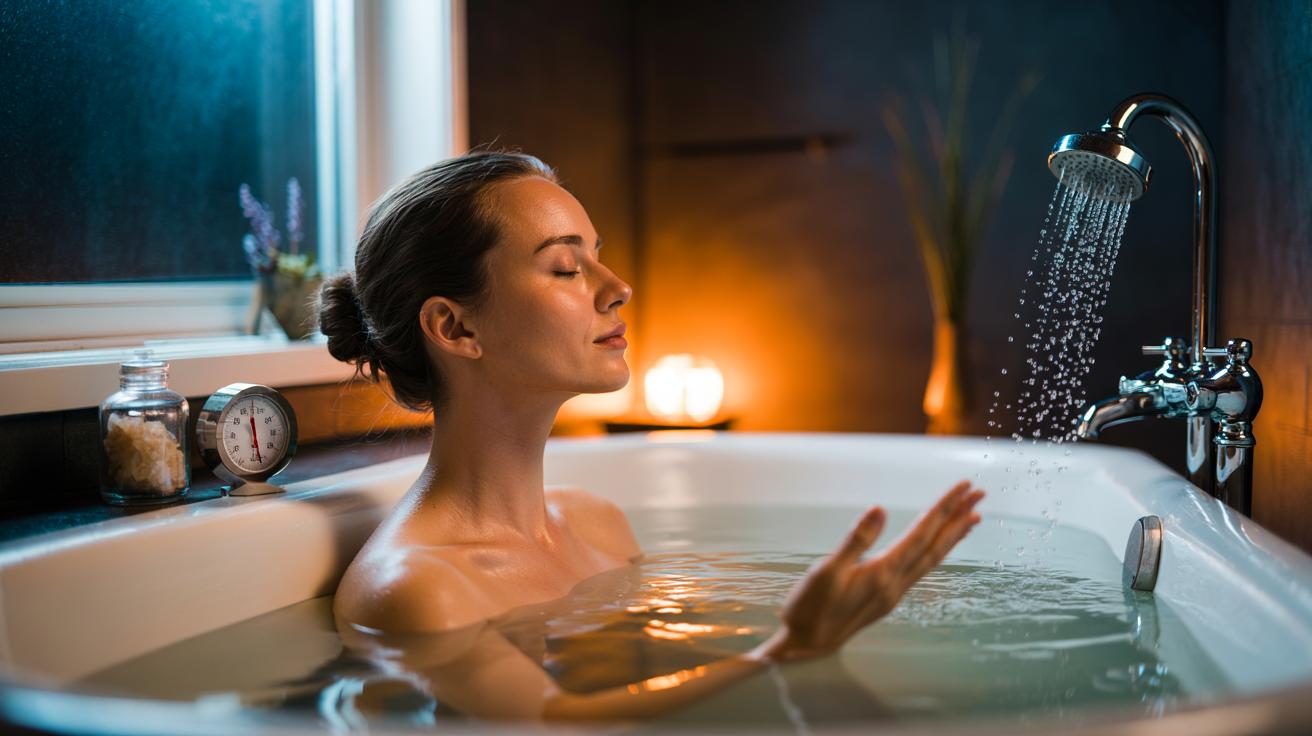
In a nutshell
- 🛁 The doctor-backed calm-trigger bath: soak at 38–40°C for 10–15 minutes (mid-chest water), optionally adding Epsom salt and a drop of lavender or bergamot for comfort—designed as a nervous-system reset, not a detox.
- 🌬️ Layer simple breathwork and a finish: maintain a 4–6 breathing pattern throughout and consider a brief 30–60 second cool rinse for alert calm; skip the cool step if heading to sleep.
- 🧠 Why it works: warm water’s hydrostatic pressure and skin thermoreceptors nudge the baroreflex and vagus pathways, shifting you into a parasympathetic state and aiding faster sleep onset via post-bath heat loss.
- 🕯️ Make it a ritual: dim lights, phone away, towel ready—consistent sensory cues create a reliable calm trigger; small, regular sessions beat occasional marathon soaks and can be tailored for morning focus or evening unwind.
- ⚠️ Safety first: adapt if you have heart disease, low blood pressure, are pregnant, or have neuropathy; avoid alcohol/sedatives, watch for dizziness, and remember the routine is the medicine—fragrance is optional and may irritate some.
There’s a simple ritual hiding in plain sight, whispered on hospital night shifts and shared in GP rooms after long clinics: the calm-trigger bath. No expensive kit. No complicated protocol. Just warm water, measured time, and a quiet tweak that changes everything. A short soak at the right temperature, followed by the gentlest cool finish, can dial down stress within minutes. People describe shoulders dropping, jaw unclenching, breath slowing. Doctors like it because it’s low risk and works fast, even on the most crowded days. In an age of relentless noise, this tiny act of hydrotherapy feels almost rebellious—and deeply human.
What Is the Calm-Trigger Bath?
The idea is disarmingly straightforward. Run a bath to 38–40°C—warm, not scalding—then soak for 10–15 minutes with the water reaching mid-chest while seated. Add a small handful of plain Epsom salt (optional) for skin feel and buoyancy; pair it with a drop or two of lavender or bergamot essential oil if fragrance helps you relax. This isn’t a detox; it’s a nervous-system reset. The warmth cues heat receptors in the skin, your breathing deepens, and muscles soften. For many, that’s enough. For others, the twist is to finish with a brief 30–60 second cool rinse of limbs, which sharpens alertness without undoing the calm.
Why the fuss about temperature and time? Because they set the stage for the body’s natural balance between “go” and “slow.” Too hot or too long and you may feel woozy; too cool and you shiver. The sweet spot is where your parasympathetic nervous system wins. Think of it as pressing the “rest-and-digest” button on demand. It’s portable, repeatable, and—crucially—doesn’t require clearing a whole evening. Many clinicians suggest keeping it simple: light off, phone away, door closed. Ten minutes later, you’re different.
Why Heat, Water Pressure, and Scent Work Together
Warm water shifts blood toward the body’s core, a gentle squeeze known as hydrostatic pressure. That change nudges the baroreflex, a built-in stabiliser that can lower heart rate and quieten the stress response. Meanwhile, skin thermoreceptors signal safety—no predators in a warm bath—helping the vagus nerve recalibrate breath and pulse. In plain terms: warmth tells your biology it’s safe to switch off. Studies also show that a warm bath in the evening can hasten sleep onset by promoting heat loss from hands and feet post-soak, a neat trick if your mind whirs at bedtime.
Scent is the soft power here. Evidence for essential oils varies, but pleasant smells can anchor attention and create a repeatable cue for calm. Lavender and bergamot are common, yet a favourite soap or unscented approach works just as well if fragrance irritates you. The goal is a reliable sensory pattern: warm water, slower breathing, dimmer light, and a quiet mental script. The synergy matters—tiny inputs combining to lower arousal without effort. When people say it “melts” stress, this is what they mean: systems aligning, not a miracle cure.
Step-by-Step: From Run Tap to Deep Exhale
Set the bathroom scene first. Dim the lights, crack a window if it gets steamy, and place a towel within arm’s reach. Run the tub to cover your thighs when seated; check temperature with a thermometer or the inner wrist. Aim for 38–40°C and hold that line. Slip in slowly. Rest the head against the tub rim or a folded towel, unclench the jaw, and try a simple breath pattern: inhale 4, pause, exhale 6. If thoughts race, count ten slow breaths and start again. The session is brief by design; time it if you like. Finish with a 30–60 second cool rinse to legs and arms, or skip it if you’re heading straight to bed.
| Step | Temperature | Time | Additions | Why It Helps |
|---|---|---|---|---|
| Warm soak | 38–40°C | 10–15 min | Epsom salt (optional) | Parasympathetic shift; muscle ease |
| Breathing | — | Throughout | 4–6 pattern | Slows heart rate via vagus input |
| Cool finish | Comfortably cool | 30–60 sec | Optional | Keeps clarity without losing calm |
Keep it flexible. Morning bath before a tough presentation? Choose the cool finish. Late-night unwind? Skip the cool water and glide into pyjamas. Small, consistent rituals beat heroic one-offs. You’re building a cue your body recognises on difficult days.
Safety Notes and Who Should Adapt It
Most healthy adults can enjoy this practice, but a few groups should adapt. If you live with heart disease, low blood pressure, fainting episodes, or are pregnant, keep water comfortably warm, not hot, and keep soaks short. Stand slowly and hydrate. People with neuropathy or reduced temperature sensation should use a thermometer to avoid overheating. Essential oils can irritate sensitive skin or trigger asthma; unscented works perfectly. Never mix hot baths with alcohol or sedatives. Children need supervision and cooler temperatures. If you’re unsure, that’s a conversation for your GP or midwife, tailored to your situation.
Watch for warning signs: dizziness, pounding heart, nausea. If they appear, end the bath, cool the room, sip water, and sit until steady. Keep the door unlocked. A bath pillow supports the neck; a non-slip mat prevents awkward slides. Magnesium claims deserve nuance: Epsom salt feels lovely, but skin absorption is inconsistent in studies. Use it for comfort, not as a medical treatment. The medicine here is the routine itself—predictable warmth, slowed breathing, gentle pressure. Treat it like brushing your teeth for the nervous system: brief, regular, effective.
The surprising part of this doctor-approved trick isn’t the bath—it’s the precision. Temperature, time, breath, light. Get those right, and stress loosens its grip fast, leaving you clearer for the evening commute or the next email. Done repeatedly, it becomes a personal signal for safety, ready at short notice when the day surges. Calm can be engineered, not only hoped for. If you try it this week, what tiny adjustment—cool finish, lavender, or timed breathing—will make the ritual unmistakably yours?
Did you like it?4.5/5 (29)