In a nutshell
- 🧪 Harnesses tannins from tea and acetic acid in vinegar to lower pH, loosen greasy biofilm, and soften mineral-tainted residues—helped by heat from a freshly boiled kettle.
- 🕰️ Simple overnight routine: brew strong tea (2 bags, 3–5 mins), pour hot tea into the drain, wait 10 minutes, add 200–250 ml white vinegar, leave overnight, then flush with a full kettle of hot water.
- 🧰 Best for light sludge, soap scum, and odours; safe on PVC, stainless steel, and copper. Not a cure for dense hair plugs or fully blocked traps—use a snake or P-trap clean-out instead.
- ⚖️ Low-cost, low-risk alternative to corrosive chemicals; kinder to septic systems and indoor air. Outperforms baking soda mixes here (which neutralise the needed acidity).
- 🧼 Practical tips: pre-pull hair in bathroom sinks, avoid splashes on marble/limestone, wipe the waste rim after flushing, and repeat weekly in hard-water areas for preventative maintenance.
Forget the heavy-duty drain acid and the caustic fumes. A gentler hack is rising from the back of the cupboard: a used tea bag and a glass of white vinegar. It sounds quaint. It isn’t. The pairing harnesses everyday chemistry—tannins from tea and acetic acid from vinegar—to loosen grease, nudge along soap scum, and break down early-stage sludge while you sleep. In British kitchens where kettles run hot and limescale builds fast, this tactic is cheap, safe, and surprisingly effective. The secret isn’t brute force but smart chemistry working low and slow overnight. Here’s how it clears pipes and when to use it.
Why Tea Tannins and Vinegar Work
The power duo relies on two simple agents with distinct talents. Tea, especially black varieties, is rich in tannins—polyphenols that act a bit like mild surfactants. They can loosen oily films and destabilise the biofilm matrix that glues food residues to the inside of pipes. Vinegar brings acetic acid (~5%) to the party, dropping the local pH and helping dissolve mineral deposits such as calcium carbonate from hard water. That matters in the UK, where kettle crust isn’t just cosmetic; it feeds rough surfaces that trap fats and fibres. Lower pH plus tannin action creates a hostile environment for sticky, early-stage clogs.
Heat is the third player. A freshly boiled kettle carries energy that softens congealed fats and relaxes soap scum, allowing tannins to engage the film. Then vinegar follows to acidify, chelate trace metals, and keep loosened particles from re-attaching. The effect is not that of a corrosive drain opener; it’s a slow cleaner. It excels at prevention and at easing partial blockages, not at bulldozing a pipe choked with hair and solid grease. Think of it as a night watchman, not a battering ram.
Step-By-Step Overnight Method
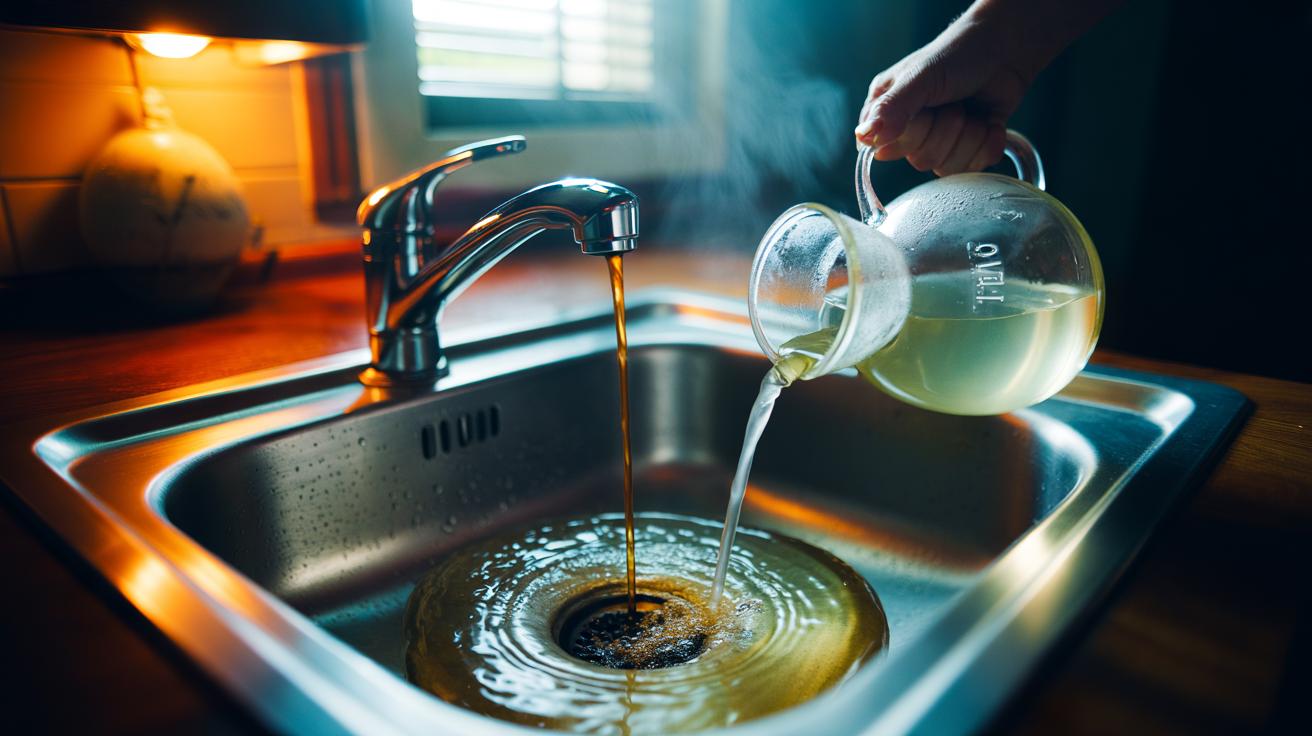
Start with the basics. Clear visible debris from the strainer. Boil a kettle and brew two strong tea bags in a large mug or jug for 3–5 minutes; squeeze the bags for maximum tannin release. Pour the hot tea directly into the sluggish drain. The heat softens grease; the compounds in tea begin loosening the film. Wait 10 minutes. Now pour in 200–250 ml of white vinegar. If your sink has a plug, seat it lightly to limit escaping vapour. Let the mixture sit undisturbed overnight so chemistry, not force, does the work.
In the morning, flush with a full kettle of hot water, followed by 30–60 seconds of very warm tap flow to carry loosened residue away. If water still drains slowly, repeat once. Avoid adding bicarbonate of soda at the same time as vinegar; the fizz looks industrious but neutralises the acid you need. For bathroom sinks, pre-pull a tuft of hair with a simple plastic hook before the tea step; you’ll boost results dramatically. Finish by wiping the waste rim—grime often clings just above the waterline. Once a week in hard-water areas keeps pipes cleaner and odours down.
What It Does—and What It Doesn’t
Expect steady improvement, not theatrical eruptions. Tea-and-vinegar works best on fatty films, light soap scum, and mineral-tainted residues that slow flow but still allow water through. It’s safe for PVC, stainless steel, and copper plumbing in typical domestic use. It won’t melt a dense mass of hair or a waxy plug that’s months old; those need mechanical removal—unscrewing a P-trap, using a drain snake, or pulling the stopper mechanism. If a sink is fully backed up and gurgling, you’re past the point of gentle chemistry.
Mind the surroundings. Vinegar is acidic enough to etch marble, limestone, or cement-based worktops; keep splashes off stone and rinse immediately if contact occurs. Rubber gaskets tolerate brief exposure, but don’t soak them in vinegar baths. Odour is temporary; airing the room fixes it. If you rely on a septic tank, this method is friendlier than bleach or caustic soda, which can upset the microbial balance. And because the approach leverages heat plus mild acidity, it leaves no harsh residues, just a cleaner, less sticky pipe interior.
Safety, Materials, and Quick Comparisons
You need very little: two tea bags (black tea works best), 200–250 ml white vinegar, and a kettle of hot water. Keep children away from hot liquid and avoid steam burns by pouring slowly. If your tap water is extremely hard, consider a second vinegar pour after five minutes to extend contact time in the trap. Gentle methods succeed when given time and consistent, modest heat. For clarity, here’s how the hack stacks up against common options in UK homes.
| Method | Cost | Risk | Speed | Best For |
|---|---|---|---|---|
| Tea + Vinegar | Very low | Low | Overnight | Film, light sludge, odours |
| Caustic Soda/Bleach | Low–medium | High (corrosive, fumes) | Fast (minutes) | Grease-heavy clogs |
| Enzyme Cleaner | Medium | Low | Slow (hours–days) | Organic buildup maintenance |
| Mechanical Snake | Low–medium | Moderate (scratches possible) | Fast if accessible | Hair and solid blockages |
Note that commercial acidic drain openers are very fast but carry burn risks and can damage older pipes if misused. For routine care, the tea-and-vinegar route preserves plumbing and the environment while keeping odours at bay. Think of it as part of a weekly kitchen ritual: kettle on, drain refreshed.
The tea bag and vinegar unblocker succeeds because it reduces stickiness, softens deposits, and denies grime its foothold. It keeps costs down and pipes calmer, while leaving harsh chemistry on the shelf for true emergencies. The method won’t perform miracles on a blocked u-bend, but that’s not its job; it’s your preventative first responder, quiet and persistent. Next time the sink sulks, try the night shift approach and listen for a brighter gurgle in the morning. What tweaks—different teas, longer steeps, hotter flushes—will you experiment with to perfect your own overnight clear-out?
Did you like it?4.5/5 (26)