In a nutshell
- 🪞 The vinegar film-free window wash trick delivers crystal-clear mirrors with a fine mist and a swift wipe, cutting cost, waste, and time while avoiding the haze typical of perfumed glass sprays.
- ⚗️ Powered by acetic acid, distilled white vinegar dissolves alkaline residues from hard water and soap scum, then evaporates clean—no polymers, no softeners, just brighter reflections and fewer streaks.
- 🧴 Mix smart: 1:1 vinegar:water for routine shine, 2:1 for heavy film, and use distilled water in hard-water areas; mist sparingly onto the cloth, wipe top-to-bottom with overlapping strokes, then dry-buff.
- 🧽 Prevent streaks with a lint-free microfiber (no fabric softener), cool glass, and shade; switch cloth quarters as they dampen, and use a squeegee for windows with a quick edge wipe to finish.
- ⚠️ Avoid vinegar on natural stone, waxed timber, and reactive metals; be cautious with tinted films and aging mirror edges, never mix with bleach, and use isopropyl alcohol for electronics and coated lenses.
There’s a reason professional window dressers swear by a bottle of vinegar and a crisp microfiber. The vinegar film-free window wash trick is disarmingly simple: a fine mist and a swift wipe, nothing more. No foamy cleaners. No rainbow residue. Just clear, brilliant glass and mirrors that gleam under any light. As domestic budgets tighten and eco-credentials matter, this low-cost, low-waste tactic feels almost subversive. Yet the science is sound, and the results are repeatable in small bathrooms and grand bay windows alike. Here’s how a humble acid sidesteps streaks, slays soap film, and makes reflections look professionally polished.
Why Vinegar Beats Glass Cleaner
Most shop-bought glass sprays rely on surfactants and fragrances that leave polymers or softeners behind. They smell clean, but the film they deposit scatters light. That’s the haze you notice at sunset. Vinegar’s edge is chemical, not cosmetic. The acetic acid in distilled white vinegar (around 5% acidity) cuts through alkaline residues from hard water, soap scum, and make-up binders, then evaporates without a sticky trace. Less residue equals fewer streaks and brighter reflections. Crucially, it doesn’t need suds to work; it dissolves what causes the cloudiness in the first place.
On mirrors and interior windows, that clarity shows up immediately under side-lighting. The pH swing matters. With a quick wipe, acetic acid neutralises film that standard cleaners merely redistribute. The price point helps too: pennies per mix, and no dyes to fog the finish. Use distilled white vinegar, not malt or balsamic—colour and sugars can smear. Sensitive to the tang? The smell fades within minutes as it flashes off, especially if you crack a window or run the extractor.
There’s a caveat. Vinegar excels on glass and mirror surfaces but must be kept away from reactive materials (we’ll come to that). On the right substrate, it’s fast, precise, and strikingly reliable.
The Quick Mist-and-Wipe Method, Step by Step
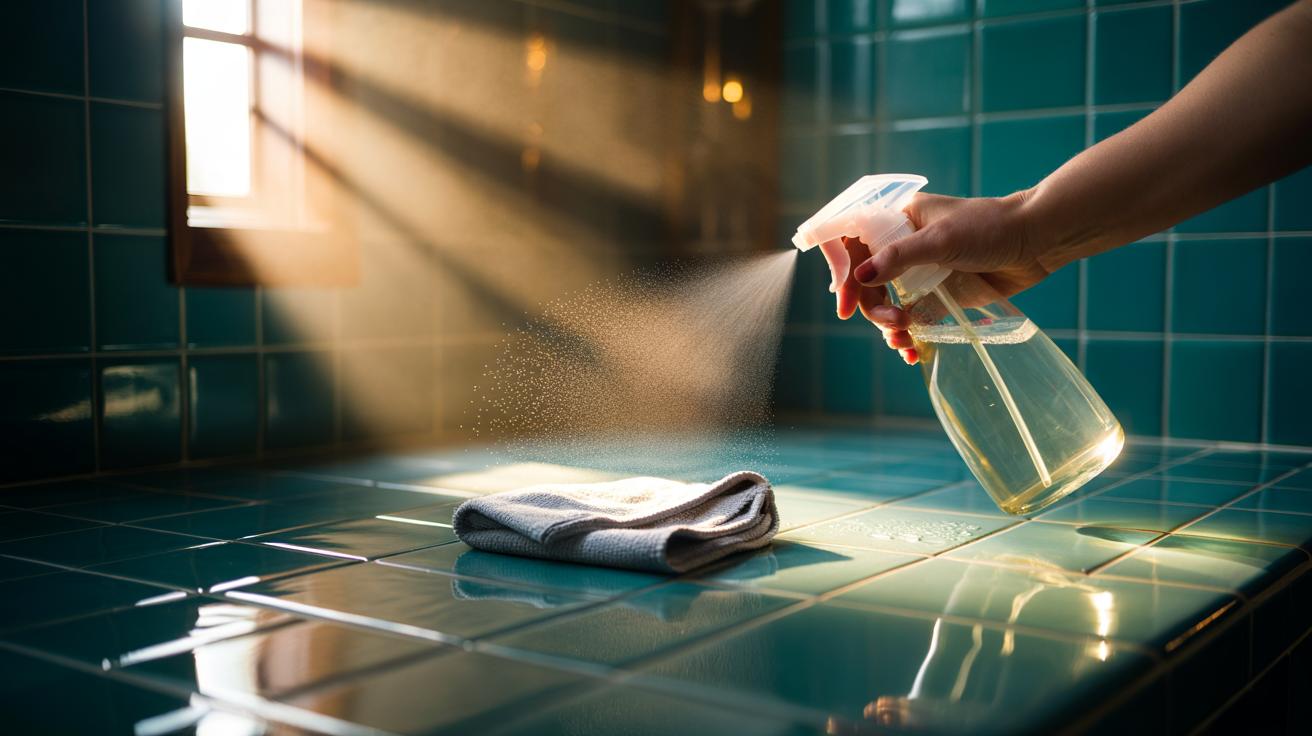
Start with a clean microfiber cloth, ideally 300–400 GSM, folded into quarters to create multiple fresh faces. Mix your solution in a fine-mist sprayer: 1:1 vinegar to water for everyday sheen; nudge to 2:1 for heavy film, or use distilled water if you live in a hard-water area. Always mist sparingly. You’re dissolving film, not soaking plaster. Aim the spray at the cloth for framed mirrors to protect edges and backing.
| Mixture | Best Use | Tool | Notes |
|---|---|---|---|
| 1:1 vinegar:water | Daily mirror refresh | Fine-mist sprayer | Quick dry, minimal odour |
| 2:1 vinegar:water | Soap scum and haze | Microfiber, folded | Buff with a dry side |
| 1:0 (neat) | Stubborn limescale specks | Spot treatment | Rinse patch and dry |
Work top to bottom. Make your first pass in straight, overlapping strokes—vertical on one side of the pane, horizontal on the other—so any streaks reveal which face needs attention. Flip to a dry quarter and buff lightly in quick arcs until the glass squeaks. Stop as soon as it flashes clear; over-wiping can re-deposit lint. For edges and corners, pinch the cloth, then finish with a final dry feather of pressure. The whole routine takes under a minute for a vanity mirror. Speed is part of the trick, but restraint is the secret.
Preventing Streaks With the Right Tools and Timing
Streaks are often a materials problem, not a method failure. Choose a tight-weave lint-free microfiber reserved just for glass; launder it without fabric softener, which coats fibres and smears. Keep one cloth for “wet” passes and one for “dry buffing.” In a pinch, coffee filters or clean newspaper can deliver a crisp polish, but modern soy inks sometimes transfer, so test first. Less liquid equals fewer streaks. A fine mist is plenty—if you can see droplets running, you’ve used too much.
Timing matters. Clean when the glass is cool and the room is not steamy; condensation dilutes the mix and breeds trails. Open a window for airflow, or run the fan after a hot shower, then wait five minutes. Direct sun? Avoid it. It accelerates evaporation and traps product mid-wipe. For windows, a small squeegee can speed the first pass; follow with a dry microfiber on the edges where water collects. Switch cloth quarters as soon as they feel damp or grabby—that tactile cue tells you the fibre is loaded and ready to streak.
In hard-water regions, using distilled water in your mix prevents mineral spotting. Label the bottle, store it cool and dark, and remake monthly for freshness. Simple habits, big results.
Common Pitfalls and When Not to Use Vinegar
Vinegar is not universal. Never use it on natural stone such as marble, limestone, or travertine; the acid etches and dulls the surface. Keep it away from waxed timber, pearlised finishes, and reactive metals like brass or unsealed aluminium. Be cautious with tinted window films, anti-glare or low‑E coatings, and older mirrors where the silvering at the back is exposed along the edge. If in doubt, spray the cloth, not the surface, and patch test on a hidden corner. Do not mix vinegar with bleach or products containing chlorine—that combination releases hazardous gases.
On electronics and lens coatings, a dedicated isopropyl alcohol or manufacturer-approved cleaner is safer. For stubborn silicone residue or adhesive, use a plastic scraper first, then your vinegar pass to remove the haze. If you encounter rainbow streaks after wiping, you’ve either over-wet, used a fabric-softened cloth, or cleaned in harsh sun. Adjust the variables one by one. In almost every domestic scenario—bathroom mirrors, patio doors, picture glass—the vinegar routine wins when you keep it light, controlled, and precise.
Clean glass is about light, not perfume. The vinegar mist-and-wipe routine respects that, delivering sharp reflections with minimal effort and almost no waste. It’s quick, cheap, and astonishingly consistent, whether you’re tackling toothpaste flecks on a vanity mirror or a week of fingerprints on a French door. Arm yourself with the right cloth, the right dilution, and a light hand, and you’ll sidestep haze every time. Ready to retire the blue spray and make your mirrors sing—what tweak will you try first: a finer mist, a drier buff, or a switch to distilled water?
Did you like it?4.5/5 (30)