In a nutshell
- 🔬 The science: baking soda’s absorption, odour neutralisation, and gentle pile lift make colours look truer in a fast, dry method refresh.
- ⏱️ The routine: vacuum first, sprinkle 50–100 g of bicarbonate of soda, wait 10 minutes, then vacuum in perpendicular passes—no water or vinegar.
- 🧵 Fibres & stains: safe for wool, nylon, polyester, polypropylene; test first; helps fresh acidic spills, but old stains need targeted spotting; be cautious with antique/vegetable-dyed rugs.
- 🌿 Sustainability: low-cost, fragrance-free upkeep reduces wet extractions, suits UK drying conditions; store airtight and keep pets/kids away during dwell; vacuum thoroughly.
- 📋 Quick reference: items, amounts, purposes, and times highlighted; empty the vacuum bag/canister after use to maintain suction and results.
Ten minutes, a box of baking soda, and a vacuum: that’s all you need to coax tired carpets back to life. In countless British homes, crumbs, oils, and indoor pollution steal lustre from once-bright fibres. The result is that flattened, greyed look you hate in photos and notice in daylight. Sprinkle, wait, vacuum. Simple. But there’s science behind the magic. As bicarbonate of soda settles, it draws out odours and light soils, reduces static cling, and subtly lifts the pile to improve light reflection. The change isn’t theatrical, but it is immediate and tangible. And crucially, it’s safe, dry, and virtually cost-free.
Why Baking Soda Lifts Dullness in Minutes
The secret lies in absorption and neutralisation. Household carpets accumulate a film of microscopic grease from cooking vapours, personal care products, and traffic. These films trap dust, flatten fibres, and mute colour. Baking soda is a fine, porous powder that clings to those light soils, helping loosen the film so your vacuum can remove it. Its mild alkalinity also neutralises odours by reacting with acidic scent molecules that make rooms smell “close”. While it doesn’t repaint pigment, it can make colours look truer because clean fibres reflect light more evenly.
There’s a mechanical effect too. As powder settles, it gently props up matted fibres. That slight lift increases surface area and brightness, a small optical trick your eye reads as “revived”. Expect a visible refresh on dull high-traffic lanes within 10 minutes; stubborn, set-in grime still needs a wet extraction at intervals. Crucially, this is a dry method, so there’s no risk of backing damage associated with over-wetting. For allergy-prone homes, the approach also helps tame lingering pet odours without fragrances that can irritate.
Step-By-Step: A 10-Minute Colour Refresh
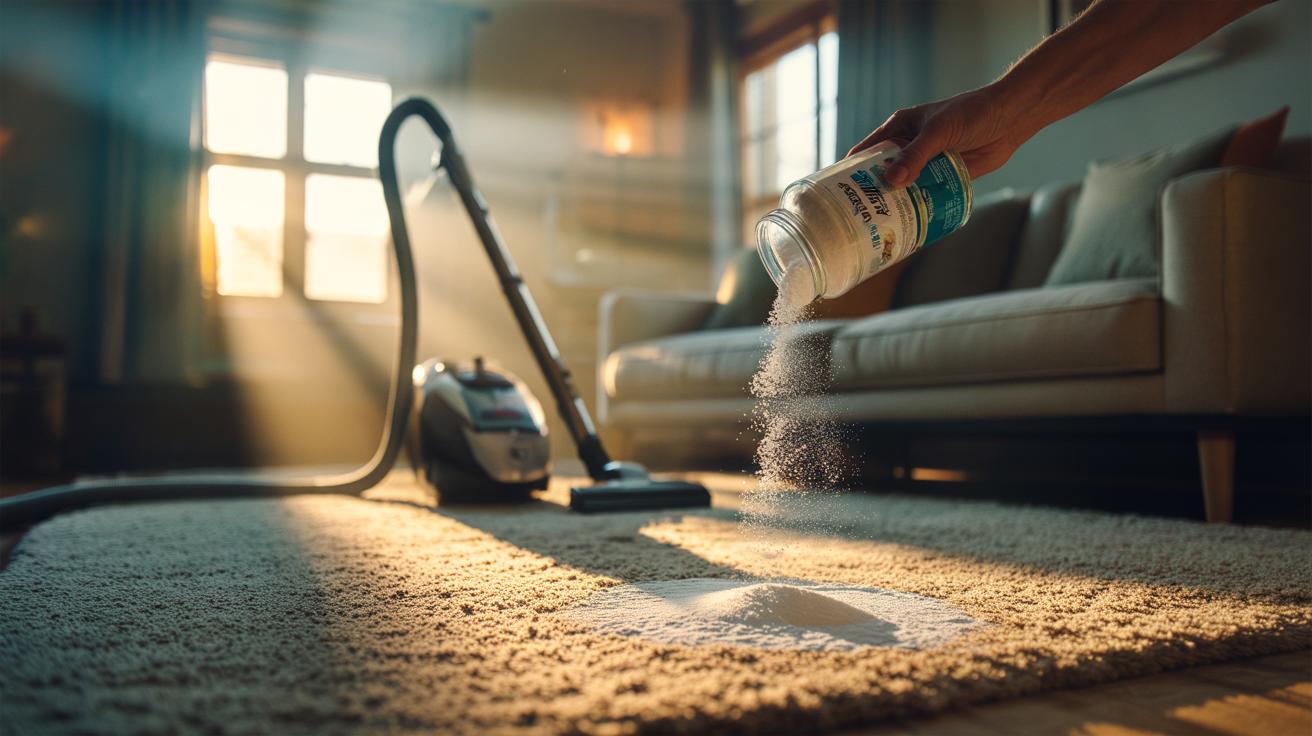
Start clean. Vacuum slowly to remove grit that would otherwise block the powder’s access to soils. Lightly sprinkle bicarbonate of soda over the carpet, aiming for a fine dusting rather than drifts. Think seasoning, not snow. For a hallway or sitting room, most homes use 50–100 g. Use your hand or a soft brush to distribute the powder evenly. Do not add water or mix with vinegar at this stage—keep the action dry to avoid paste and residue.
Now the clock. Give it 10 minutes. In that short pause, the powder is busy attaching to odorous compounds and loosening surface greases. If time allows, 20–30 minutes improves results on heavy-traffic paths, but ten will still show. Finish with a thorough vacuum—two passes in perpendicular directions. Empty or change the bag afterward; fine powders fill quickly and reduce suction if left.
| Item | Amount | Purpose | Time |
|---|---|---|---|
| Baking soda | 50–100 g per room | Absorb soils and odours | 10 minutes dwell |
| Soft brush | Optional | Even distribution | 1–2 minutes |
| Vacuum | High suction | Remove powder and lifted dirt | 5–8 minutes |
Dealing With Stains, Fibres, and Colourfastness
Always test on an inconspicuous patch first. Dab a pinch of baking soda onto a hidden corner, wait ten minutes, and vacuum. No change? Proceed. Wool, nylon, polyester, and solution-dyed polypropylene all tolerate this dry refresh, but each behaves differently. Wool benefits from the gentle lift and odour control. Nylon shows noticeable brightening where heel-scuffs have mashed fibres. Poly blends respond well, provided you vacuum thoroughly to prevent residue. For antique rugs or vegetable-dyed pieces, keep use light and brief, and rely on professional care for deep cleaning.
Stains are another story. Baking soda helps with fresh acidic spills by buffering acidity before permanent dye damage occurs. Blot first, never rub. Then sprinkle, wait, vacuum. For old tannin marks (tea, wine) or protein stains (milk), you’ll need targeted spotting paired with the dry refresh afterward. Do not mix baking soda directly with acids like vinegar on the carpet—the fizz neutralises both and leaves salt water, which can wick and mark. Keep moisture minimal, ventilate well, and remember: the 10-minute method is for colour lift and freshness, not for deep stain removal.
Sustainable, Low-Cost Maintenance Between Deep Cleans
The beauty of this approach is its sustainability. Bicarbonate of soda is inexpensive, widely available, and fragrance-free. Used monthly on high-traffic zones, it reduces reliance on heavy detergents and extends the time between wet extractions, which saves water and energy. That matters in UK homes where winter drying times are slow and over-wetting can mean musty odours. With a simple routine—vacuum, sprinkle, wait ten, vacuum—you maintain a presentable surface and a fresher, quieter-smelling room.
Store the powder in an airtight container; clumps fall unevenly and waste the product. If you share space with pets or toddlers, keep curious hands away during dwell time and vacuum meticulously afterward. For renters, it’s a move-out ally that lifts dull traffic lanes before inspections. The method will not fix fibre damage or sun fade, but it will make honest colours read brighter by removing the veil that hides them. Add a quarterly professional clean for a reset, and use the ten-minute refresh as your weekly polish.
Reviving a dull carpet doesn’t require chemical cocktails or hours on your knees. A short dwell of baking soda clears odours, loosens films, and lifts the pile just enough to restore clarity and warmth to the room. It’s kitchen-cupboard care with newsroom pragmatism: quick, cheap, reliable. Try it tonight on that greyed runner and watch the fibres stand to attention under the vacuum’s second pass. Then breathe in. Fresher. Lighter. Brighter. Which corner of your home will you refresh first, and what difference do you notice in 10 minutes?
Did you like it?4.4/5 (29)