In a nutshell
- 🍋 A lemon’s citric acid dissolves limescale, revives spray, and leaves a fresh scent while being gentle on chrome and seals.
- ⏱️ The five-minute method: secure a lemon half in a bag over the jets, wait 5–10 minutes, massage nozzles, flush hot water, and buff for shine.
- ⚠️ Safety & alternatives: never mix acids with bleach; spot-test delicate finishes, use gloves; swap in white vinegar or citric acid powder when lemons aren’t available.
- 🛠️ If deposits persist, try a longer soak, disassemble removable heads, clean the aerator, replace worn washers, or consider a cost-effective replacement.
- 💧 Payoff & upkeep: improved water flow, warmer-feeling showers, and savings on chemicals; wipe after use, do a weekly citrus clean, or add a small inline filter in very hard-water areas.
Hard water leaves its calling card. Chalky deposits clog nozzles, dull chrome, and turn a once-invigorating shower into a sulky dribble. But there’s a swift, natural fix hiding in your fruit bowl. In just five minutes, a humble lemon can lift limescale, revive water flow, and leave the bathroom scented with clean citrus. No harsh fumes. No pricey specialist kit. Just a citrus squeeze, a rubber band, and a little patience. It’s a small ritual that delivers outsized, visible results, and it’s kinder to both your lungs and your budget. Here’s how to reclaim a bright, lively spray before your kettle finishes boiling.
Why Lemon Works on Limescale
Britain’s hard water is rich in calcium and magnesium. These minerals exit the mains as invisible passengers, then settle on your shower head as stubborn, chalky calcium carbonate. Enter the lemon. Its citric acid dissolves mineral build-up by gently chelating those deposits, softening and lifting them without stripping chrome or fogging finishes. Lemon targets limescale without the acrid odour that often accompanies heavy-duty bathroom cleaners, which is why so many household pros reach for citrus first.
There’s another gain: the pH. A lemon’s mild acidity is tough on alkaline deposits yet friendly to most fixtures. Used briefly—five to ten minutes—this approach avoids etching and keeps rubber seals intact. For homes relying on water-saving shower heads, that’s essential; tiny jets are easily blocked, and a quick acid wash restores the intended spray pattern. The result is more uniform droplets, warmer-feeling showers, and less time rinsing shampoo or soap.
The bonus is sensory. Fresh lemon replaces the tell-tale tang of bleach with bright, subtle notes. Practical, yes. Pleasant, too. Think of it as maintenance that doubles as a micro mood-lift.
Five-Minute Method: Step by step
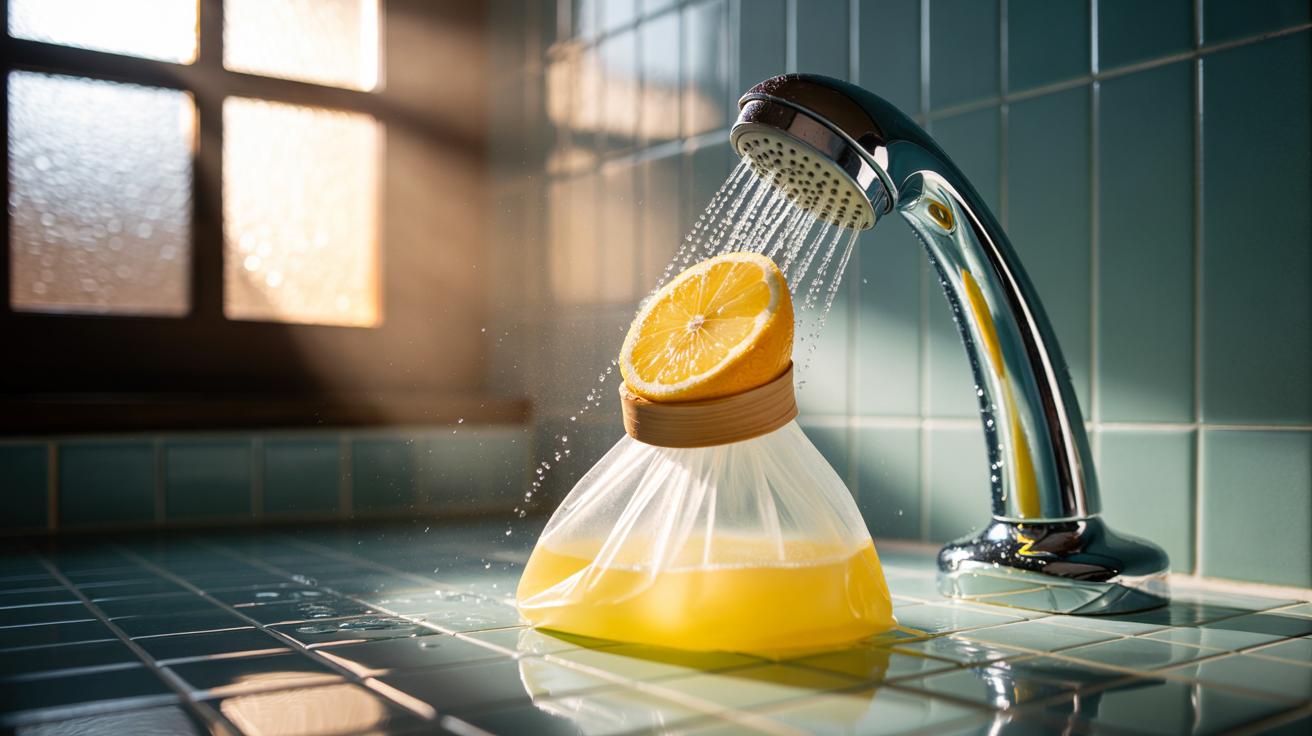
First, gather a fresh lemon, a small food bag or bit of cling film, and a rubber band. Slice the lemon through the equator. Squeeze a little juice into the bag to pool at the bottom, then nestle one lemon half inside. Without removing the shower head, slip the bag over the face so the cut lemon sits flush against the nozzles. Secure it with the band. Ensure the citrus flesh touches the jets directly; that’s where the chemistry happens. Set a timer for five minutes. For heavier scale, extend to ten—but no more than fifteen on plated finishes.
When the timer pings, remove the bag and massage the nozzles with your thumb or a soft toothbrush. You’ll see pale residue release in ribbons. Run hot water for a minute to flush loosened grit. Buff the chrome with a microfibre cloth for that showroom sheen. If some jets still misbehave, prick them gently with a wooden cocktail stick; avoid metal pins that can gouge silicone.
| Item | Purpose | Quick Tip |
|---|---|---|
| Lemon half | Dissolves limescale via citric acid | Warm the lemon in your hands to release more juice |
| Food bag + rubber band | Holds lemon against jets | Ensure a snug seal to prevent drips |
| Soft brush/cloth | Agitates and polishes | Go gently on plated finishes |
Safety, materials, and handy alternatives
Never mix lemon (or any acid) with bleach. The reaction can release dangerous gases. Keep it simple: citrus, water, and elbow grease. If your shower head is lacquered or made from softer metals, test a tiny spot first. Wear washing-up gloves if you have sensitive skin; citrus oils can be drying. Place a towel in the tub to catch stray drips and prevent slippery patches underfoot. These small precautions make the five-minute spruce-up both safe and seamless.
No lemons to hand? White vinegar is a reliable understudy. Its acetic acid performs a similar job. For a fragrance-free option, mix a teaspoon of citric acid powder into warm water and apply with a cloth. Grapefruit works in a pinch, though it’s milder. Choose the gentlest effective acid, and let time do the heavy lifting. The technique stays the same: contact, brief wait, light agitation, thorough rinse.
To stretch results, wipe the shower face after steamy baths to interrupt new deposits. Consider a weekly citrus swipe if you live in a very hard-water area. It’s quick, almost meditative, and far cheaper than cycling through speciality sprays. Your nose—and your water pressure—will thank you.
When a Quick Clean Isn’t Enough
Sometimes five minutes is a warm-up, not the match-winner. If jets still sputter, try a targeted soak: fill the bag with lemon juice (or a 1:1 vinegar-water mix) and immerse the head for 20 minutes, keeping the nut and hose threads dry. For removable models, unscrew the head, strip it down per the manufacturer’s diagram, and soak the faceplate separately. Gentle patience beats aggressive scrubbing every time, especially on chrome-plated or brushed finishes.
Stubborn blockages often hide just behind the spray plate. Dislodge grit with a soft brush, then rinse parts under hot water. Replace any tired rubber washers to prevent weeping joints. If the internal aerator is clogged, a brief citric bath followed by a rinse usually restores flow. When plastic nozzles are perished or scale has pitted the surface, replacement can be more cost-effective than endless cleaning cycles.
Keep perspective: improved spray efficiency shortens showers, saving water, energy, and money. The knock-on comfort is real; droplets feel fuller and warmer. If limescale returns rapidly, a small inline filter or a whole-house softener might be worth pricing up. But for routine care, that bright yellow fruit remains the quickest, neatest tool in the caddy.
Five minutes. One lemon. A transformed shower that gleams, smells fresh, and feels better on the skin. This is maintenance as habit, not hassle, and it adds up—less scrubbing later, fewer harsh chemicals, more satisfying mornings. Small domestic rituals shape daily comfort in surprisingly powerful ways. Will you try the lemon method tonight, or is there another low-cost trick you swear by for keeping hard-water havoc at bay?
Did you like it?4.3/5 (27)