In a nutshell
- 🧪 The science: citric acid lowers pH and d‑limonene dissolves oils, while citric acid also chelates hard‑water minerals for a squeaky, residue‑free finish.
- ⚡ Fast methods: lemon + salt scrub for hobs, microwave steam clean with lemon halves, oven glass paste using bicarbonate of soda, and hot-soak extractor filters.
- 🛡️ Surface safety: fine on stainless steel, ceramic, and glass; avoid marble/limestone/travertine and cast iron; use caution on aluminium and unsealed granite—always spot test.
- ☣️ Safety rules: never mix lemon with bleach; after acidic cleaning, rinse and dry; alternate alkaline bicarb and lemon for layered, polymerised grease.
- 🍋 Practical wins: a low-cost, natural degreaser that cuts harsh chemicals; adopt “small squeezes, short contact, thorough rinsing” for reliably spotless results.
Grease splatters add up. A splash from bacon, a smear from roast veg, a sheen from last night’s stir-fry; suddenly the hob, tiles, and extractor are sticky. Here’s the quiet revolution: a simple lemon. Slice, squeeze, scrub, and watch oil-bound grime surrender in minutes. It smells bright, costs pennies, and avoids harsh chemicals. The secret is part chemistry, part technique. When used correctly, citric acid and aromatic d-limonene in lemon cut through residue on metal, glass, and ceramic. Used wisely, lemon cleaning is quick, safe, and startlingly effective. Below, the know-how to turn a humble fruit into your most dependable degreaser.
The Science Behind Lemon’s Degreasing Power
Think of grease as a tight-knit club of oil molecules. Lemon’s weapons are twofold. First, citric acid lowers pH, loosening the intermolecular grip that helps sticky residues cling to surfaces. It doesn’t saponify fat like an alkali would; instead, it helps water penetrate and lift films while disrupting the static that holds dust and oil together. Second, the peel holds d-limonene, a natural solvent that dissolves hydrophobic grime. Pair acidity with a non-polar solvent and you have a powerful one-two punch.
Heat accelerates everything. Warm lemon juice thins viscous oils and improves spread. A dab of washing-up liquid adds surfactants that trap loosened grease into micelles, ready to rinse away. Minerals in hard water often hinder cleaning by forming deposits that anchor dirt. Citric acid chelates calcium and magnesium, stopping that from happening. That’s why a lemon wipe-down feels squeaky clean rather than filmy. For stubborn, polymerised oils on oven doors, the acid softens the upper layer while fine abrasives (salt or bicarbonate) provide mechanical persuasion without harsh scratching.
Step-by-Step Methods That Work in Minutes
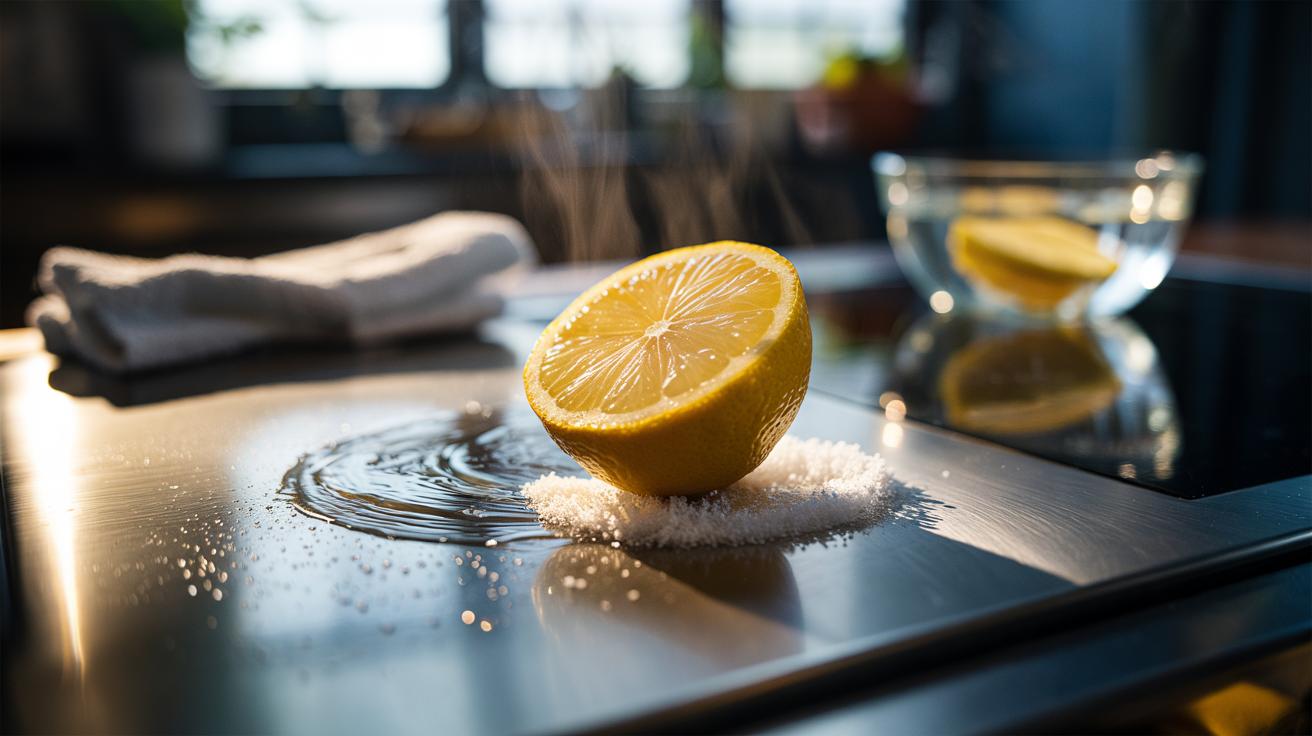
Hob and splashback refresh: Halve a lemon, dip the cut face in fine salt, and scrub in small circles. The salt scours, the juice cuts grease. Leave for 2–3 minutes, then wipe with a hot, damp microfibre cloth. Finish with a quick buff. Tiles gleam; grime lifts.
Microwave steam clean: In a bowl, mix 250 ml water with the juice and shells of one lemon. Heat on high until vigorously steaming (3–5 minutes). Let sit, door closed, for another 2 minutes. Wipe away softened splatters. It’s fast, low-effort, and smells fresh.
Oven glass rescue: Make a paste with 2 tbsp bicarbonate of soda and enough lemon juice to thicken. Spread over cool glass, wait 10 minutes, then scrub lightly and rinse. The alkaline bicarb lifts baked-on carbon; the acid breaks greasy bonds, and the gentle fizz helps release residue.
Sink and stainless steel polish: Rub with lemon juice, then a microfibre cloth. Rinse thoroughly and dry to prevent spotting. For extractor filters, soak in hot water with lemon juice and a squirt of washing-up liquid; rinse and dry fully before refitting.
Cutting board deodoriser: Sprinkle bicarb, scrub with half a lemon, leave 5 minutes, rinse, then dry. Never flood end-grain wood; use minimal liquid and dry promptly. For everyday pan degreasing, add a squeeze of lemon to hot, soapy water to speed up the cut-through and neutralise cooking odours.
What You Can and Cannot Clean With Lemon
Lemon is versatile, but not universal. Acid will etch or dull some stones and metals, and it can strip protective finishes. Keep this quick guide handy, and always test in an inconspicuous spot first.
| Surface | Method | Safe? | Notes |
|---|---|---|---|
| Stainless steel | Lemon juice wipe, rinse, dry | Yes | Dry immediately to avoid water spots. |
| Ceramic/glass hobs | Lemon + salt/bicarb, gentle scrub | Yes | Use non-scratch pads only. |
| Enamel | Juice, short contact, rinse | Generally | Don’t leave acid sitting for long. |
| Marble, limestone, travertine | None | No | Acid etches natural stone—avoid completely. |
| Granite (unsealed) | None | No | Can dull polish and open pores. |
| Aluminium | Very brief contact | With care | Prolonged acid may discolour. |
| Cast iron | Avoid | No | Strips seasoning; use hot water and brush instead. |
| Sealed wood | Light wipe, dry | With care | Do not soak; may dull finishes. |
Never mix lemon with bleach or chlorine-based products; it can release hazardous gases and damage surfaces. After any acidic clean, rinse with warm water and dry thoroughly to neutralise residue. For very stubborn polymerised grease, alternate a bicarb paste (alkaline) with lemon juice (acid) and mechanical scrubbing, rinsing between steps. This seesaw approach loosens layers without resorting to harsh oven cleaners. When in doubt, consult the manufacturer’s care guide—especially for specialist coatings or warranties.
There’s a pleasing elegance to it. A fruit that perfumes tea also restores a sparkle to your cooker hood and glassware, while cutting your reliance on synthetic degreasers. Use fresh lemons for quick jobs, keep a jar of lemon-peel vinegar for weekly wipe-downs, and reserve bicarbonate pairings for baked-on battles. Small squeezes, short contact, thorough rinsing—those three habits unlock consistently spotless results. Your kitchen will smell brighter, and your cleaning cupboard lighter. What’s the first greasy challenge you’ll test with a lemon, and which surface will you dare to transform today?
Did you like it?4.3/5 (23)