In a nutshell
- 🌿 Tannins in used tea act as a clarifying veil that evens reflection, enriches grain, and delivers a single-wipe natural sheen without synthetic waxes.
- 🧽 Method: use a cooled black tea bag, wring until just damp, wipe with the grain, avoid saturation, then buff dry; do a patch test to check finish compatibility.
- 🪵 Best matches: oak, walnut, and cherry glow; pine needs a lighter touch; sealed films see a clarity refresh; kitchen boards benefit as a food-safe refresh, while laminates gain degreasing only.
- ⚠️ Caveats: tannins react with iron (risk of dark staining), keep moisture minimal on water-based topcoats, avoid shellac or waxed surfaces, and remember tea is not a repair.
- ♻️ Sustainability and cost: upcycle a tea bag for pennies, skip silicones that hinder refinishing, cut chemical load, and maintain authentic patina with a subtle, buildable effect.
That spent tea bag beside your kettle might be the most underrated furniture polish in your home. Dip, brew, sip — then put it to work. When gently wiped across timber, its natural tannins lend a soft lustre, deepen tone, and subtly unify grain without synthetic waxes or silicone build-up. It’s quick. It’s cheap. It’s surprisingly elegant. The trick is restraint: squeeze out excess, glide with the grain, then buff dry. A single, well-aimed pass can revive dull wood and coax out a richer glow. Here’s why it works, where it shines, and how to make this kitchen cast-off your most civilised cleaning ally.
Why Tannins Make Wood Gleam
Tea is rich in polyphenolic tannins, the same astringent compounds that make your mouth pucker. On timber, those tannins act like a delicate glaze. They lay down microscopically thin color, amplifying contrast in the grain while muting scuffs that scatter light. Because tea is mildly acidic, it can lift surface grime that dulls sheen without stripping existing finishes. The effect is not a thick polish but a clarifying veil that helps wood reflect light more evenly. That’s why even a single pass can make a matt, tired surface look composed and quietly radiant.
There’s also a tactile shift. Astringency draws down raised fibres, giving a smoother hand-feel once you buff. Think of it as a temporary tightening of the surface that pairs beautifully with oil-finished pieces and bare wood accents. Crucially, you’re not adding a plasticky film; you’re enriching what’s already there. The colour bias leans amber-brown, so warm-toned species like oak, walnut, and cherry respond particularly well. Pale pines and maple can benefit too, though they may show a slightly stronger tint.
One caveat: tannins react with iron. On woods with high native tannin content (oak, chestnut), contact with rusty fasteners can produce blue-black iron tannate staining. Keep steel wool and corroded hardware away during application. If you’ve used a water-based topcoat that’s prone to watermarks, keep the cloth almost dry and buff immediately; you want sheen, not moisture rings.
How to Use a Used Tea Bag Safely
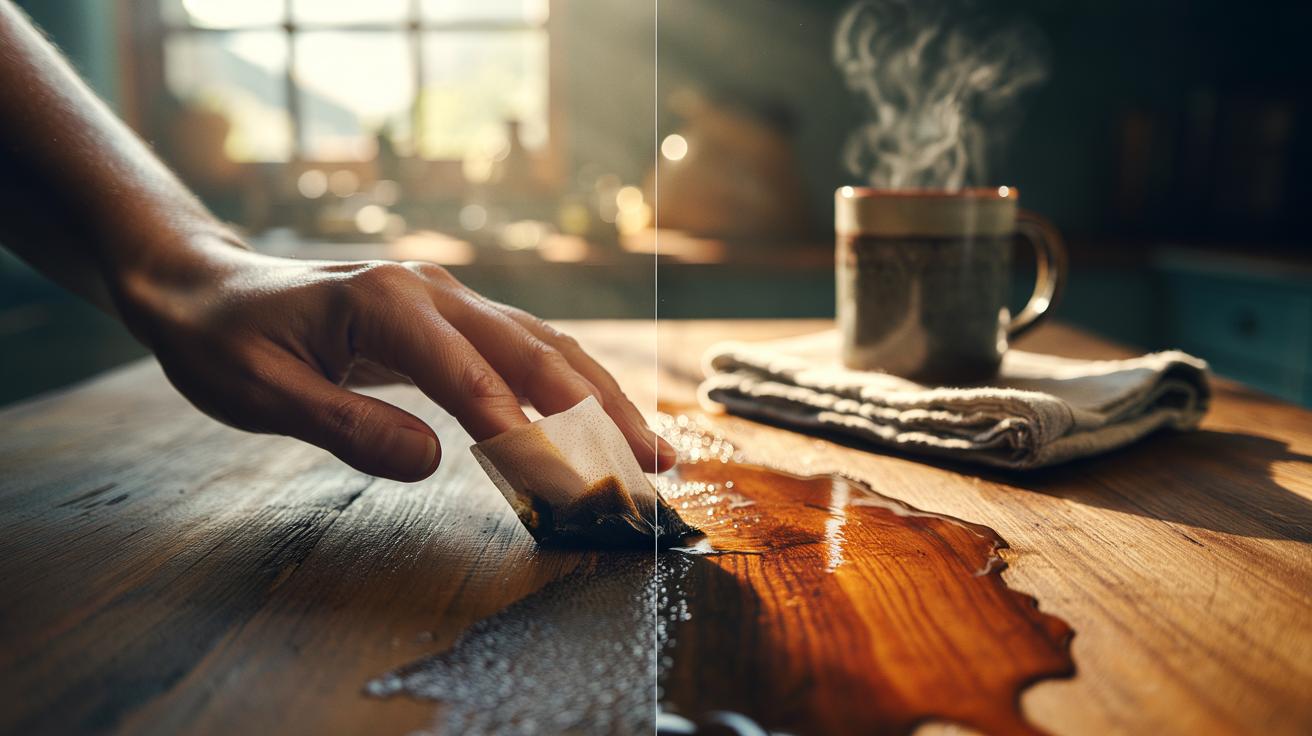
Begin with a freshly used black tea bag. Stronger teas carry more tannins. Let it cool, then squeeze hard until only damp. You want a controlled, nearly dry applicator. Glide with the grain in long strokes, covering a manageable section — a side table, a stair tread, a cabinet door. Stop as soon as the surface looks evenly moistened; don’t saturate. Wait 60 to 90 seconds, then buff with a clean, lint-free cloth or microfiber pad until the wood feels dry and looks calm, not glossy-wet.
For a slightly deeper tone, repeat once. Two passes are usually enough. On a varnished or polyurethane finish, keep expectations modest: you’re refreshing clarity, not building shine like a wax. On oil-finished or unfinished wood, the change reads warmer and more pronounced. Always do a patch test inside a cabinet door or under a chair seat. If the test spot streaks or darkens unevenly, your piece may have silicone residue or an incompatible finish; in that case, a dry buff alone is safer.
Practical hygiene matters. Toss the bag after use to avoid mildew. If you prefer a cloth, dip a corner in cooled tea, wring almost dry, and proceed identically. Avoid drips near joins and end grain, which absorb quickly and can blotch. Never use on active water stains, shellac softened by alcohol, or wax surfaces that smear with even slight moisture. Finish with a dry buff, then leave the piece to air for ten minutes before placing books or ceramics back on top.
Which Surfaces Respond Best
Candidates abound: dining tables tired from everyday wiping, oak banisters dulled by hand traffic, sideboards that lost their crispness under a film of dust. Mid- to dark-toned timbers typically sing. Walnut gains depth and a gentle chocolate glow. Oak brightens as the medullary rays catch light. Pine, being softer and resinous, benefits from a lighter hand and extra buffing to avoid patchiness. Laminates and melamine? They won’t absorb tannins, but a tea-damp cloth can still lift light grease and freshen the look before you dry the surface thoroughly.
Kitchen tools deserve a note. Chopping boards and wooden spoons handle tea well because it’s food-safe. The wipe can neutralise odours and even out appearance between oilings. Yet stains are possible on very pale maple. When in doubt, keep tea extremely dilute and finish with a light coat of mineral or linseed oil after drying. Floors respond too, though the margin for error narrows. Use a barely damp mop head, work in sections, and buff as you go to prevent water marks and traffic-line tidemarks.
For quick reference, match your tea and surface to the likely effect:
| Tea/Surface | Tannin Level / Finish | Expected Effect | Risk / Tip |
|---|---|---|---|
| Black tea on oak/walnut | High tannins, oil or bare | Warmth, grain contrast, calm sheen | Watch for iron contact; buff dry |
| Green tea on pine/maple | Moderate tannins, softwood | Subtle tone, cleaner look | Go very light to avoid blotches |
| Herbal infusion on laminate | Low tannins, sealed surface | Degreases only, minimal tone | Dry immediately to avoid streaks |
| Black tea on polyurethane | Sealed film finish | Clarity refresh, slight warmth | Use almost-dry cloth; avoid pooling |
Beyond Shine: Sustainability and Costs
A used tea bag is the definition of low-waste maintenance. No aerosol propellants, no petrochemical residue, no synthetic fragrance fogging the room. You’re upcycling a household leftover into a functional, visible improvement. For renters and students, the cost case is irresistible. One bag can treat a sideboard, a bedside table, and a banister run for pennies. Compare that with £6–£12 for a branded polish that may leave silicone traces making future refinishing difficult. Tea leaves nothing that complicates sanding or oiling later.
There’s another advantage: control. Off-the-shelf polishes can be overly glossy, masking patina and making antique pieces look oddly plastic. Tea’s effect is transparent and cumulative; you build just enough tone to flatter the timber without sealing history under a shine you can see from the hallway. If you already oil your furniture quarterly, a tea wipe between oilings keeps the look consistent and the dusting effortless. It also smells gentle and familiar, not cloying.
Be realistic about limits. Tea is not a repair. It won’t fill scratches, reverse sun-fade, or replace a deep clean on wax-heavy surfaces. But as a weekly or monthly refresh, it threads the needle between effort and elegance. Used thoughtfully, it’s a tiny ritual that pays off in a room that looks better kept, not overworked. Consider it the journalist’s favourite kind of tip: simple, verifiable, and ready the next time the kettle sings.
A humble bag of tea, wrung nearly dry, can lift haze, warm tone, and coax a composed sheen from tired wood in seconds. No toxins, little fuss, just a quiet nudge toward the natural beauty already present in the grain. Treat it as a maintenance habit, not a makeover, and you’ll sidestep streaks and stains while keeping options open for future refinishing. If your furniture could speak after one careful pass and a brisk buff, what pieces would ask for the next gentle wipe?
Did you like it?4.2/5 (21)