In a nutshell
- 🥖 Simple overnight hack: a slice of bread soaked in vinegar acts as a slow-release deodoriser, taming bin odours while you sleep with minimal cost and effort.
- 🧪 How it works: acetic acid lowers pH and protonates amines, cutting volatility; bread’s porous crumb diffuses vapour and traps smells inside a closed bin.
- 🧭 Steps: saturate stale bread with 2–4 tbsp white distilled vinegar, place on a saucer in the bin, close the lid overnight, then discard and wipe condensation in the morning.
- ⚠️ Safety and limits: Do not mix vinegar with bleach; don’t pair with baking soda in the same session; avoid aluminium parts, keep from pets, and deep-clean heavy residue first.
- 📊 Best choices: White distilled leaves minimal scent; malt is stronger (suited to outdoor bins); cider is mild but fruitier; pick neutral bread (wholemeal holds liquid well).
Britain’s bins work hard and smell worse. Yet a humble kitchen pairing can tackle the pong while you sleep. A heel of bread soaked in vinegar turns into a slow-release deodoriser, one that tames the funk of food scraps, fish wrappers, and damp liners without chemical sprays. The trick is chemistry but the win is convenience: set it up before bed, wake to a fresher kitchen. Acetic acid gently shifts the bin’s microclimate, knocking back odour-causing compounds, while the bread acts as a sponge and diffuser. It’s cheap, safe, and surprisingly effective for everyday whiffs—a small ritual for a big quality-of-life upgrade.
Why Vinegar and Bread Work Together Overnight
At the heart of this hack is acetic acid, the defining ingredient of vinegar. Many bin smells arise from alkaline compounds such as amines released by decomposing food, alongside sulphur notes and fatty acid volatiles. When the air inside a closed bin grows stagnant, those molecules linger. Vinegar lowers the local pH, protonating amines and shifting them into less volatile, less smelly forms. By nudging the chemistry towards acidity, you directly reduce the intensity of odours, not just mask them. That’s crucial in small, enclosed spaces like kitchen caddies and under-sink bins.
The bread isn’t just a carrier. Its porous crumb acts as a reservoir that releases vinegar vapour gradually, spreading the acidifying effect through the bin overnight. It also provides physical odour-binding: porous starch networks trap moisture and airborne molecules, softening sharp notes while the vinegar does the neutralising. Because the bin lid remains closed, the vapours stay where they’re needed. This slow, contained diffusion is why the trick works best while you rest, delivering an easy reset without aerating the whole kitchen.
Step-By-Step: The Overnight Bin Refresher
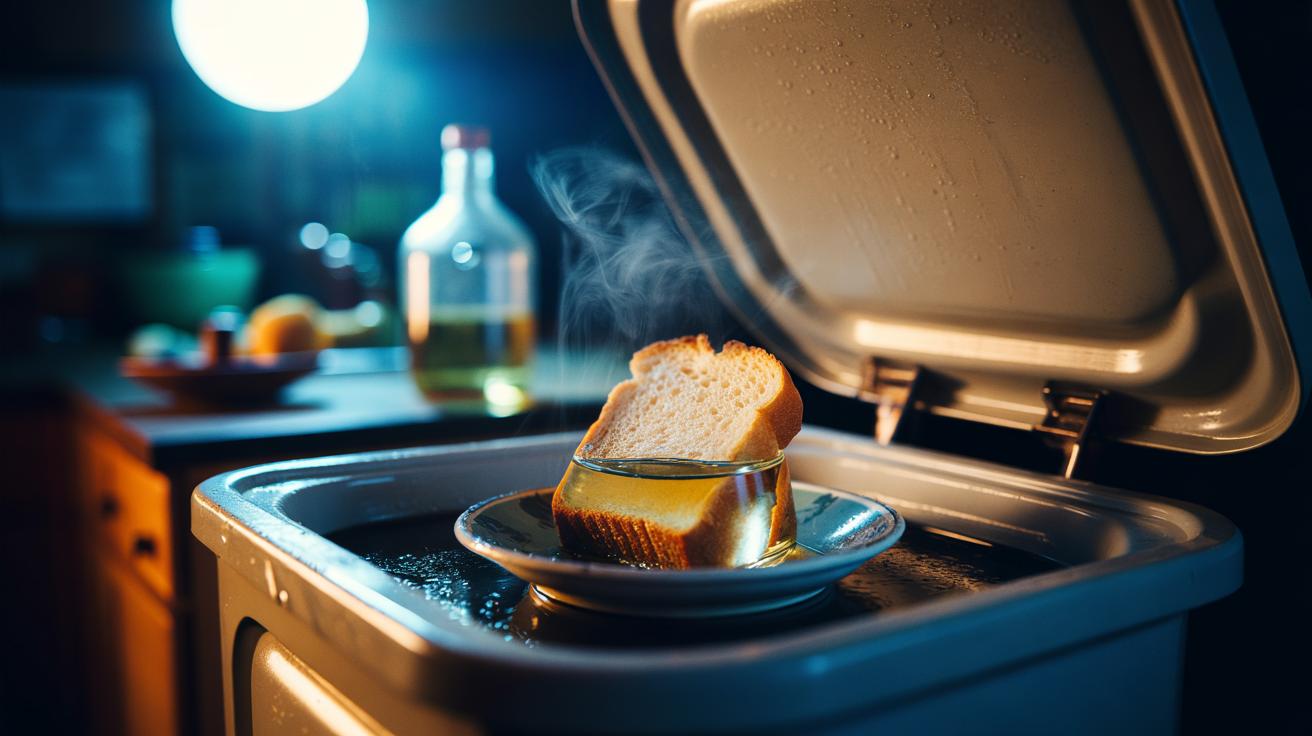
Start with a quick tidy. Remove rubbish and give the bin a fast rinse if necessary. Pat dry; a slightly damp interior is fine. Take a slice of bread—stale is perfect—and place it on a small saucer or on baking parchment to prevent sticking. Pour 2–4 tablespoons (about 30–60 ml) of white distilled vinegar over the slice until it’s fully saturated but not dripping. Set the saucer at the bottom of the bin or the caddy, close the lid firmly, and leave it overnight. In the morning, discard the bread and wipe any condensation from the lid and rim.
For persistent whiffs, repeat two or three nights in a row. If you can, line the bin after deodorising to slow future build-up. Avoid adding bicarbonate of soda alongside the vinegar in the same session; they neutralise each other and weaken the deodorising. Use baking soda on a different day for a dry freshen. Never combine vinegar with bleach or bleach-based cleaners, which can release hazardous gases. A final tip: a splash—no more than a capful—on the bread is enough for small caddies; larger wheelie bins may need a second slice placed on the opposite side.
The Science of Acidity: How Smells Are Neutralised
Most household vinegars sit at a pH around 2–3. That level of acidity is well suited to taming malodours from volatile amines (think fishy or “bin juice” notes). Protonated amines are less volatile, so they don’t leap into the air as readily. Lower volatility means fewer odour molecules reach your nose. There’s also a secondary benefit: acetic acid exerts a mild antimicrobial effect, discouraging the microbes that pump out the next wave of smells overnight. This isn’t sterilisation, but it’s a useful brake on the odour cycle.
Why involve bread rather than a bowl of vinegar? Surface area and distribution. A soaked slice exposes an intricate matrix of pores, increasing evaporation across a broad area while keeping liquid contained. This stabilises release, so the bin interior experiences a steady plume of acetic vapour rather than a sharp burst that dissipates quickly. It also limits spills. Some odours, especially fatty or smoky notes, can cling to the bread’s starch-lipid network, which acts as an extra passive filter. The result is a one-two punch: chemical neutralisation plus physical capture, achieved with ingredients already on your countertop.
Choosing the Right Vinegar and Bread, Plus When It Won’t Work
Not all vinegars behave identically. For neutral deodorising, a clear, clean-smelling liquid helps. White distilled vinegar leads because it’s consistent and leaves minimal residue. Malt vinegar is common in UK cupboards but carries its own aroma; it still works, yet may add a faint tang that some notice in very small kitchens. Cider vinegar is serviceable but more fragrant. As for bread, any plain slice will do, though dense wholemeal holds liquid well and resists disintegration. Avoid seeded or strongly flavoured loaves that could leave their own odour.
| Vinegar Type | Typical Acidity | Odour Residue | Best Use |
|---|---|---|---|
| White Distilled | 5–6% | Very low | Daily kitchen bins, caddies |
| Malt | 5–6% | Moderate, malty | Outdoor bins or well-ventilated spaces |
| Cider | 5–6% | Mild fruity | General use if fragrance acceptable |
There are limits. If a bin harbours liquid leaks, rancid fats, or protein-heavy residue, you’ll need a wash with hot water and detergent before the vinegar-bread routine can shine. Do not pour vinegar directly onto aluminium components or bin hardware; it can accelerate corrosion. Most plastic bins are fine. For maggot outbreaks or severe contamination, deep-clean first, then use the overnight method as maintenance. Keep the slice out of reach of pets. And remember: liners that breathe, regular emptying, and dry scraps policy will extend the freshness window.
A bread-and-vinegar refresher is a small domestic upgrade with outsized pay-off: quiet chemistry taking back control of your bin while you sleep. It’s frugal, low-risk, and easy to fold into your week. Each morning you avoid the pungent surprise, thanks to acidity doing the hard work inside a closed lid. Once a habit, it becomes the simplest way to keep everyday odours in check. Will you try the overnight slice tonight—and if you do, which vinegar will you pick for your first test run?
Did you like it?4.7/5 (22)