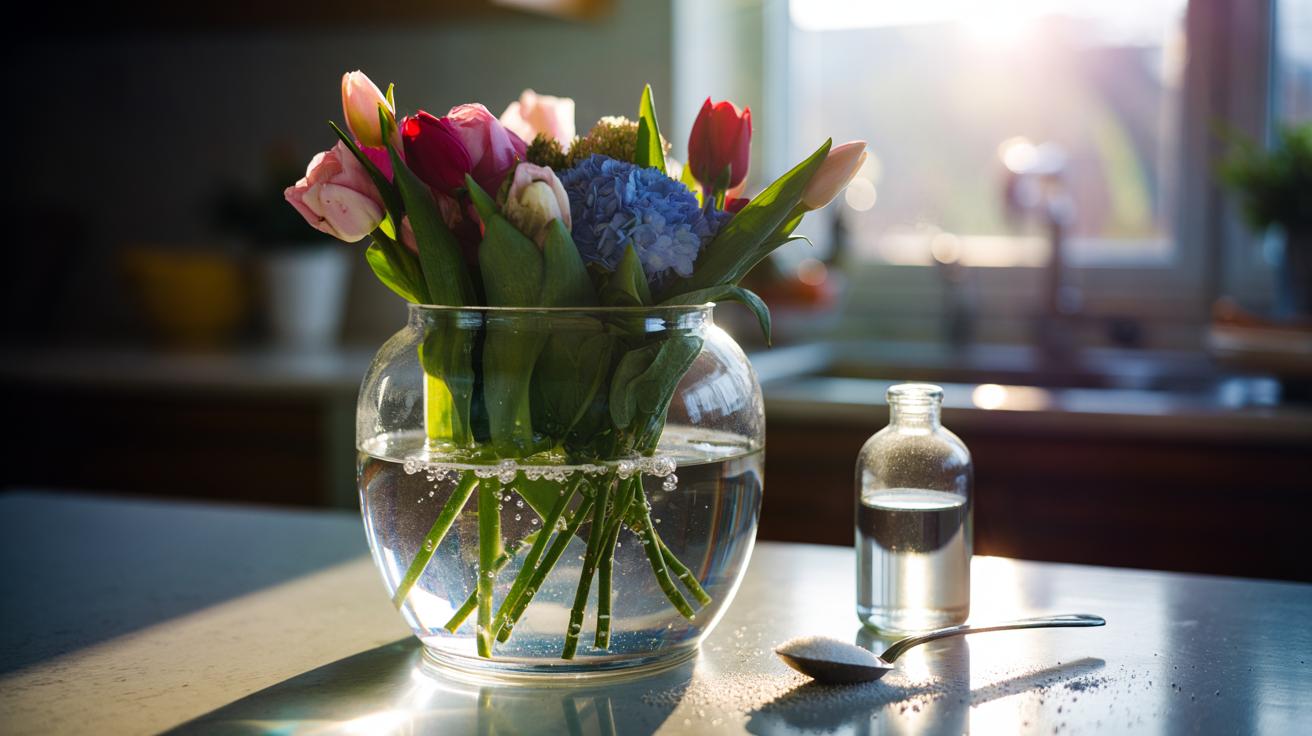
In a nutshell
- 🌸 A quick vinegar soak revives wilted flowers in hours by lowering water pH, suppressing microbes, and unclogging the xylem; a pinch of sugar fuels metabolism.
- 🧪 Best choice is white distilled vinegar; mix 1 L water + 1 tbsp vinegar + 1 tsp sugar for the soak, then use half-strength in the vase; dilute more if using stronger cleaning vinegar.
- ✂️ Step-by-step: re-cut stems at 45°, strip underwater foliage, use lukewarm water, soak 10–40 minutes by species, keep flower heads dry, then transfer to fresh solution or clean water.
- 🌿 Flower-specific tips: roses like a warm start; tulips prefer cooler, shallow water; hydrangeas benefit from a longer soak and gentle misting; woody stems (e.g., lilac) respond to a base split.
- 🧼 Maintenance and safety: scrub vases, refresh water daily, never mix vinegar with bleach, protect stone surfaces; the proven trio—clean cut + mild acid + modest sugar—outperforms myths like coins or aspirin.
It sounds like a trick from a thrifty florist, yet it’s grounded in clear plant science: a quick vinegar soak can bring tired bouquets back from the brink. When cut flowers droop, the culprits are usually bacterial build-up and clogged stems that block water flow. A mild acidic bath resets the plumbing. Petals lift. Colours sharpen. In many cases, blooms rebound in just a few hours. This kitchen-cupboard rescue is simple, cheap, and surprisingly elegant. With the right ratio, the right temperature, and a few careful snips, you can restore poise to roses, tulips, hydrangeas and more—without resorting to pricey sachets or harsh chemicals.
Why Vinegar Works on Cut Flowers
Cut stems are highways for water. When microbes multiply at the cut end, they form slimy biofilms that clog the xylem, starving the bloom above. A small dose of acetic acid lowers the water’s pH, creating conditions less friendly to bacteria and fungi. The acid also helps dissolve mineral deposits, especially in hard-water areas, where calcium can precipitate and gum up the works. Lower pH equals smoother flow. The result is faster rehydration and a visible lift in turgor—the internal water pressure that keeps petals firm and leaves upright.
Acidity alone is only part of the lift. Add a pinch of sugar and you give the flower a quick carbohydrate top-up, helpful for varieties that continue to metabolise after cutting. Think of it as a two-part formula: vinegar acts as a mild biocide; sugar acts as a snack. The combination is the basis of many commercial preservatives, just minus the synthetic additives. Get the balance right, and stems drink deep, fast.
There’s a caveat. Too much acid can scorch tender tissues. Keep the solution gentle and the soak brief. Observe for signs of stress—bleaching, limp petals—and adjust. With delicate blooms, err on the conservative side and focus on impeccable stem hygiene.
Step-by-Step: The Rapid Revive Soak
First, clear the stem ends. With a clean, sharp knife or floristry shears, re‑cut each stem at a 45-degree angle. Remove any foliage that would sit below the waterline. This single act reduces decay and opens fresh conduits for water. Always cut under running water or in a bowl to prevent air pockets. Air embolisms—tiny bubbles—impede uptake just as effectively as a biofilm.
Mix your bath: 1 litre of lukewarm water, 1 tablespoon (15 ml) white distilled vinegar, 1 teaspoon sugar. Stir to dissolve. Place stems so that only the lower third is submerged. Keep blooms and foliage dry to avoid spotting. For robust flowers—roses, chrysanthemums, gerberas—soak 20–40 minutes. For sensitive petals—tulips, sweet peas—start with 10–15 minutes and reassess. Do not immerse flower heads. Once perked, transfer to a vase of fresh solution at half-strength (about ½ tablespoon vinegar per litre) or clean water.
Timing matters. Work swiftly after the re-cut, as stems are most receptive in the first minutes. Position the arrangement out of direct sun and away from radiators or draughts. If stems were severely wilted, repeat a shorter soak the next day. Most bouquets show noticeable lift within two hours, while some continue to firm overnight as hydration equilibrates through the petals.
Choosing the Right Vinegar and Ratios
Not all vinegars are equal. For speed, clarity and scent neutrality, white distilled vinegar is the workhorse. It brings predictable acidity without tinting the water or competing with the flower’s fragrance. Alternatives can work, but adjust your dose and expectations. Remember: the goal is gentle acidity, not pickling.
| Vinegar Type | Typical Acidity | Suggested Ratio (per litre) | Notes |
|---|---|---|---|
| White Distilled | 5% | 1 tbsp for soak; ½ tbsp for vase | Neutral smell, no colour; ideal baseline |
| Apple Cider | 5% | 1 tbsp for soak | May tint water; mild aroma |
| Cleaning Vinegar | 6–8% | ½–¾ tbsp for soak | Stronger; dilute more to avoid damage |
| Wine/Balsamic | 5–6% | Not recommended | Colour and aromatics can stain or overwhelm |
If your tap water is very hard, vinegar is doubly useful; it softens the solution and helps prevent the chalky films that block cut ends. Add sugar sparingly—1 teaspoon per litre is plenty—especially for flowers prone to bacterial issues. When in doubt, start weaker and build up. Too much acidity can curl petals or strip bloom waxes that protect against wilting.
Troubleshooting, Safety, and Flower-Specific Tips
Roses love a warm start. After the vinegar soak, move them to cool water and remove guard petals if they’re bruised. Tulips prefer cooler conditions and shallow water; use a lighter dose of acid and keep them upright while they drink. Hydrangeas are thirsty brutes: consider a longer initial soak and mist the heads lightly—but keep acid off petals. Woody stems like lilac or eucalyptus benefit from a fresh split at the base to expose more drinking surface. Tailor the soak to the species, not the other way round.
Cleanliness wins longevity. Wash vases with hot, soapy water and rinse thoroughly before any rescue attempt. Replace water daily or every other day, refreshing your half-strength vinegar solution to hold microbes at bay. If water clouds or smells, change it. Strip foliage below the line, always. Dirty containers undo the soak in hours.
Safety is simple. Never mix vinegar with household bleach; it releases chlorine gas. Keep acidic solutions away from marble and natural stone, which etch. Pet owners, note: a few drops of vinegar in a vase aren’t appealing to cats or dogs, but still place arrangements out of reach. Finally, skip myths like copper coins or aspirin. The science-backed trio—clean cut, mild acid, modest sugar—delivers results you can see.
A humble splash of vinegar can turn a flagging bouquet into a centrepiece again, saving money and reducing waste. The method is fast, tidy, and rooted in plant physiology, not folklore. With a sharp blade, a clean vase and a measured solution, you give stems the best possible path for water, and petals answer with poise. In the space of an afternoon, a room can look newly dressed. Which flowers will you try first—and how might you tweak the ratios to suit your favourite stems and your local water?
Did you like it?4.5/5 (29)