In a nutshell
- 🧪 Acetic acid power: A gentle pH shift breaks ionic bonds, loosens alkaline residues, disrupts metal-tannin links, and neutralises odours for fast stain release.
- 🧰 Mixing ratios & tools: Use 5% distilled white vinegar at 1:1 with water (or 1:2 for delicate fibres), plus white cotton cloths, a spray bottle, and a soft-bristle brush.
- ⏱️ Method that works: Lightly mist, allow 5–10 minutes dwell, blot not rub, then rinse and blot; repeat controlled cycles and speed drying with airflow to prevent wicking.
- 🧵 Fibre care essentials: For wool/viscose use weaker mixes (1:2–1:3), short dwell, minimal agitation, and patch-tests; some protein or oil stains need alternative cleaners.
- ⚠️ Safety first: Never mix vinegar with bleach or peroxide, don’t bottle-mix with bicarbonate, always patch-test, and call a professional for large or persistent stains.
The humble bottle of household vinegar has a star turn on carpets. It’s not a miracle potion, yet the science behind its success is satisfyingly sober: acetic acid, a weak organic acid, changes the chemistry of sticky residues, mineral films, and odour-causing compounds so they release from fibres. Used correctly, it’s quick. It’s frugal, too. A spray, a pause, a patient blot, and many light stains retreat without drama or damage. From hallway runners marked by winter salt to living-room rugs shadowed by old tea rings, vinegar often restores clarity and colour. Speed comes from chemistry, not elbow grease.
Why Acetic Acid Works on Stains
Acetic acid doesn’t scour; it shifts balance. Many everyday soils—salts from shoes, alkaline cleaners left behind after previous “spot fixes”, traces of soap—are basic. A mild acid lowers the pH, breaks ionic bonds, and loosens films that glue grime onto fibres. It can also disrupt metal-bridged complexes (think iron-tannin links in old tea stains), softening the “hold” that discolouration has on nylon or polyester. As a small, polar molecule, acetic acid penetrates matted pile easily, and because it’s volatile, it tends to evaporate cleanly, helping carpets dry faster once blotted and rinsed.
There’s an odour angle, too. Pet accidents leave alkaline residues and volatile amines; vinegar neutralises them, cutting smell at the source rather than merely perfuming the air. Crucially, this is gentle chemistry. At working strength—often a simple 1:1 dilution of white vinegar and water—the solution is assertive enough to act on residues yet kind to most synthetic fibres and many dyes. It’s the pH shift, not scrubbing, that does most of the work. Highlight that in your method and your carpet will thank you with colour that looks truer, not tired.
Mixing Ratios, Tools, and Contact Time
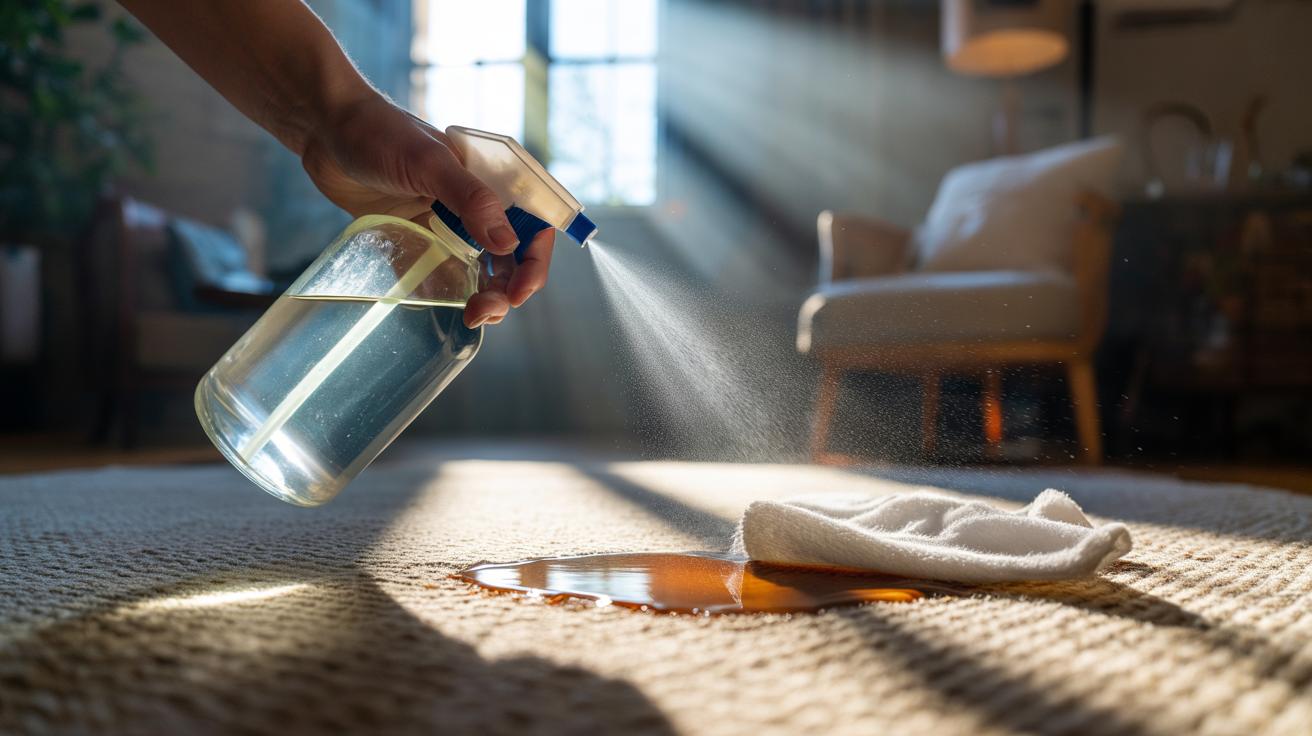
Reach for plain, clear, distilled vinegar at 5% acidity. For routine soil and light discolouration, a 1:1 mix with cool water is a solid starting point; for delicate fibres or vivid dyes, stretch to 1:2. Warm (not hot) water improves penetration without risking dye bleed. Equip yourself with white cotton cloths—they reveal transfer—plus a spray bottle and a soft-bristle brush for textured pile. Apply modestly: you want to wet the stain, not the underlay. Give the solution time. Five minutes on fresh marks, up to ten on older patches. Then blot, don’t rub. Rubbing drives pigments deeper and roughens pile.
Finish by misting with clean water and blotting again; this lifts loosened residues and trims any lingering acid feel. You can dust with bicarbonate of soda after rinsing to tame odours during drying, but don’t mix it into the bottle—it neutralises the acid and weakens the clean. Always test on an inconspicuous area. If colour lifts onto your cloth, stop and consider a professional spotter.
| Stain Type | Vinegar:Water | Contact Time | Notes |
|---|---|---|---|
| Tea/Coffee (old) | 1:1 | 8–10 min | Blot from edges in; repeat cycles may be needed. |
| Pet Urine (dry) | 1:1 | 5–7 min | Neutralises odour; rinse well to prevent wicking. |
| Road Salt/De-icer | 1:1 | 5–8 min | Dissolves alkaline residues; brush to lift crystals. |
| Mud/Soil | 1:2 | 5 min | Let dry mud flake first; vacuum before treating. |
| Light Rust on Synthetic | 1:1 | 3–5 min | Test carefully; avoid on wool and viscose. |
Step-by-Step Stain-Lifting Technique
Start with identification. Is the carpet wool, synthetic, or a blend? Wool and viscose ask for a gentler dilution. Vacuum loose grit to prevent abrasion. Blot fresh spills with a dry, white cloth until no more transfers; never press hard enough to compress the underlay. Lightly mist your vinegar solution across the stained area and an inch beyond to avoid tide marks. Allow it to dwell—time unlocks bonds. Then blot in firm, vertical presses. Rotate to clean sections of cloth so you track progress, not reapply soil. Work from the outside edge towards the centre to stop spread.
If the pile is crushed, tease it upright with a spoon or soft brush. Rinse by misting clean water; blot again. Persistent stains respond to cycles: apply, dwell, blot, rinse, repeat. Keep moisture controlled to avoid underlay saturation—excess water creates slow-drying patches that wick old soils back to the surface, producing ghost stains. Speed drying with airflow: open a window, set a fan on low, place paper towels under a lifted corner if safe to do so. Finish by grooming the nap in its natural direction for a uniform finish and fewer dull spots.
Safety, Fibre Care, and When to Call a Professional
Vinegar is friendly, not foolproof. Natural fibres such as wool and viscose/rayon can be sensitive to acids and moisture. Use a weaker mix (1:2 or 1:3), short dwell times, and minimal agitation. Watch for colour bleed—reds and deep blues are the usual culprits. Never combine vinegar with bleach; the reaction releases dangerous chlorine gas. Likewise, avoid pairing it in-bottle with peroxide or bicarbonate—the chemistry cancels or risks fizzing where you don’t want it. Always patch-test on a hidden section before treating the centre of a room.
Know the limits. Protein stains like blood or raw egg can set under acid; reach for cool water and an enzymatic cleaner instead. Sticky paint, tar, and oil-based dyes need solvent spotters, not vinegar. If the stain is large, if odours return after drying, or if you suspect mould beneath the carpet, call a professional carpet cleaner with hot-water extraction and fibre-safe spotters. They can stabilise dyes, neutralise pH precisely, and dry the subfloor swiftly, preventing long-term damage or reappearing marks that sap your hard-won progress.
Used smartly, a vinegar solution trades brute force for brainpower, tackling the chemistry that bonds stains to carpet fibres and replacing it with clean, quick release. It’s cheap, accessible, and—once you master dilution, dwell time, and blotting—remarkably effective on everyday mishaps. Keep a small spray bottle handy, label it clearly, and treat stains sooner rather than later. The sooner the pH shifts, the sooner the colour returns. Which household stain are you most keen to defeat with acetic acid—and what’s the one tricky mark you still want a journalist to investigate on your behalf?
Did you like it?4.5/5 (25)