In a nutshell
- 🔬 The science: acetic acid in vinegar reacts with limescale (calcium/magnesium carbonates), forming soluble salts and releasing CO₂—acidity converts crust into rinseable residue fast.
- 🧼 Method that works: spray neat white vinegar, keep it wet for 5–15 minutes, gently brush jets, rinse hot, and run the shower; for heavy build-up, use a bag-and-soak for 20–30 minutes and consider warm vinegar plus a drop of washing-up liquid for better cling.
- ⚠️ Safety first: never mix vinegar with bleach (chlorine gas risk), avoid natural stone surfaces, limit contact on brass/nickel finishes, patch test, and rinse around rubber seals and O-rings.
- 🧰 Surface tips: chrome and stainless tolerate neat or 1:1 vinegar with short dwell; brass/nickel need diluted, brief contact; rubber nozzles prefer 1:1; stone surfaces should be masked or avoided.
- ♻️ Smart alternatives and upkeep: try citric acid (5–10%) as a gentler option, skip baking soda (neutralises acid), and switch from weekly clearing to a monthly spritz for low-effort maintenance.
Hard water strikes again. A chalky halo on the shower head, a spray pattern that hisses sideways, and that dull film you can’t quite buff away. The quick fix isn’t a pricey gel or a harsh solvent. It’s a vinegar spray. Humble, food-grade, and astonishingly effective, it eats through limescale in minutes. The secret lies in acidity and a bit of patience. Mist the surface, let chemistry work, then rinse to reveal bright metal and unclogged jets. Used correctly, vinegar can dissolve mineral build-up faster than you can make a cup of tea, saving both money and elbow grease while keeping fumes and environmental impact to a minimum.
How Acidity Breaks Down Limescale
That rough, white crust is mostly calcium carbonate and magnesium carbonate, minerals deposited as hard water dries. White vinegar—typically 5% acetic acid—reacts with those carbonates. The chemistry is neat and visible: acetic acid converts insoluble carbonate into soluble calcium acetate, releasing tiny bubbles of carbon dioxide. Those bubbles tell you the acid is biting, thinning the crust and loosening the bond to metal or plastic. Vinegar doesn’t just loosen scale—it transforms it into salts that can be rinsed away. That’s why results come quickly, even without heavy scrubbing.
Performance hinges on a few variables. Lower pH means faster action, so full-strength white vinegar outpaces diluted mixes. Warmth helps too; gently warmed vinegar speeds diffusion into pores. Thin layers dissolve rapidly; thicker encrustations may need repeated sprays as the acid is consumed. Agitation matters: a soft brush or cloth shifts dissolved residues, exposing fresh surface to acid. Time is your ally. A dwell time of 5–15 minutes clears light deposits; crusty build-up may need 30 minutes, topped up once or twice. The science is simple, the payoff immediate.
Step-by-Step Vinegar Spray Method
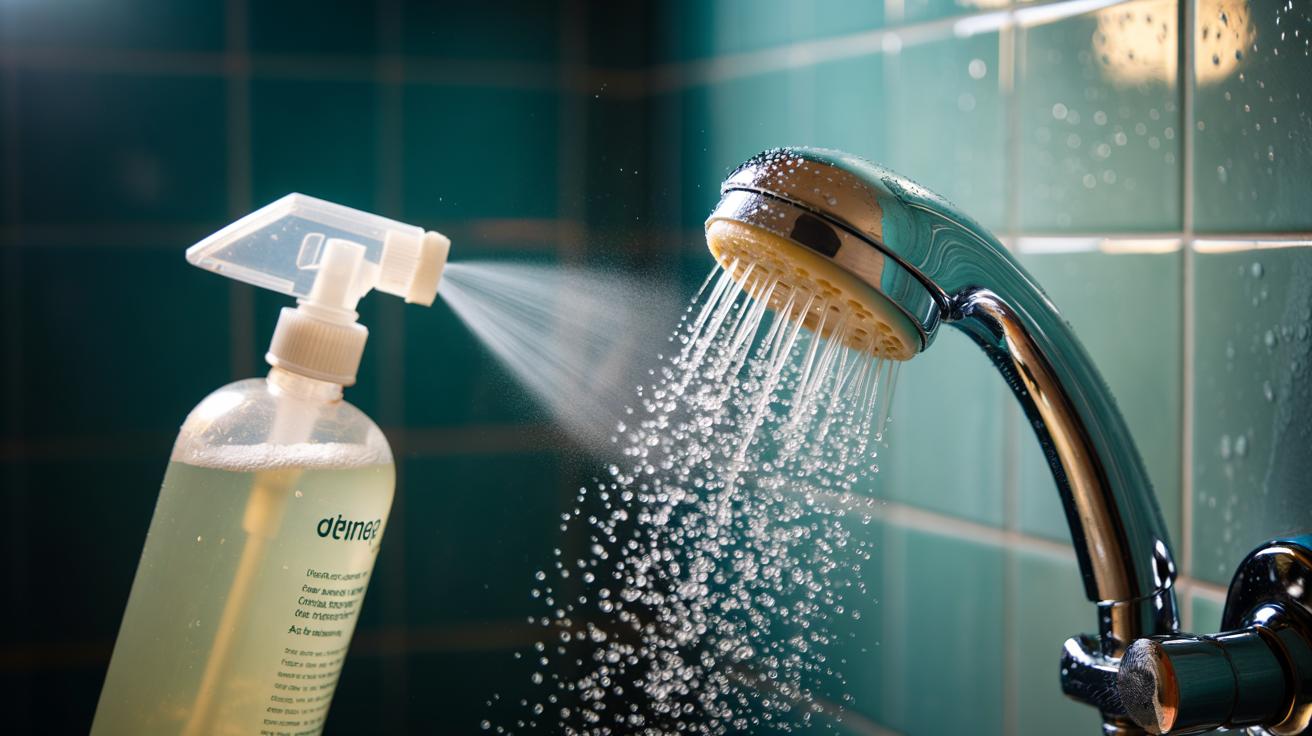
Start with a clean spray bottle and standard white vinegar. For routine build-up, use it neat. For delicate finishes, try a 1:1 mix with warm water. Mist the shower head generously, front and back, lifting the faceplate if it’s removable. Leave it to fizz. Five to ten minutes is often enough; keep the surface wet by respraying if it dries. Loosen jets with a soft toothbrush or a wooden cocktail stick. Rinse with hot water, then run the shower for a minute to flush internal passages. Dry and buff with a microfibre cloth. For stubborn scale, bag-and-soak works: tie a vinegar-filled bag around the head for 20–30 minutes.
| Surface | Mix | Dwell Time | Notes |
|---|---|---|---|
| Chrome-Plated Head | Neat vinegar | 5–15 min | Soft brush only; rinse and dry thoroughly. |
| Stainless Steel | Neat or 1:1 with warm water | 10–20 min | Safe and effective; avoid abrasive pads. |
| Brass/Nickel Finishes | 1:1 dilution | 5–10 min | Short contact; patch test finish. |
| Rubber Nozzles/O-Rings | 1:1 dilution | 5–10 min | Rinse promptly; prolonged soak not needed. |
| Natural Stone Nearby | Avoid vinegar | — | Acid etches marble/limestone; mask or keep dry. |
Two small extras raise the game. Warm the vinegar (not hot) to improve action. Add a drop of washing-up liquid to reduce surface tension so the spray clings better to curved chrome. Finish with a quick polish; you’ll resist fresh deposits longer if the surface is clean and dry.
Safety, Materials, and What Not to Do
Vinegar is non-toxic, but smart precautions keep the job tidy. Work with ventilation and avoid misting directly into your face; overhead spraying can irritate eyes. Wear light gloves if your skin is sensitive. Keep contact time short on brass, nickel, and oil-rubbed finishes, and never scrub with abrasives that can cut protective coatings. Rinse thoroughly, especially around rubber seals and cartridges, which don’t need prolonged acid exposure. Always test on a hidden spot first if you’re unsure how a finish will respond.
The big red line is chemistry. Never mix vinegar with bleach; the reaction releases chlorine gas, which is hazardous even at low concentrations. Don’t use vinegar on natural stone (marble, limestone, travertine) as acids etch calcium-rich surfaces. If your shower wall includes stone, mask it or remove the head and clean it in a sink. Avoid leaving metal parts soaking overnight; prolonged immersion can dull plating. Store vinegar away from strong alkalis to prevent accidental neutralisation that makes both products ineffective.
Smart Tweaks and Alternatives for Stubborn Scale
When deposits are thick, stack the deck. Heat accelerates reactions, so use warm vinegar and re-spray as fizzing slows—fresh acid keeps momentum. For an ultra-fast cling, one drop of washing-up liquid creates a thinner film that wets every crevice. Consider a bag soak after spraying to bathe the underside where hands rarely reach. If your water is extremely hard, repeat treatment weekly until the jets run true, then switch to a monthly spritz as maintenance. Short, regular sessions beat one heroic scrub.
Alternatives exist. A 5–10% citric acid solution (dissolve crystals in warm water) works gently and smells milder. “Cleaning vinegar” at 6–10% is stronger, but watch sensitive finishes and cut contact times. Resist the urge to sprinkle bicarbonate of soda on vinegar; the fizz looks dramatic but neutralises acidity and slows limescale removal. If aerators or flow restrictors are clogged deep inside, disassemble and soak parts separately. Quick chemistry, light touch, consistent care—these are the habits that keep a shower head spraying like new.
With a bottle of vinegar and ten spare minutes, the maths stacks up: minimal cost, minimal effort, maximum shine. The reaction is visible, the routine easy to remember, and the environmental footprint small. Keep the spray handy, touch up little and often, and you’ll rarely meet a stubborn crust again. Ready to try the method tonight, or will you test citric acid first and compare which chemistry wins on your shower head?
Did you like it?4.7/5 (21)