In a nutshell
- 🧪 Science that works: Vinegar’s acetic acid protonates fatty acid salts and disrupts calcium/magnesium bonds in soap scum, loosening residue so it wipes away with minimal scrubbing.
- 🧴 Simple method: Use white distilled vinegar—1:1 with water for light haze, neat for heavy buildup; apply warm (not hot), allow a 5–10 minute dwell, then wipe, rinse, and dry with microfibre.
- ⏱️ Let time scrub: Spritz from the top so runoff carries loosened deposits; for tiles/grout extend dwell to 10–15 minutes, repeating if needed for limescale-fringed scum.
- ⚠️ Safety and surfaces: Ventilate, wear gloves if sensitive, and never mix vinegar with bleach; avoid natural stone (marble, limestone, travertine) and test delicate finishes first.
- 🧰 Smart boosters: For tough cases, add a little citric acid or a drop of non-ionic surfactant; use non-scratch pads lightly, and keep bicarbonate of soda as a separate step to avoid neutralising the acid.
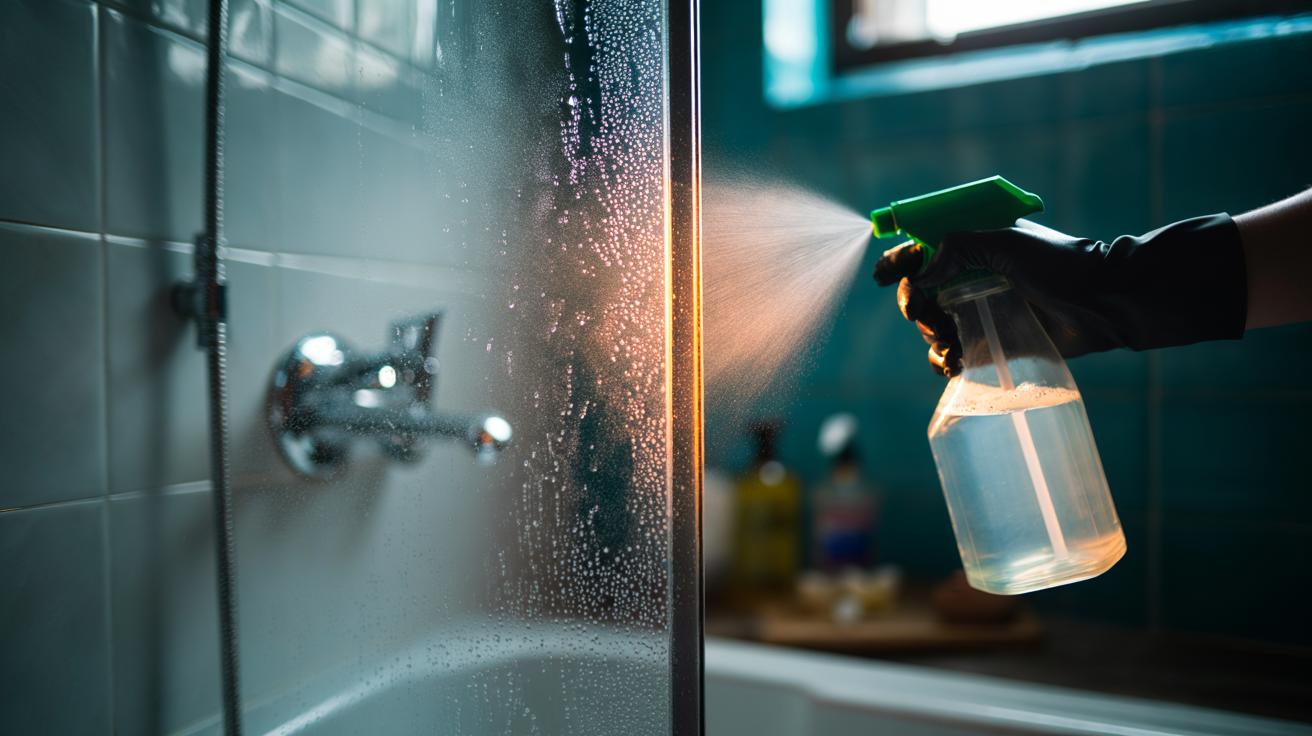
That chalky haze on your shower screen? It isn’t dirt in the usual sense. It’s stubborn chemistry. A quick mist of household vinegar, though, can make it melt away with minimal effort. The trick isn’t elbow grease but acetic acid, the gentle yet effective solvent hiding in plain sight in your cupboard. Apply, wait, wipe. The transformation looks instant, because acid breaks the bond between soap scum, body oils, and hard-water minerals. You don’t need specialist sprays or abrasive pads that scratch glass. You just need the right strength, the right dwell time, and a simple routine you’ll actually keep.
Why Soap Scum Forms on Tiles and Glass
Soap scum is the gritty partnership of fatty acid salts from traditional soap and minerals—chiefly calcium and magnesium—floating in hard water. When you lather up, those minerals bind with soap to create insoluble compounds such as calcium stearate. They don’t rinse away. They cling. Warm water evaporates, leaving a film that traps skin oils, talc, and dirt. In a day or two, the film dulls glass and tiles, turning clear screens cloudy and chrome fittings chalky.
Texture matters. Micro-scratches in old glass and the porous grout lines between tiles give deposits a foothold. Heat helps, too, accelerating evaporation and crystal growth. That’s why shower doors cloud near the handle and edges first. Every splash that dries, sets the next layer. Switch from bar soap to liquid body wash and you’ll often see a mild drop in residue. But where water is very hard, deposits still form. The result is cumulative and stubborn—until you change the chemistry.
How Acetic Acid Breaks Down Residue
Vinegar’s power comes from acetic acid. In a typical 5% white vinegar, the pH sits near 2.4—comfortably acidic, yet household-safe on glass and ceramic. When it meets soap scum, acetic acid does two key jobs. First, it protonates the carboxylate ends of those fatty acid salts, converting them back into free fatty acids that are more soluble and easier to lift. Second, it disrupts the bond between calcium/magnesium ions and the soap residue, nudging the equilibrium so the deposits release their grip on the surface.
This isn’t just theory. You can see it. Spritz a dry panel and watch the white bloom retreat to faint streaks as the matrix loosens. The acid also nibbles at light limescale, softening edges of crystalline carbonate deposits so a microfibre cloth can gather them without scratching. Time does the scrubbing for you. Let the acid work for several minutes so it can penetrate microscopic pits and crevices. Then wipe. Rinse. Dry. The shine that returns is not polish; it’s clarity restored by a precise chemical unpicking.
The Right Vinegar Spray: Ratios, Dwell Time, and Safety
Pick white distilled vinegar for a clean finish—no sugars, no colour. For light haze, use a 1:1 mix with warm water and a few drops of washing-up liquid to help wet the surface. For heavy buildup, use vinegar neat. Warm—not hot—vinegar works faster because heat helps diffusion, but avoid steaming temperatures which can be uncomfortable to breathe. Mist generously, starting at the top so runoff carries loosened residue down the pane. Leave it for 5–10 minutes on glass; extend to 15 for severe scale on tiles or grout, then wipe with a high-quality microfibre and rinse with clean water.
| Target | Vinegar Strength | Dwell Time | Technique | Notes |
|---|---|---|---|---|
| Light soap haze (glass) | 1:1 vinegar:water | 5–7 minutes | Spray, wipe, rinse | Microfibre for a streak-free finish |
| Stubborn scum (tiles) | Neat vinegar | 10–15 minutes | Spray, dwell, wipe, rinse | Repeat once if needed |
| Chrome fittings | 1:1 vinegar:water | 3–5 minutes | Spray onto cloth | Avoid soaking joints |
Always ventilate the room. Wear gloves if you have sensitive skin. Never mix vinegar with bleach; this can release harmful chlorinated gases. After cleaning, squeegee and dry surfaces to delay the next layer of buildup.
When Vinegar Isn’t Enough: Boosters and Boundaries
Tough cases happen. For soap scum interlaced with heavy limescale, add a teaspoon of citric acid powder to 250 ml of vinegar for a stronger—but still household-level—acid hit. A drop of non-ionic surfactant (your regular washing-up liquid) improves wetting and helps lift greasy residues. If physical assistance is needed, choose a white non-scratch pad and a light touch on glass. Let chemistry do the heavy lifting; abrasion should be minimal.
Know the limits. Avoid vinegar on natural stone—marble, limestone, travertine—and cementitious surfaces where acid etching or grout softening can occur. Test fragile finishes like plated brass, anodised aluminium, or rubber seals on an inconspicuous spot first. If you want to use bicarbonate of soda as a gentle abrasive, do it in a separate step: clean with vinegar, rinse thoroughly, then use a damp bicarb paste for texture only. Mixing them directly neutralises the acid and kills the cleaning power. And remember: if an area smells of bleach, do not spray vinegar. Rinse, ventilate, then proceed safely.
Clean bathrooms don’t require caustic gels or marathon scrubbing sessions. A simple, smart vinegar spray tackles the chemistry of soap scum at its root, unpicking bonds that brushes merely smear around. Used with patience—five to ten calm minutes—it restores the sparkle of glass, the gloss of ceramic, and the shine of chrome. Build the habit: spritz, dwell, wipe, dry. Your weekly clean becomes a quick ritual, not a weekend chore. Where will you test the method first, and what tweaks—stronger mix, warmer spray, longer dwell—will you try to make it effortless in your home?
Did you like it?4.6/5 (24)