In a nutshell
- 🧪 Vinegar’s acetic acid (≈5%, pH ~2.5) breaks the mineral-fat salts in soap scum, loosening deposits so they wipe off in minutes.
- 🧴 Mix a 1:1 warm water–vinegar spray; add a drop of washing-up liquid for wetting. Prioritise dwell time (3–10 minutes) and wipe with microfibre for a streak-free finish.
- 🪟 Best on glass, glazed tiles, chrome, and acrylic; avoid natural stone (marble, limestone) and be cautious with cement grout—always spot test first.
- ⚠️ Safety first: Do not mix with bleach, ammonia, or peroxide; apply via cloth on rubber seals, and skip the vinegar–bicarb “volcano” which neutralises cleaning power.
- 🔧 For stubborn build-up, extend contact, cover with cling film, or switch to citric acid (5–10%). Maintain shine with a quick squeegee after showers and routine light mists.
Soap scum sneaks up on even the tidiest bathrooms, a chalky haze that dulls glass, clings to tiles, and laughs at half-hearted wipes. The surprise hero is a simple vinegar spray. It’s cheap. It’s fast. It works because its acidity breaks down the mineral-fat film that ordinary cleaners often smear around. In just minutes, a fine mist loosens the grime so a single pass with a cloth restores shine. Acid beats scum by unpicking the very bonds holding it together. If you’ve ever wondered why this kitchen staple outperforms pricey products, the answer lies in smart chemistry and a few practical tricks anyone can master.
Why Vinegar Works Against Soap Scum
At its core, soap scum is a stubborn pairing: fatty acids from soap grab hold of hard water minerals such as calcium and magnesium, producing insoluble salts that glue themselves to surfaces. White vinegar—roughly 5% acetic acid, pH around 2.5—disrupts this union. Acetic acid donates protons that weaken and dissolve the mineral components, converting them into more soluble forms that wipe away rather than smear. In simple terms, acid meets alkaline residues, and the film gives up its grip. This is why a light mist can undo weeks of build-up in minutes.
There’s more at play than acid-base reaction alone. Scum is often interlaced with trace limescale, body oils, and shampoo polymers. Vinegar helps by breaking ionic bonds and nudging dissolved minerals back into solution. Warmth accelerates the process. A gentle temperature lift (not boiling) boosts the reaction rate, so a warm spray penetrates faster. You’ll notice a quick clearing on glass shower doors, chrome taps, and glazed tiles. The chemistry is elegant: simple molecules, powerful results—provided you give them a little time to work and don’t rush the wipe.
Mixing the Perfect Spray and Using It Right
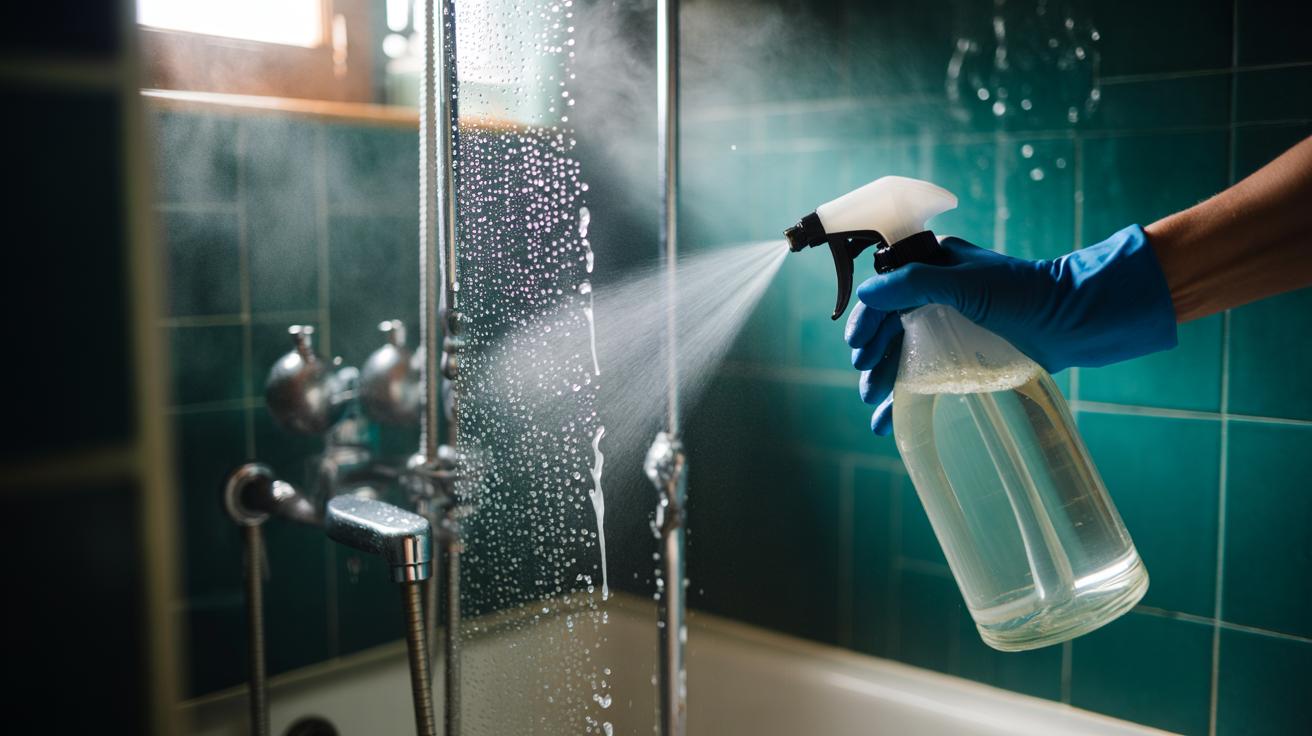
The winning formula is uncomplicated. Combine 1:1 white distilled vinegar and warm water in a clean trigger bottle. For clingy soils, add one small squirt of washing-up liquid to improve wetting and cut residual oils. Shake gently. That’s it. Use a fresh batch monthly to keep the solution effective and odours mild. Prefer a softer scent? A few drops of essential oil are fine, but keep it modest to avoid streaks.
Application matters. Spray until the surface is uniformly damp, then wait. Dwell time is the secret: three to five minutes for light film; up to 10 for heavy haze. On glass, a microfibre cloth delivers a streak-free finish; on textured tiles, a soft non-scratch pad helps. Rinse with warm water and buff dry. Ventilate the room and wear gloves if you have sensitive skin. Never mix vinegar with bleach or products containing chlorine—dangerous gases can form. Equally important: avoid natural stone and cement-based surfaces, which acids can etch. A quick spot test on an inconspicuous area is always wise.
Surfaces, Dwell Times, and What to Avoid
Not all bathrooms are created equal. Some surfaces love vinegar; others don’t. Knowing which is which saves repairs and frustration. Use the guide below to set expectations and avoid mishaps. The rule of thumb: the glossier and less porous the finish, the better vinegar performs. Matte stone or cementitious materials? Keep the bottle capped. If you’re unsure, assume caution and test.
| Surface | Recommended Dwell | Method | Caution |
|---|---|---|---|
| Glass shower doors | 5–10 minutes | Spray, wait, microfibre wipe, squeegee | Rinse well to prevent streaks |
| Glazed ceramic tiles | 3–7 minutes | Spray, soft pad, rinse | Avoid grout saturation if cement-based |
| Chrome taps and fittings | 2–5 minutes | Spray on cloth, wipe, buff | Don’t leave to dry on pitted chrome |
| Acrylic tubs | 2–4 minutes | Mist lightly, wipe gently | Use non-scratch pads only |
| Cement grout (sealed) | 1–3 minutes | Spot-treat, rinse quickly | Test; acids can degrade sealers |
| Natural stone (marble, limestone, travertine) | Do not use | — | Acid etches stone permanently |
One more universal rule: Do not mix vinegar with bleach, ammonia, or hydrogen peroxide. Reactions can be hazardous, and neutralising the acid undermines its cleaning edge. Keep the chemistry simple and targeted. For rubber seals, apply to a cloth rather than spraying directly, reducing soak and prolonging the life of gaskets.
When It Fails: Troubleshooting Stubborn Build-Up
Occasionally, the haze barely budges. That’s your clue you’re dealing with thicker limescale or even silica deposits from certain water supplies. Step one: increase contact time. Reapply, then cover with cling film to stop evaporation and leave for 15–20 minutes. Warm vinegar helps. Step two: switch to citric acid (5–10% solution) on glass and ceramics; it’s a slightly stronger chelator and often cracks the case. Use a non-scratch pad and light pressure—let chemistry, not force, do the heavy lifting.
A quick myth-buster: the fizzy volcano of vinegar and bicarbonate of soda looks potent but neutralises the acid, limiting de-scaling power. Use them separately. Keep acids for mineral film; keep mild abrasives for texture and final polishing. If polymer residues from shampoos are the culprit, a first pass with a little washing-up liquid can break the oily matrix so the acid can reach the minerals beneath. Once you’ve restored clarity, adopt a daily two-minute routine: a squeegee swipe after showers, a quick mist twice a week, and a dry buff. Small habits, big shine.
Vinegar earns its place under the sink because it’s fast, accessible, and scientifically sound, turning cloudy screens and dull taps pristine without drama. Used with patience and a light touch, it dissolves the mineral-fat bond that defeats many branded sprays and leaves bathrooms brighter in the time it takes the kettle to boil. Respect the limits—no natural stone, no bleach cocktails—and you’ll get professional results on a shoestring. Ready to put chemistry to work at home and see how a simple spritz can transform your shower in minutes—what surface will you tackle first, and what tweak will you try to perfect your shine?
Did you like it?4.4/5 (27)