In a nutshell
- 🧬 A single sperm donor, Donor 7069 (“Kjeld”), carried a rare TP53 mutation affecting tumor suppressor p53, linked to Li-Fraumeni syndrome.
- 🌍 His sperm was used by 67 clinics across 14 countries, leading to at least 197 children; investigators believe the true number is higher.
- ⚠️ About 20% of his sperm carried the mutation; carriers face up to a 90% cancer risk by age 60, and some affected children have already died.
- 🔎 Data presented by oncologist Edwige Kasper found 67 children from the donor; 23 carried the mutation and 10 had developed cancer.
- 🏥 The case exposes gaps in genetic screening, record-keeping, and cross-border oversight; urgent monitoring and contact of all families is underway.
A startling cross-border scandal has emerged from Europe’s fertility industry. A single sperm donor, identified as Donor 7069 and known by the alias “Kjeld”, has fathered at least 197 children across 14 countries. He carries a rare mutation in the TP53 gene, the guardian of the genome that shapes how cells respond to damage and prevents tumors. Some of the children conceived with his sperm have already died. Others face high, lifelong cancer risks. This is not a distant, theoretical worry—it is a present and expanding reality for dozens of families. The scale is staggering. The questions it raises—for clinics, regulators, and parents—are even larger.
The Scale of the Donor’s Reach
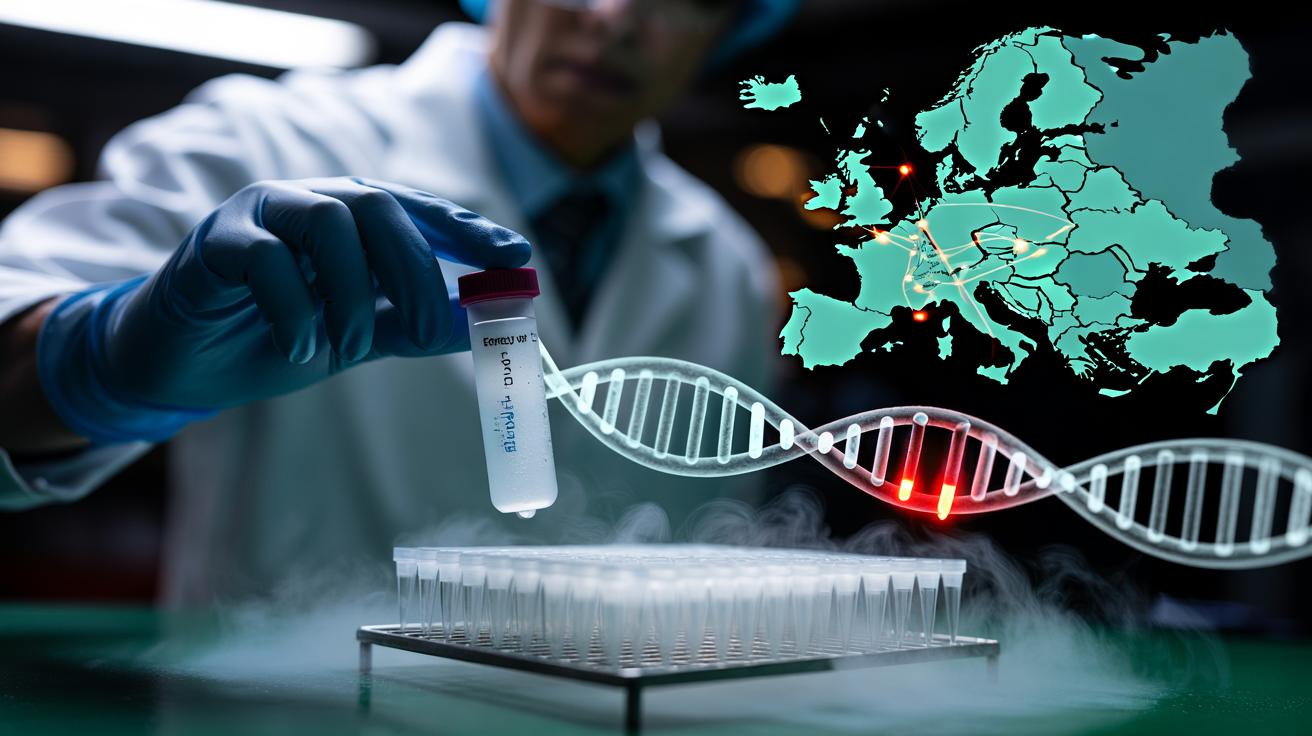
The donor began providing samples in 2005 in Copenhagen, when he was a student. He was healthy, passed standard checks, and—crucially—his rare variant was not detected because such conditions typically fall outside routine screening. His sperm moved widely, entering the supply chains of 67 fertility clinics across 14 countries, including Denmark, Belgium, Spain, Greece, Germany, Ireland, Poland, Albania, and Kosovo; recipients in Sweden also used the samples. Investigators have identified 197 children so far. They expect the true figure to be higher.
According to the investigation, the man himself was unaffected by the condition, yet roughly 20 percent of his sperm carried the mutation. That single detail explains how one healthy donor could seed a rare, dangerous predisposition throughout Europe. Some children have already died; many more are expected to develop cancer. The case illustrates how one donor, distributed across borders and buffered by inconsistent screening practices, can leave a legacy of risk that lasts decades. The human cost is intimate. The public-health implications are continental.
| Key Fact | Detail |
|---|---|
| Donor ID / Alias | Donor 7069 / “Kjeld” |
| Gene Involved | TP53 (tumor suppressor; protein p53) |
| Children Identified | 197 (across 14 countries) |
| Clinics Using Sperm | 67 |
| Mutation Load in Sperm | ~20% |
What the TP53 Mutation Means
The gene at the center of this story, TP53, encodes the protein p53, a transcription factor that halts uncontrolled cell division, triggers DNA repair, and initiates cell death when damage is beyond repair. Faults in p53 are linked to many cancers. When a germline TP53 mutation is inherited, it causes Li-Fraumeni syndrome, a rare autosomal dominant disorder that elevates cancer risk in childhood and young adulthood—across the brain, blood, bone, soft tissues, adrenal glands, and breast.
Children with the mutation have up to a 90% chance of developing cancer by age 60. Half develop cancer by age 40. The estimated frequency of such mutations in the general population sits between 1 in 5,000 and 1 in 20,000. Here, the mutation was present in only a fraction of the donor’s sperm—yet that was enough to propagate serious, inherited risk to families spread across Europe. The logic is brutal: every embryo conceived with a mutated sperm cell inherits that predisposition. The outcomes, already visible in this cohort, include aggressive and early-onset disease.
How the Case Came to Light—and What Comes Next
The picture began to sharpen when French oncologist Edwige Kasper presented findings at a genetics conference in May. She identified 67 children conceived using the same donor; 23 carried the TP53 mutation, and 10 had already developed cancer. The numbers landed like a siren: this was not an isolated anomaly, but a pattern demanding urgent action. A later, wider investigation by 14 European news organizations mapped a larger network—197 children linked to the donor so far.
It remains unclear how many of those 197 carry the mutation. Kasper and colleagues are working to identify and contact each family, so they can access monitoring and screening that could improve survival odds. This is a race against time, and geography. Cross-border distribution complicates outreach; clinic records and donor codes matter immensely. The central challenge now is simple to state, hard to execute: locate every child at risk, inform parents clearly, and organize lifelong surveillance that can detect cancer early—when it is still treatable.
This saga forces hard reflection on standards, accountability, and transparency in fertility services. A healthy student donor in 2005 helped create families across a continent, yet a rare, undiscovered variant turned that generosity into peril for many. Families deserve certainty that systems can prevent one mutation from cascading into hundreds of lives. As investigators work to identify and support all affected children, the debate will only intensify: how should Europe align screening, record-keeping, and data-sharing so that hope and safety travel together—across borders, clinics, and generations? What safeguards would you demand before trusting a donor-conception pathway?
Did you like it?4.5/5 (20)