In a nutshell
- ⚡ Foil parcels turbocharge roasting by combining conduction from the tray and trapped steam, cutting cook times by 30–50% while keeping veg juicy.
- 🔥 Use a two‑phase method: steam‑assist inside the sealed wrap until tender, then open to dry and trigger the Maillard reaction for caramelised edges.
- ⏱️ Practical method: preheat to 220°C (200°C fan) with a preheated tray, cut evenly (2–3 cm), season, make tightly sealed single‑layer parcels, then open for 5–10 minutes to caramelise.
- 📊 Key timings: carrots 15–18 min + 5 min open; potatoes 22–28 min + 8 min; beetroot 35–40 min + 10 min; broccoli 8–10 min + 3 min—size and density still dictate speed.
- 🌱 Smart extras: reuse or line foil for sustainability, add acids after opening, finish with lemon zest, herbs, or vinegar; shorter oven time saves energy and money.
Weeknight dinner and a tray of roast vegetables don’t always get along. The clock wins, and the carrots lose. Yet there’s a simple trick that shrinks the wait without sacrificing that coveted golden edge: wrapping veg in aluminium foil. By creating compact parcels, you fast‑track heat into the centre while protecting moisture, cutting overall cook time by as much as half. It’s part science, part common sense, and completely doable in any home oven. Below, I unpack how it works, the precise steps, and when to rip open the packets for proper browning. Quicker, juicier, still caramelised. That’s the promise of foil‑wrap roasting.
Why Foil Parcels Turbocharge Roasting
Traditional roasting relies on hot, dry air flowing around vegetables. It’s effective but slow because surface moisture evaporates, cooling the veg and delaying softening. A foil parcel changes the physics. Conduction takes the lead, as the thin metal hugs the food and channels heat directly from the roasting tray, while trapped steam lifts the internal temperature faster than dry air alone can manage. The result is accelerated softening and even cooking across dense pieces like carrots, beetroot, and potatoes.
Inside the parcel, humidity soars, so veg don’t desiccate; they tenderise swiftly. This doesn’t mean abandoning flavour. You can still get browning. The trick is timing. Let the parcel do the heavy lifting for most of the cook, then tear it open and blast the veg for a few minutes so the surfaces dry and the Maillard reaction kicks in. Think of it as two phases: steam‑assist for speed, dry heat for colour. Use a preheated tray to amplify contact heat; it’s a small change with outsized impact. And no, the shiny vs dull side of foil? Largely irrelevant in everyday cooking.
Step-By-Step Method for Perfect Parcels
Heat your oven to 220°C (200°C fan) with a heavy roasting tray inside. Meanwhile, cut vegetables into even pieces: 2 cm for dense roots, 3 cm for softer veg. Uniform size matters; it’s the simplest way to guarantee even doneness at speed. Toss with 1–2 tbsp oil per 500 g, a good pinch of salt, and optional flavour boosts—garlic, rosemary, cumin, smoked paprika. For roots, a tiny sprinkle of sugar encourages deep colour later.
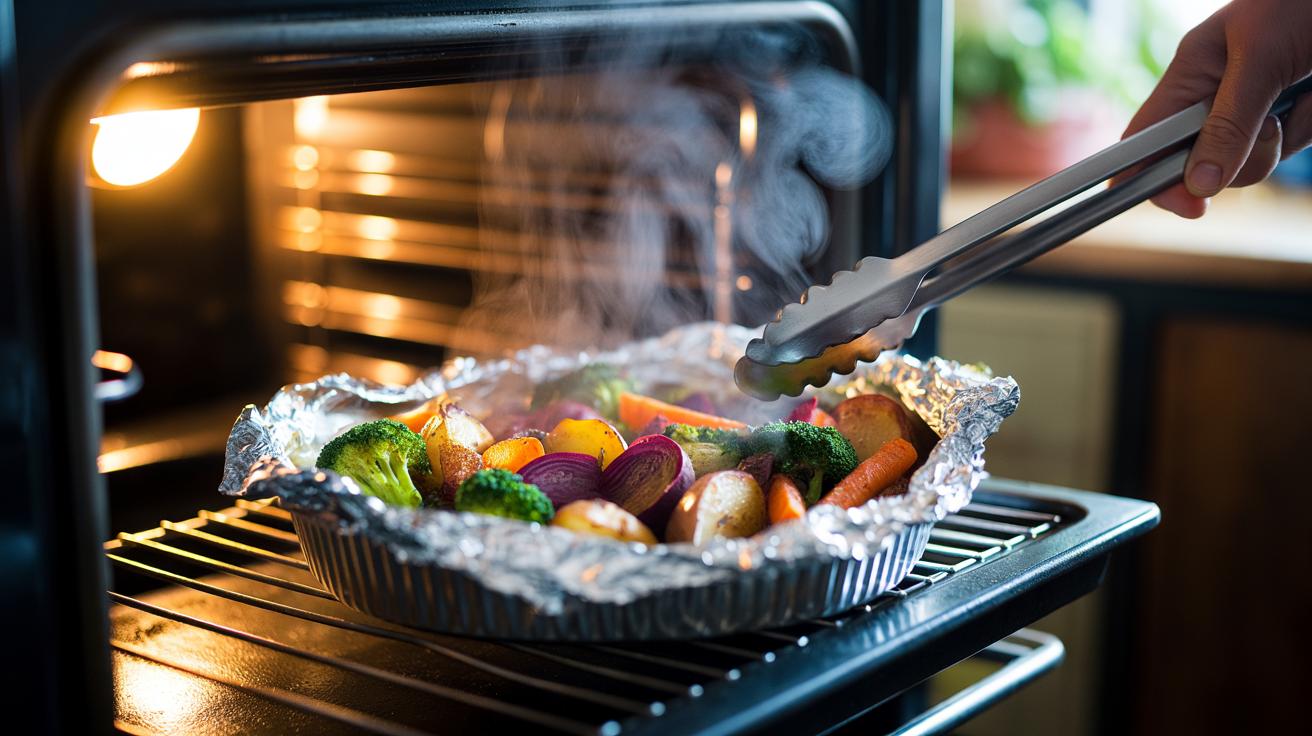
Lay out a sheet of aluminium foil and arrange veg in a single layer. Add a spoon of water, stock, or wine if you want extra steam and a ready‑made glaze. Fold over and crimp tightly on all sides to make a sealed packet—leave minimal headroom so heat transfers quickly. Slide onto the preheated tray. Don’t overfill the parcel; two smaller packs beat one crowded one. Roast until nearly tender—often 12–15 minutes for broccoli or peppers, 20–28 minutes for carrots or potatoes—then open the parcel. Return to the oven for 5–10 minutes to caramelise the edges. Finish with lemon zest, fresh herbs, or a drizzle of vinegar for brightness. Mind the steam when unsealing; open away from your face.
Timing, Temperatures, and Vegetables That Shine
Use high heat for speed and colour: 220°C conventional (or 200°C fan) is a sweet spot for mixed trays. Dense, starchy veg benefit most from parcels because steam softens them rapidly; watery veg still gain speed but need brief open‑roasting to avoid sogginess. As a rule of thumb, expect a 30–50% reduction versus uncovered roasting, with the fastest gains on carrots, parsnips, and potatoes. Seasoning matters: salt draws water, which helps the steam build, while oil prevents sticking and carries aromatics. Add acids like lemon or tomato after opening or at the end; they can dull browning if used too early inside sealed foil.
| Vegetable | Standard roast time | Foil parcel time | Texture & tip |
|---|---|---|---|
| Carrots, 2 cm | 30–35 min | 15–18 min + 5 min open | Tender‑sweet; add cumin and honey after opening |
| Potatoes, 2–3 cm | 40–50 min | 22–28 min + 8 min open | Fluffy centres; roughen edges when opening for crunch |
| Beetroot, wedges | 60–70 min | 35–40 min + 10 min open | Juicy and earthy; glaze with balsamic to finish |
| Broccoli, florets | 15–20 min | 8–10 min + 3 min open | Vivid green; chilli oil after opening |
| Peppers/Courgettes | 20–25 min | 12–15 min + 5 min open | Silky; drain excess juices into couscous |
For sustainability, reuse clean foil where possible or line it with baking parchment to reduce contact with acidic marinades. Energy savings are a bonus: shorter oven time means lower bills without compromising flavour.
Wrapped roasting is simple, thrifty, and surprisingly precise. It respects time without flattening flavour, and it gives you options—soft and succulent for salads, or burnished edges for the Sunday spread. The clever bit is phase cooking: steam for speed, then dry heat for drama. Once you’ve mastered the parcel, the door opens to weeknight mezze, traybake suppers, and ready‑made sauces from collected juices. What will you foil‑roast first this week, and which seasoning twist—spiced butter, garlicky oil, or a punchy herb dressing—will become your house signature?
Did you like it?4.4/5 (25)