In a nutshell
- 🧪 How salt works fast: Sodium ions (Na+) activate ENaC, suppress bitterness, boost saliva, and lift volatiles for retronasal smell—so flavours sharpen in about 30 seconds.
- 🍫 Contrast and amplification: A pinch tames bitterness and heightens sweetness/umami in chocolate, coffee, tomatoes, melon, and citrus without leaving an overtly salty taste.
- ⏱️ 30-second method: Taste, add a small pinch, wait 30 seconds, taste again; use flake salts for finishing texture, fine salt for liquids; add in stages—you cannot unsalt.
- 🥗 Quick applications: Tomato salad (20–30s) gets sweeter and more umami; dark chocolate is instantly smoother; grapefruit softens in 10–20s; steak gains a sparkling crust; cucumber brightens in 30–60s.
- 🩺 Balance and health: In the UK, keep salt under 6 g/day; lean on acidity, fat, aromatics, and umami boosters (MSG, Parmesan) to use less salt while tasting more.
Salt does more than make chips taste good. In the space of a breath, it can transform flat food into something vivid, layered, and satisfying. The magic happens fast—often inside 30 seconds—as sodium ions nudge your taste buds, saliva, and even your sense of smell to pay attention. That tiny pinch you sprinkle is a tool, not just a habit. Used well, it sharpens sweetness, softens bitterness, wakes up aromas, and coaxes hidden notes to the surface. Used badly, it bulldozes nuance. Here is how and why salt intensifies flavour quickly, and how to deploy it with precision at the table and the hob.
The Science Behind Sodium’s Fast-Acting Power
On your tongue, sodium ions (Na+) zip through channels in taste receptor cells known as ENaC. That electrical nudge triggers a salty signal within moments, but there is a second act: salt modulates other tastes. It suppresses bitterness by damping certain receptors and neural pathways, which makes sweetness and umami stand out. That is why a pinch on grapefruit, cocoa, or coffee makes them taste rounder. Salt also boosts saliva flow, dissolving flavour molecules so they reach receptors more efficiently. The result is a cascade that feels immediate. A tiny dose can reshape the entire flavour balance of a mouthful.
Aromas join in. As salt draws moisture to the surface of foods, it can help carry volatile compounds into retronasal olfaction—the smell you sense from the back of the throat while chewing. In soups and sauces, salt aligns dissolved sugars, acids, and glutamates so they register more clearly; with tomatoes, for example, sodium highlights natural glutamates and fructose simultaneously. This is why you often perceive “more tomato” rather than “more salt.” The effect is quick because nothing needs to cook; it is a chemical and sensory recalibration, not a slow transformation.
From Bitterness Tamed to Sweetness Amplified
Consider chocolate. Add a few flakes of sea salt and the cocoa tastes deeper, the caramel notes brighter, the finish cleaner. That is not culinary theatre; it is taste interaction. Salt inhibits bitter receptors while selectively accentuating sweetness and umami, which are inherently pleasurable. In tonic water, where quinine dominates, a micro-pinch renders the drink softer without turning it into lemonade. Coffee behaves the same way. One grain too many, though, and you swing from balance into brine. The art lies in summoning contrast without leaving a saline fingerprint.
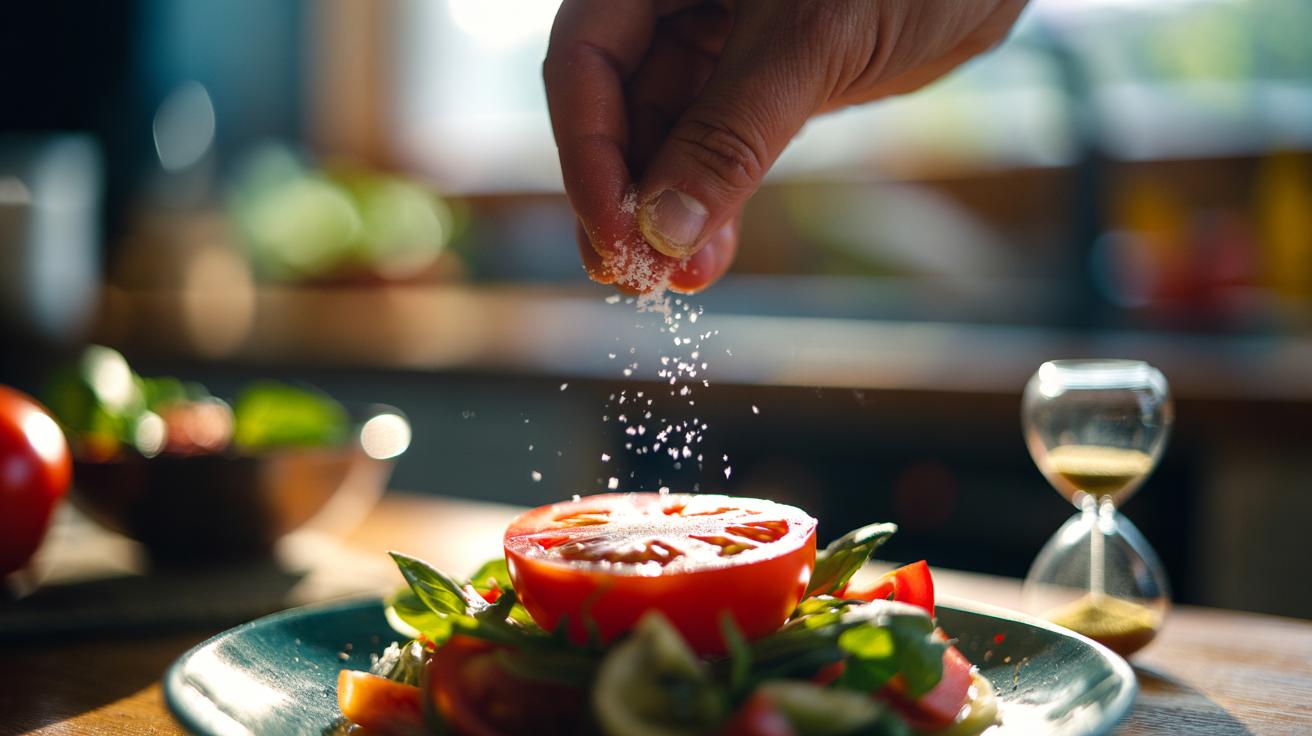
Raw produce demonstrates another trick. Salt on cucumber or radishes pulls surface water by osmosis, concentrating flavour and tempering astringency. On tomatoes, a light dusting amplifies the fruit’s natural sugars and the savoury thrum of glutamates; with melon, you get extra juiciness and a sweeter impression. Even citrus benefits: salt on grapefruit slices doesn’t sweeten the fruit, it simply quiets bitterness so your brain can register the latent sweetness already there. In all cases, the “30-second effect” is literal: once the salt dissolves on the tongue or surface, the recalibration happens almost instantly.
How to Use Salt in 30 Seconds: Practical Kitchen Moves
Begin with tasting. If a sauce tastes dull, add a small pinch—about the size of your thumbnail—and stir or swirl. Wait half a minute. Taste again. You are checking for clarity, not salinity. If flavours pop but the dish does not taste “salty,” you are in the sweet spot. For finishing, reach for flake salts: larger crystals dissolve slower, delivering a tiny crunch and a quick aroma lift. For liquids, fine salt integrates fastest and lets you measure precisely. Always add in stages; you can’t unsalt.
Different foods respond differently, and speed matters. Here are quick cues you can apply at the table or over the pan.
| Food | Pinch/Flake | What Happens | Time | Extra Tip |
|---|---|---|---|---|
| Tomato salad | Pinch fine | Sweeter, more umami | 20–30s | Add a drop of vinegar for lift |
| Dark chocolate | Few flakes | Bitterness tamed | Instant | Pair with orange zest |
| Grapefruit | Tiny pinch | Bitterness muted | 10–20s | Finish with fresh mint |
| Steak post-rest | Flake salt | Crust sparkle | Instant | Brush with butter first |
| Cucumber | Pinch fine | Crunchier, brighter | 30–60s | Rinse lightly for low-salt |
Seasoning is not only “how much” but “when.” Early salting during cooking shapes texture; late salting defines perception. Finish at the end to fine-tune. If you are unsure, salt your portion at the table and clock the change within 30 seconds—an instant masterclass in taste chemistry.
Balance, Health, and Better Seasoning Decisions
There is a limit. The UK guidance for adults is to keep daily salt under 6 g (about 2.4 g sodium). Aim to use salt as a flavour catalyst, not the flavour itself. Rely on acidity (lemon, vinegar), fat (olive oil, butter), and aromatics (garlic, herbs) to reduce the total you need. MSG and Parmesan deliver umami synergy, letting you salt less while tasting more. When the dish suddenly becomes vivid yet not overtly salty, stop.
Labels matter: “salt” on UK packs already includes sodium converted to its salt equivalent, while “sodium” alone needs multiplying by 2.5 to match salt. Choose iodised salt if your diet lacks iodine; use flaky finishing salts for texture rather than extra quantity. Practice also helps. Keep a ramekin of fine salt near the hob for controlled pinches, and taste in cycles—add, wait 30 seconds, reassess. That habit builds a mental map of how salt intersects with sweetness, bitterness, sourness, and umami across different foods.
Salt is a lever for flavour, not a crutch. In seconds, it can turn the lights on in a dish you thought was lost, revealing sweetness you missed and aromas you never noticed. Respect its power, mind your totals, and treat every pinch as a question: what do I want to taste more of? The fastest way to learn is to try it now—taste, pinch, wait, taste again. Which food in your kitchen will you test in the next 30 seconds, and what hidden notes do you expect to uncover?
Did you like it?4.4/5 (23)