In a nutshell
- 🍌 Banana peels deliver a gentle boost of potassium plus phosphorus, calcium, and magnesium—ideal as a supplement (not a full feed) to support flowering, resilience, and sturdier stems.
- 🧪 Safe application methods: diluted peel soak (1:4) for a monthly soil drench, dried peel powder every 6–8 weeks, or adding peels to a compost/wormery for slow-release nutrition.
- ⚠️ Avoid burying fresh peels in small pots: it can attract fungus gnats, cause odour, and create anaerobic pockets—test on one plant first, and be cautious with orchids, cacti, and succulents.
- 📊 Method match-up: soak is fast and simple; powder is tidy and storable; compost is steady with fewer pests—always pair with a balanced fertiliser for core nutrition.
- 🔍 Troubleshooting tips: prioritise light, water, and temperature; watch for sweet smells, flies, or fuzz; keep tools clean, use peat-free mixes, rotate pots, and reduce feeding in winter.
There’s a thrifty trick sweeping British windowsills, and it starts in the fruit bowl. Save that banana skin. Your houseplants might thank you. Gardeners are turning to banana peels for a quick, budget-friendly boost that can complement regular feeding routines without the faff of specialist products. Used well, it’s simple and safe. Used poorly, it can be messy. The appeal is obvious: turn kitchen scraps into plant power, reduce waste, and add a trace-nutrient nudge that encourages blooms and steady growth. This is not miracle medicine, but it’s clever, local, and low-cost. Here’s how to do it right—and avoid the pitfalls.
Why Banana Peels Benefit Houseplants
Banana peels contain a helpful stash of potassium, with smaller amounts of phosphorus, calcium, and magnesium. These minerals support flowering, sturdier stems, and overall resilience, especially when plants are asked to perform on a sunny sill or under grow lights. Potassium in particular is linked to water regulation and disease management. In plain terms: it helps plants cope. Think of banana peels as a supportive supplement rather than the main meal, because peels are low in nitrogen, the nutrient that drives leafy growth.
There’s a second, quieter benefit: as peels break down, they feed the soil microbiome. Microbes cheer. They convert organic leftovers into plant-available goodies and improve soil texture at the surface. That’s handy for peat-free mixes, which can dry out between waterings. Still, be cautious. Whole, freshly buried peels can attract fungus gnats or fruit flies and may turn sour in compact pots. You want nutrients, not a fruit fly fiesta.
So the golden rule is control. Process the peel, dilute liquids, and apply sparingly. Pair the peel strategy with a balanced houseplant feed, especially in spring and summer. That combination keeps foliage lush while the peel-derived potassium steadies plants through temperature swings and inconsistent watering—common realities in British homes.
How To Use Banana Peels Safely
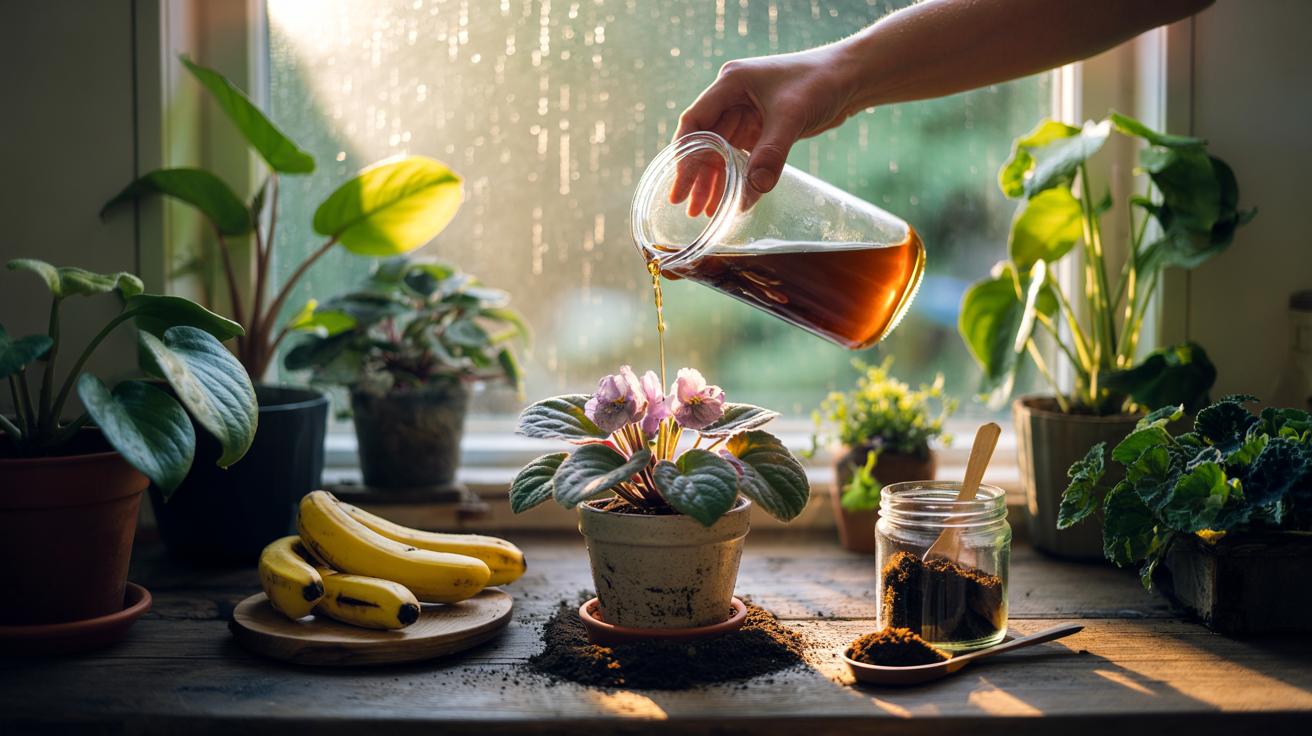
First, wash the peel to remove surface residues. Then choose a method that suits your plant and your tolerance for kitchen experiments. The simplest is a banana peel soak: submerge chopped peels in a jar of clean water for 24–48 hours, strain, then dilute the liquid roughly 1:4 with water. Water the soil, not the leaves, and keep it monthly. Always dilute—concentrated soak can smell, sour, and overwhelm roots.
Prefer a dry option? Make peel powder. Air-dry or oven-dry peels at low heat until brittle, then blitz into a fine powder. Dust a teaspoon across the surface of a 15–20 cm pot and gently mix into the top centimetre of compost before watering. Little and often. It’s tidy, odour-light, and easy to store in a jar. You can also add peels to a compost bin or wormery and use the mature compost as a top-dress for indoor containers—slow, steady, and far less risky.
Avoid burying fresh peels in small pots. It decomposes unevenly, invites pests, and can create slimy pockets that exclude air. If you’re working with orchids, cacti, or succulents, be extra cautious: these prefer leaner, faster-draining media and seldom need extra potassium from peels. When in doubt, test on one plant, observe for two weeks, then scale up.
A Quick Comparison of Methods
Different plants and routines benefit from different approaches. If you want ease, choose the soak. If you want precision and less odour, use powder. Compost is best for those who can wait and want fewer pest risks. The table below sums up the choices so you can pick a path that fits your home, schedule, and plant collection.
| Method | How To | Best For | Frequency | Pros | Watch-outs |
|---|---|---|---|---|---|
| Peel Soak (Tea) | Steep 24–48h, dilute 1:4, soil drench | Flowering houseplants, leafy exotics | Monthly | Fast, simple, cheap | Odour risk, must dilute |
| Dried Peel Powder | Dry, grind, sprinkle lightly, mix in | General indoor pots | Every 6–8 weeks | Tidy, storable, low smell | Overuse can crust surface |
| Compost/Wormery | Compost peels; use mature compost as top-dress | All containers needing structure | Spring and autumn | Stable nutrients, fewer pests | Slow; needs space |
Match the method to the plant, not the other way around. Flowering begonias and African violets appreciate the potassium nudge; foliage-first pothos or monstera may barely notice unless growth has stalled. Always keep a balanced fertiliser in rotation for core nutrition. If water sits in saucers, drain it: stagnant, nutrient-rich runoff invites gnats. A small tweak—such as bottom-watering with diluted soak—can keep the surface drier and the pests away.
Troubleshooting, Myths, and Proven Tips
Let’s bust a myth. Plonking a fresh peel on compost will not “revitalise” a wilting plant overnight. Water, light, and temperature are still the big three. Banana peels help only when those basics are in place. If leaves are yellowing from a nitrogen shortfall, peels won’t fix it; reach for a balanced feed. If edges are browning on older leaves, potassium may indeed be part of the story—peels can assist, modestly.
Spot trouble early. A sweet odour, fruit flies, or a grey fuzz near the surface signals overdoing it, especially after burying fresh peels. Scoop out debris, let the pot dry lightly, and resume with diluted liquid or powder in smaller amounts. If you notice a film on the soil, tickle the surface with a fork to improve airflow and water less frequently. Hygiene matters. Clean jars, fresh water, and labelled containers reduce mishaps.
Lean into smart tweaks. Pair peel-based feeds with peat-free compost that drains well, and rotate the pot weekly so light is even. During winter, cut the frequency; growth slows in UK homes. For sensitive or rare plants, trial on a single specimen. Keep notes. The goal is gentle, consistent support, not a flood of nutrients. When you treat banana peels as one tool in a kit—alongside pruning, repotting, and proper light—you’ll see sturdier stems, clearer colour, and blooms that last longer.
Banana peels won’t replace a well-stocked shed, yet they’re a smart, sustainable ally for the curious indoor gardener. They reduce waste, cost pennies, and, when applied with care, add a welcome lift to flowering and overall plant resilience. Start small. Choose a method that suits your space and patience. Track results and adjust with the seasons. Your plants will tell you what works. Ready to give this kitchen-shelf experiment a go—and which houseplant will be your first test case?
Did you like it?4.4/5 (27)