In a nutshell
- 🌿 Uses acetic acid to dissolve limescale, algae film, and odours on pots, patios, and tools—visible results in minutes with 5% household vinegar.
- ⏱️ Two-minute method: Mix, Mist, and Wipe micro-zones; use 1:1 for terracotta, 1:3 for plastics, and neat vinegar for paving cracks to maximise fast impact.
- 🌱 Acts as a foliage-only contact herbicide for tiny weeds in cracks; roots may survive, so treat this as a quick visual reset, not a permanent fix.
- ⚠️ Safety first: Never mix vinegar with bleach, avoid marble/limestone and delicate finishes, spot-test plastics, and keep sprays away from desired plants.
- 🧰 Smart maintenance: de-gunk pruners with a vinegar cloth, then rinse, dry, and oil; don’t rely on vinegar to change soil pH—use proper amendments for long-term acidity.
Two minutes. That’s all it takes to breathe life back into a tired patio, stained clay pots, and gummed-up garden tools using ordinary vinegar. This pantry staple contains acetic acid, a fast-acting agent that dissolves mineral crusts, cuts algae film, neutralises mild odours, and even scorches tiny weeds between pavers. It’s cheap, quick, and low faff. The magic isn’t mystical; it’s chemistry you can see working almost instantly. With a spray bottle, clean cloth, and a jug of 5% household vinegar, you can deliver visible results before the kettle boils. Small effort, outsized impact. Here’s how to make those 120 seconds count, safely and smartly.
Why Vinegar Revives a Tired Garden
Vinegar’s power comes from acetic acid, which reacts with alkaline deposits—think limescale on terracotta, salty bloom on saucers, and hard-water rings in watering cans. The reaction loosens mineral build-up so it wipes away with minimal scrubbing. On patios and furniture, a light mist dismantles the biofilm that makes surfaces look dull. Odours in compost caddies and green bins? A quick rinse knocks them back because acetic acid disrupts the compounds responsible. You see the difference faster than you expect. The garden reads instantly less neglected, even if you’ve only worked in a single corner.
There’s also a short-lived soil-side benefit. A splash of diluted vinegar on alkaline residue around pot rims helps remove crusts that lock out moisture. Some gardeners aim vinegar at chlorosis, hoping to acidify soil; the reality is subtler. Vinegar’s pH shift is local and fleeting, useful for cleaning surfaces rather than transforming beds. Do not rely on vinegar to change soil pH long term. Instead, think of it as a rapid reset for surfaces, tools, and the tiny spaces—like paving joints—where grime hides.
Then there’s weed control. Household vinegar acts as a contact herbicide on tender seedlings and shallow-rooted weeds in cracks. It dehydrates foliage. Roots often survive, but a spot-spray clears the visual clutter fast. That counts on a busy morning. Keep sprays off plants you want to keep. Treated weeds slump within hours, buying you time for deeper work later.
Two-Minute Method: Mix, Mist, and Wipe
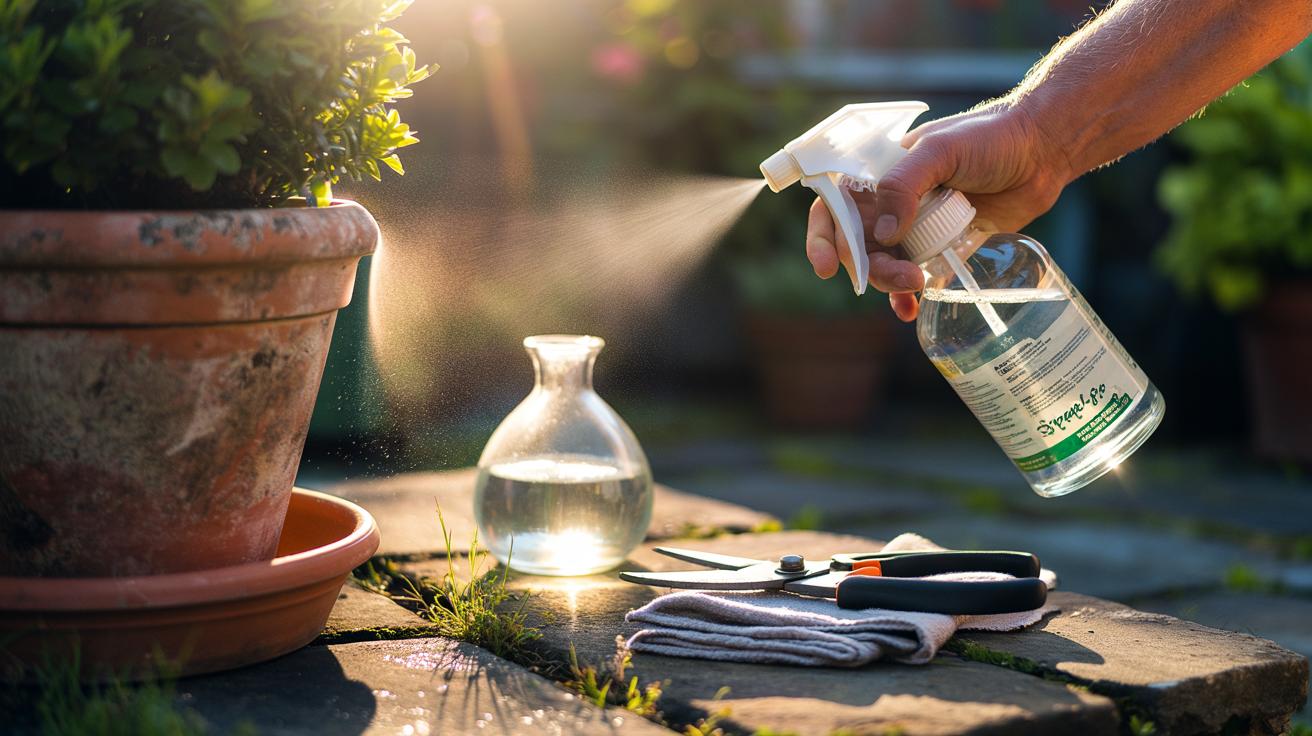
Arm yourself with one spray bottle and one cloth. Fill with a practical mix: 1 part vinegar to 1 part water for mineral deposits on pots and saucers; 1:3 for wiping furniture and plastic; undiluted for paving cracks if you’re spot-scorching tiny weeds. Work in micro-zones. Ten seconds per item adds up. Focus on what eyes notice first: rims, handles, and edges. That’s the journalism of the garden—clean the headline, and the whole piece reads better.
Hit the worst crusts first. Mist the rim of a white-stained clay pot; count to ten; wipe. Spray pruner blades; close and open them through a cloth; the sticky sap will lift. Swirl a small slug of vinegar in a cloudy watering can and rinse—gone is the ring that makes everything look old. For patios, target the green tinge near door thresholds and steps. Short bursts, short dwell time, big lift. Let the acid work while you move to the next item.
| Task | Dilution | Time Needed | Caution |
|---|---|---|---|
| Terracotta limescale | 1:1 vinegar:water | 30–60 seconds dwell | Rinse; avoid decorative glazes |
| Pruner de-gunk | Neat on cloth | 20 seconds per tool | Dry and oil after |
| Paving crack weeds | Neat targeted spray | 10 seconds per patch | Keep off desired plants |
| Plastic furniture film | 1:3 vinegar:water | Wipe immediately | Spot-test to avoid dulling |
Think of it as a sprint clean. You’re not restoring Versailles; you’re removing the few things making everything look worse. The visual dividend is outsize. And because vinegar evaporates quickly, there’s little lingering scent. Never mix vinegar with bleach—ever. If you need disinfection beyond cosmetic cleaning, use appropriate products separately and rinse between steps.
Smart Uses, Safety, and Common Pitfalls
Vinegar is potent, but it isn’t a miracle. It burns foliage on contact and only top-kills weeds. Perennial roots rebound. Use it where speed matters: driveways, steps, pot rims, tool maintenance. For beds and borders, pull weeds or mulch—strategies that solve the problem at the root. Reserve vinegar for surfaces and cracks, not soil drenches. And stick to 5% household vinegar; stronger “horticultural” versions can be hazardous and unnecessary for routine sprucing.
Protect vulnerable materials. Skip vinegar on marble, limestone, natural stone, and some metal finishes—it can etch or tarnish. Avoid misting near tender seedlings and leave rose foliage well alone. Always spot-test on plastics or painted furniture. Store your spray clearly labelled, out of reach of children and pets. Ventilate if you’re working in a shed or greenhouse. Simplicity doesn’t excuse sloppiness—work neatly and aim precisely. That precision is what turns a two-minute tidy into a genuine refresh rather than collateral damage you’ll fix later.
Finally, keep chemistry straight. Never mix vinegar with bleach or chlorine-based cleaners; the reaction releases toxic gases. Don’t combine it with baking soda in closed containers—the fizz is fun, the pressure isn’t. Rinse tools after vinegar, then dry and oil to prevent rust. If your goal is long-term soil acidity for blueberries or camellias, use sulphur, ericaceous compost, or rainwater; vinegar is the wrong instrument. Use the right tool for the job; use vinegar for speed. That’s how you win back a neglected corner before breakfast.
Harnessing vinegar for a quick garden reset is about tact, not brute force: small sprays, short dwell times, swift wipes, targeted weed hits. The change is immediate, the cost tiny, the routine repeatable whenever life gets busy. In journalism we chase clarity; in gardens we chase the same—clean lines, fewer distractions, honest textures. Make quick gains now, save the weekend for the big stuff. When you look out tomorrow morning, what two-minute zone will you claim first—the pots by the back door, the patio step, or the blades that make every cut cleaner?
Did you like it?4.5/5 (29)