In a nutshell
- ✨ A banana peel works as a natural polisher: its natural oils and waxes lift grime and leave a soft, non-greasy sheen while preserving a leaf’s epicuticular wax.
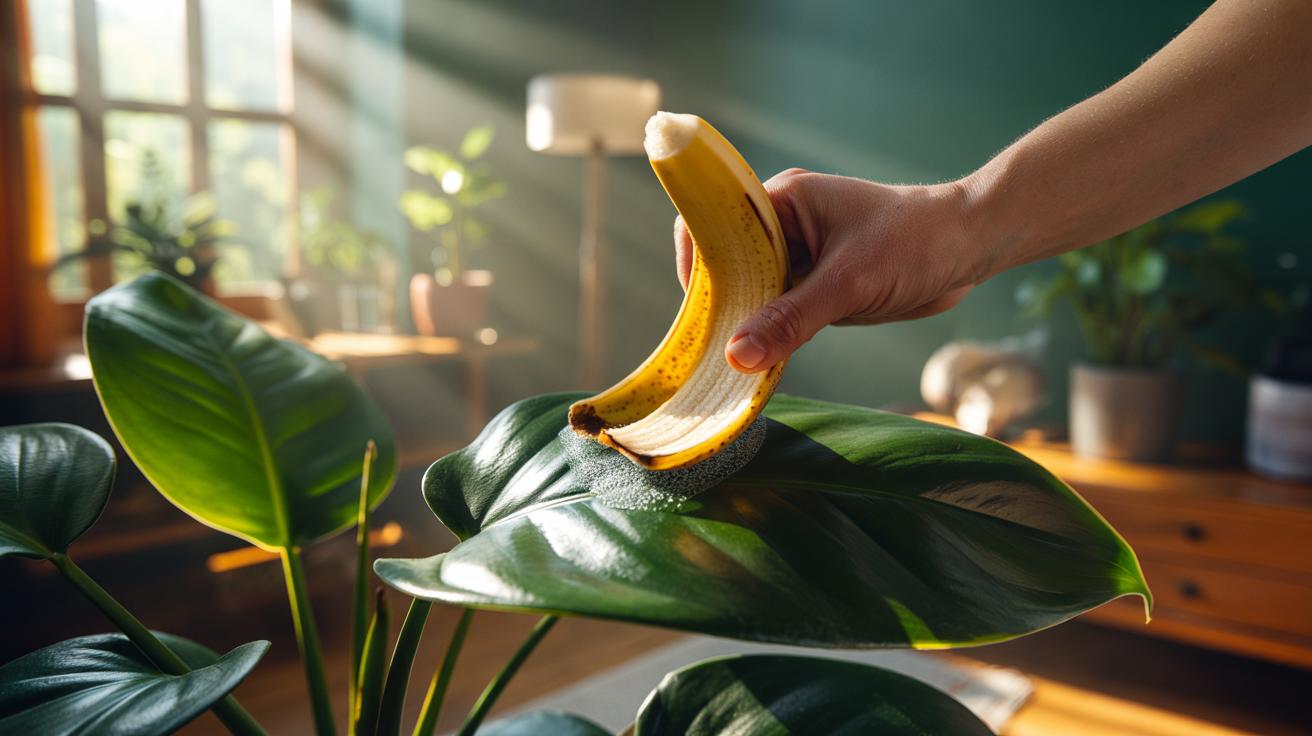
- ⏱️ The five-minute method: dust first, wipe base-to-tip with the inner peel, then buff dry; test one leaf and avoid harsh midday sun after polishing.
- 🌿 Plant suitability: ideal for rubber plants, monstera, philodendron, and peace lilies; avoid succulents, cacti, and fuzzy leaves; use light touch on snake plants and orchids.
- 🫧 Leaf health: a light application prevents clogging stomata, removes dust that hinders photosynthesis, and helps spot pests early during close-up cleaning.
- ♻️ Sustainability: reuse kitchen scraps, skip aerosols and plastics, save money, and maintain a monthly light polish with regular dusting for balanced plant health.
Skip the pricey leaf-shine sprays. Your fruit bowl holds a quieter miracle. A humble banana peel, rubbed over dusty foliage, can return a tired houseplant to a showroom gleam in minutes. The trick isn’t magic; it’s chemistry and texture working together. The peel’s natural oils and waxes loosen grime while the soft inner membrane lifts it away, leaving a subtle sheen that looks fresh, not artificial. Done right, it’s fast. It’s gentle. It’s waste-free. A banana you’ve already eaten becomes a pocket-sized polishing kit with zero plastic and zero faff. Here’s how it restores greenery in under five minutes—and when to hold back.
Why Banana Peel Works on Leaves
Plant leaves collect dust, cooking residue, and pollen that scatter light and dull their colour. Banana peels contain a cocktail of lipids, waxes, and traces of potassium that help loosen this film. The inner peel is slightly fibrous and moist, acting like an ultra-fine, biodegradable cloth. It removes grime mechanically without the need for soaps that can strip a leaf’s own epicuticular wax. A thin, even smear of plant-safe oils remains, boosting surface smoothness so light reflects cleanly. The result is not a wet gloss but a soft, natural lustre that makes variegation pop and greens look deeper.
Crucially, this polish is temporary and breathable. Used sparingly, it won’t suffocate the leaf’s stomata—those tiny pores that manage gas exchange. That balance matters: too much product, of any kind, can clog stomata and harm photosynthesis. The peel wins because it’s mild. It also contains antioxidants that don’t harm the plant tissue when applied lightly. For busy plant owners, the practical benefit is speed. One medium houseplant can be revived in less time than it takes a kettle to boil, with no mess to clean up.
The Five-Minute Method: From Dull to Glossy
Pick a ripe peel—yellow with a few freckles—because its inner surface is supple and oil-rich. Dust the plant first with a soft brush or microfibre cloth. This stops grit acting like sandpaper. Fold a piece of peel, white side out, and sweep gently along each leaf, moving from base to tip and following the veins. Focus on the upper surface; it’s the dust magnet. Replace sections of the peel as they brown or dry. For large leaves, use broad, steady strokes. For narrow ones, smaller, controlled motions prevent tugging.
Once every leaf is wiped, buff lightly with a clean, dry cloth to remove excess residue. This final step preserves that clean sheen while avoiding tackiness that could attract dust. Always test on a single leaf first and avoid harsh midday sun immediately after polishing. Sun can overheat a freshly cleaned surface. If the leaf still looks streaky, a barely damp cloth pass will even the finish. Work quickly but calmly—this is a maintenance clean, not a spa day. Done right, the entire process is swift, quiet, and oddly satisfying.
What Plants Love It — And Which to Avoid
Thick, smooth, or leathery leaves are the best candidates. Think of foliage you’d normally wipe without fuss. Avoid fuzzy, powdery, or spiky textures. These structures either trap residue or rely on a protective bloom that rubbing can damage. When in doubt, treat one discreet leaf and wait 24 hours. If it looks happy—no wilting, no spotting—carry on. If not, revert to plain water and a soft cloth. Below is a simple guide to help you decide.
| Plant Type | Use Banana Peel? | Notes |
|---|---|---|
| Rubber Plant (Ficus elastica) | Yes | Thick, glossy leaves respond beautifully; buff after. |
| Monstera & Philodendron | Yes | Wipe around splits; avoid saturating crevices. |
| Peace Lily | Yes | Gentle pressure only; remove residue to prevent tackiness. |
| Snake Plant (Sansevieria) | Sometimes | Light wipe; too much oil can mark the surface. |
| Orchids (Phalaenopsis leaves) | With care | Wipe top surface only; keep away from crown and media. |
| Succulents & Cacti | No | Protective bloom and spines; use a dry brush instead. |
| African Violets, Fuzzy Ferns | No | Hairs trap residue; water-only mist and gentle airflow. |
Watch for scale or mealybugs while you clean. The close contact reveals pests early. If you spot sticky honeydew or cottony clusters, switch to a targeted isopropyl alcohol swab and isolate the plant. Shine should never come at the expense of hygiene; polish after pests are sorted.
Beyond Shine: Long-Term Plant Health Benefits
Dust isn’t just ugly. It’s a photosynthesis thief. Even a thin layer reduces light penetration, forcing plants to work harder. A quick banana-peel wipe cuts that barrier and restores efficiency. The buffing also discourages dust from resettling quickly, keeping leaves cleaner for longer. Think of it as routine maintenance, like washing a window to let the daylight in. There’s a psychological lift, too. Brighter leaves make rooms feel fresher, and that encourages better watering and feeding habits overall.
The sustainability case is compelling. You’re reusing a kitchen scrap, not spraying aerosols or buying single-use wipes. That saves money and cuts plastic. Concerned about residue attracting pests? Keep the application feather-light and always finish with a dry cloth; the goal is clean, not sticky. Little and often beats heavy-handed shine jobs every time. For most homes, a monthly pass is enough, with a quick dust in between. Paired with good ventilation and regular checks, this simple ritual supports plant health as much as it supports aesthetics.
For many of us, houseplants are a calm corner of the day—a reminder to pause and notice living detail. A banana peel delivers that reset in minutes, restoring colour, lustre, and clarity without chemicals or clutter. It’s thrifty. It’s gentle. It’s quietly effective. If you’re careful about plant choice and keep the touch light, your greenery will thank you with brighter leaves and better growth. So the next time you finish a banana, don’t bin the peel—put it to work. Which plant on your shelf deserves a five-minute polish today, and what difference will you notice first?
Did you like it?4.6/5 (22)