In a nutshell
- 🧪 Dryer sheets work because their anti-static chemicals—notably cationic surfactants (quats)—disrupt the greasy matrix of soap scum while the nonwoven pad adds gentle abrasion.
- 🚿 Method: Warm rinse, optional vinegar pre‑soak for limescale, then wipe with a used dryer sheet using overlapping strokes; allow brief contact time, rinse thoroughly, and buff dry—spot‑test coated glass.
- 📊 Effectiveness: High on greasy scum, moderate on mixed films and water spots, low on hard limescale—pair with acid (vinegar/citric) where mineral scale dominates.
- 💷 Costs and caveats: Per‑clean cost is pennies; watch for fragrances/quats irritating sensitive skin, avoid acrylic, ventilate, and never mix with bleach.
- ♻️ Greener upkeep: Use microfibre + washing‑up liquid for routine cleans, a weekly citric‑acid spritz for scale, squeegee after showers, and consider softer water or syndet/liquid soaps to reduce residue.
It sounds like a social‑media stunt: rub a used dryer sheet on cloudy shower glass and watch the film vanish. Yet there’s real chemistry at work. Soap scum blends fatty residues with hard‑water minerals, creating a stubborn, grey haze that laughs at casual wiping. Dryer sheets carry anti-static chemicals and conditioning agents that loosen and emulsify the gunk while the nonwoven pad provides gentle abrasion. In many bathrooms, the trick works quickly on the greasy fraction of scum, letting you wipe as it softens. It won’t replace descalers for heavy limescale, but paired with a rinse and a vinegar pre‑soak, this humble square can restore clarity without a cupboard full of sprays.
Why Dryer Sheets Break Down Soap Scum
Soap scum is not a single enemy. It’s a composite: fatty acid salts (think calcium and magnesium stearates), body oils, talc or silica from toiletries, and the crystalline footprint of hard water. The cocktail sticks to glass because greasy moieties repel water, while mineral ions knit them into a film. Dryer sheets, by contrast, are loaded with cationic surfactants—often quaternary ammonium compounds (“quats”)—plus fatty softeners. These amphiphiles carry a positive charge and a hydrophobic tail, so they latch onto oily residues and disrupt the scum’s structure, loosening it for removal.
Two things happen as you wipe. The sheet’s conditioning layer transfers to the glass, reducing surface tension and re‑wetting the film; at the same time, mild mechanical action scuffs the softened layer without scratching. Anti‑static agents also limit re‑deposition of dust and lint, so the pane stays clearer as you finish. Where limescale dominates—those chalky, gritty patches—acid is king, not surfactants. That’s why pairing the sheet with a quick white‑vinegar pre‑soak often supercharges the result: acid undermines mineral bonds; the sheet mops up oils and soap residues clinging on.
How to Use a Dryer Sheet on Glass
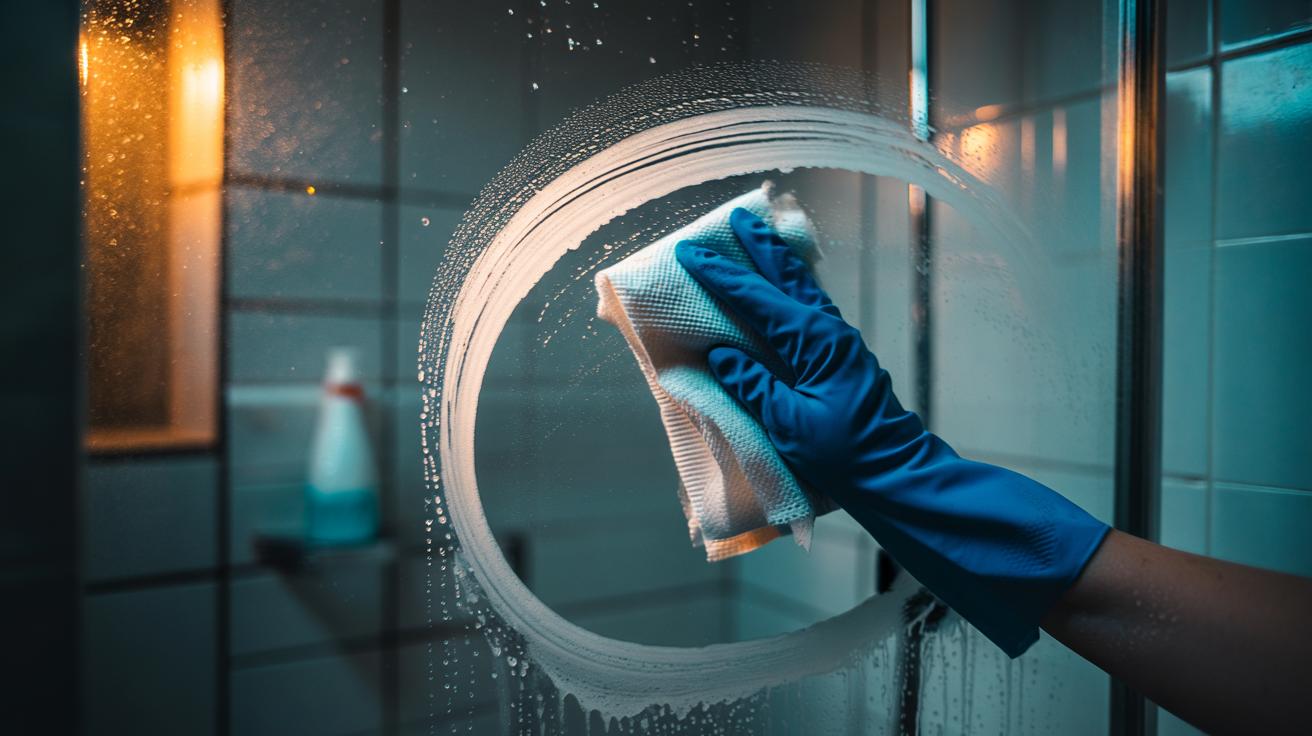
Speed matters, as does sequence. Start by running warm water over the door to soften the film. In hard‑water areas (London, East Anglia, much of the South), spritz white vinegar (1:1 with water) and leave for five minutes, then lightly rinse. Fold a used dryer sheet—used is less loaded, so it’s gentler—and dampen it. Wipe in overlapping vertical strokes from top to bottom. Flip the sheet as it soils. The goal is contact time: let the surfactants sit on stubborn zones for 30–60 seconds before another pass.
Rinse the glass thoroughly to remove residues, then buff dry with a clean microfibre cloth to prevent fresh spotting. Always spot‑test on a corner if your door has a hydrophobic or “easy‑clean” coating. Avoid natural stone surrounds; quats and fragrances can mark porous materials. Ventilate, wear light gloves if you have sensitive skin, and never combine with bleach‑based products. For maintenance, a 30‑second post‑shower squeegee keeps the film from rebuilding, meaning the dryer‑sheet trick becomes a monthly rescue rather than a weekly chore.
What the Science Says: Surfactants, Static, and Scum
The word “anti‑static” suggests sparks, but the payoff here is chemical. Quats tame charge on fabrics; on glass, they behave as surface‑active agents. Their positively charged heads are attracted to negatively biased sites and mineral soaps, while their tails mingle with oily soils, forming micelles that lift residue into a wipeable layer. Conditioners and fatty alcohols add slip, reducing friction so the pad glides rather than squeaks. The nonwoven sheet, lightly abrasive but soft, supplies the gentle scrub that pure liquids lack. This blend of chemistry plus contact time explains why you see results mid‑wipe, not five minutes later.
Effectiveness varies with the dominant soil. Here’s a quick guide you can read at a glance:
| Residue Type | Main Components | Best Countermeasure | Dryer Sheet Effectiveness |
|---|---|---|---|
| Soap scum (greasy) | Fatty acid salts, body oils | Cationic surfactants + wipe | High |
| Hard limescale | Calcium carbonate | Acid (vinegar/citric) | Low |
| Water spots | Mineral salts, silica | Acid + polish | Moderate |
| Product film | Silicones, polymers | Detergent + elbow grease | Moderate |
In short: the sheet excels on the organic portion of scum, helps with mixed films, and falls short on crystalline scale. Use it strategically.
Costs, Caveats, and Greener Alternatives
There’s a reason this hack resonates. It’s cheap and convenient. A box of 40 sheets can cost £2–£4 in UK supermarkets; one used sheet cleans a standard door, putting the per‑clean cost at pennies. Yet there are caveats. Fragrance blends and quats can irritate sensitive skin or asthmatic airways. Residual conditioners may leave a light film if you skip the rinse, inviting new dirt. Never use on acrylic panels that scratch easily, and keep spent sheets away from pets.
For lower waste, reserve the method for recovery cleans. Day‑to‑day, a microfibre cloth with a drop of washing‑up liquid (anionic surfactant) cuts body oils efficiently, while a weekly citric‑acid spritz manages limescale. Preventive steps pay off: a quick squeegee after each shower, softer water via a filter where feasible, and switching to liquid soap or syndet bars that leave fewer insoluble salts. If you want a one‑bottle solution, look for bathroom sprays that combine a mild acid with surfactants—essentially the same chemistry, minus the throwaway pad.
Used wisely, a dryer sheet is more than a laundry leftover. It’s a miniature surfactant delivery device that breaks the greasy backbone of soap scum, especially when teamed with a simple acid pre‑treat for mineral build‑up. Fast, tactile, oddly satisfying. The science checks out, and the results are visible in the rinse water running grey. What’s your plan for keeping the glass clear—stick with the sheet, shift to a greener routine, or design a hybrid that suits your water, your skin, and your schedule?
Did you like it?4.5/5 (20)