In a nutshell
- 🥚 Use eggshell paste—rich in calcium carbonate—to fill garden sculpture chips; it bonds with stone/cement and often works in one application.
- 🛠️ Mix finely ground shells with a breathable binder (egg white, casein, or diluted PVA) to a peanut‑butter consistency, press in slightly proud, feather edges, then cure and lightly sand.
- 🧪 Maintain breathability to prevent freeze–thaw issues; the mineral filler locks mechanically into micro‑pores and weathers naturally without a plasticky sheen.
- 🎨 Colour‑match with pigment or stone dust, and finish with a mineral, non‑film‑forming sealer (e.g., potassium silicate); avoid glossy acrylic coatings.
- ⚠️ Best for cosmetic chips up to ~5 mm; not for structural cracks or dense polished stones—seek professional fillers or pinning where necessary.
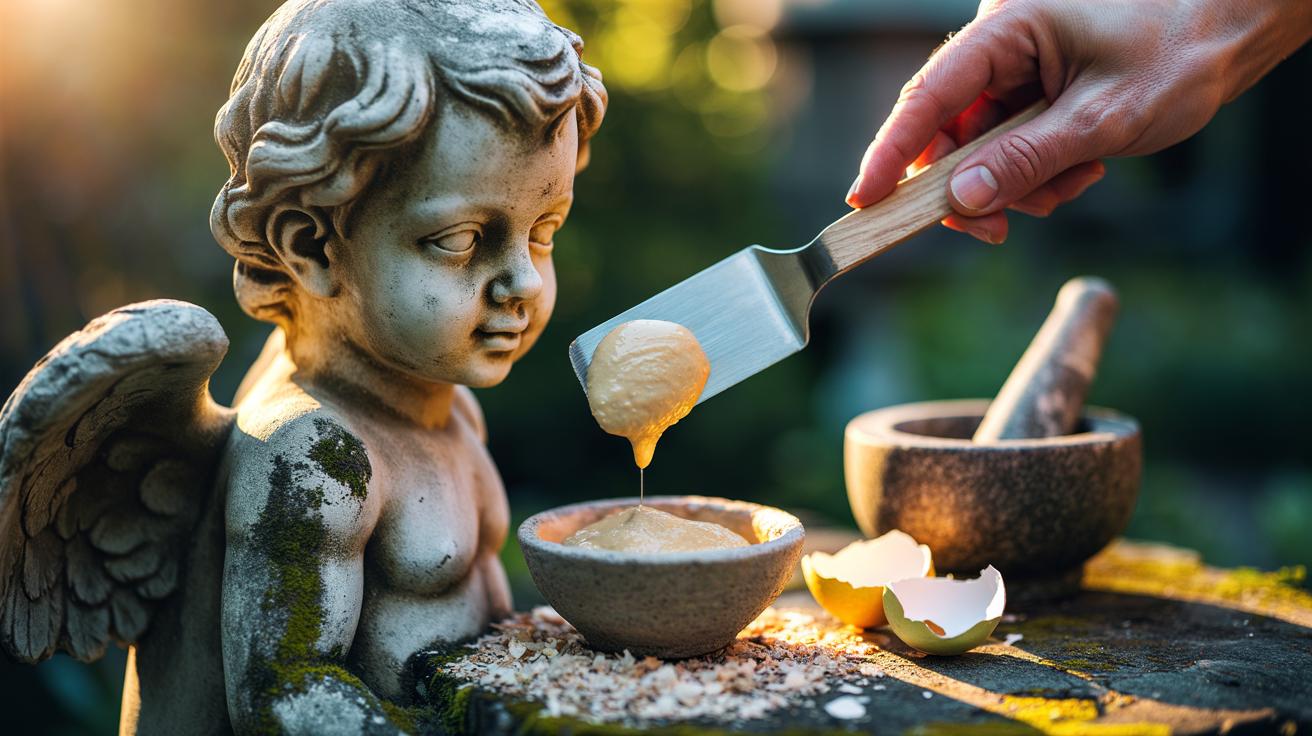
Garden ornaments collect stories as well as chips. A flaked nose on a stone cherub, a bruised edge on a concrete birdbath: tiny flaws that tug at the eye. Here’s a low-cost fix with a surprisingly elegant science—eggshell paste. Crushed shells, rich in calcium carbonate, make a fine, mineral filler that bonds, sands, and tones to the existing surface. It’s quick. It’s discreet. And, handled right, it often works in one application. I visited restorers, tinkered in sheds, and tested on sun-bleached statuary to find a method that keeps character while smoothing scars. The secret lies in particle size, a compatible binder, and a breathable finish.
The Chemistry Behind Eggshell Paste
At the heart of the method is material kinship. Eggshells are roughly 95% calcium carbonate, the same mineral family that forms limestone, many garden statues, and some plasters. When finely ground, shells create a silky powder that slips into chips and voids, locking mechanically with the micro-pores of stone or cement. The mineral content helps the repair read as part of the sculpture rather than a foreign plug. Unlike polymer-only fillers, a mineral filler doesn’t shout under sunlight; it weathers in step with masonry, especially when tinted.
The binder is the second pillar. Traditionalists reach for casein (milk protein) or egg white, which harden into a tough yet vapour-permeable glue. Modern tinkerers favour a dab of PVA diluted with water. Either way, the binder serves as a thin bridge that holds calcium particles together without sealing the surface like plastic. That matters outdoors. Moisture must migrate out of masonry to avoid freeze–thaw damage. The paste’s mineral majority, gentle alkalinity, and breathable finish create a sympathetic repair that stays put, sands neatly, and doesn’t gleam.
Texture completes the triad. Grind shells to talc-fine for porcelain-smooth statuary, or leave a small fraction coarser for cast-concrete garden pieces. The variance allows light to scatter similarly to the surrounding fabric. Add a whisper of clay or stone dust from the sculpture itself to deepen the match. With these tweaks, the paste fills crisps and nicks so effectively that one careful application is often all that’s required for chips up to about 5 mm deep.
How to Mix and Apply in One Go
Begin by cleaning the chip. A soft brush and a spritz of clean water remove friable grains and algae; let the surface dry until just faintly damp. Crush washed, baked shells to a fine powder—spice grinder or mortar and pestle, then sift. Mix the powder with your chosen binder to reach a peanut-butter consistency that just holds a peak. For casein, dissolve a teaspoon of dried milk in a tablespoon of water; for PVA, a 1:5 PVA-to-water mix works well. Fold the powder in until it trowels smoothly without slumping.
| Material | Purpose | Typical Notes |
|---|---|---|
| Eggshell powder | Mineral filler (calcium carbonate) | Ultra-fine for smooth stone; include 10% coarse for concrete |
| Binder (egg white, casein, or PVA) | Adhesion and cohesion | Keep dilute for breathability; avoid glossy build-up |
| Pigment or stone dust | Colour match | Use iron oxide, lamp black, or site dust sparingly |
| Breathable sealant | Weathering control | Silicate or mineral masonry sealer; no plastic films |
Press a small amount into the chip using a gloved finger or a narrow spatula, burnishing from the edges inward to lift and support the lip. Add a whisper more to stand just proud of the surface—repairs shrink slightly. Feather the perimeter with a damp brush. Do not overwork: a few confident passes create a monolithic fill that typically needs no second coat. After 20–40 minutes, when leathery, pat with a damp sponge to echo the surrounding grain. Let cure undisturbed for 24 hours before light sanding with 600-grit paper if required.
For deeper losses, pack in two lifts within the same session, scoring the first lightly to key the second. If you can’t resist perfection, dab a speck of pigment across the patch while tacky to break uniformity. The aim is discretion, not newness. The best repairs vanish at two paces and whisper on close inspection.
Finishing Touches, Weatherproofing, and Longevity
Colour tells. Fresh eggshell is pale; gardens are not. Dust a touch of iron oxide, soot, or site-sourced stone flour into the paste to mute brightness. Once dry, a breathable, non-film-forming seal—potassium silicate or a quality mineral masonry sealer—stabilises the surface without trapping moisture. Avoid glossy acrylic coats that suffocate stone. On concrete, a silicate wash can also subtly knit paste and substrate, marginally hardening the surface and improving abrasion resistance in exposed spots like birdbath rims.
Maintenance is light. Let lichen return naturally if your sculpture wears that greenish dignity; the mineral surface encourages it. If the piece endures hard frosts, check spring edges for micro-gapping and touch in with a fingertip of paste. Crucially, this is a cosmetic fix: do not use eggshell paste for structural cracks or wobbly limbs. Where a fragment flexes, look to pins and epoxy set by a conservator. For dense marble or polished granite, adhesion may be inadequate; a professional stone filler is the safer route.
Done well, a one-application repair lasts seasons. The paste weathers at near parity with cementitious substrates and many garden stones, particularly when shaded from constant runoff. The cost is negligible, the skill easy to acquire, and the aesthetic outcome quietly persuasive. Because the filler is essentially calcium carbonate, the repaired area breathes, takes patina, and avoids the plasticky glare that betrays many fixes. That’s the journalist’s verdict from lawns and workshops alike: a small, mineral answer to everyday chips.
In a world where quick fixes often look, well, quick, eggshell paste is a thrifty, seamless alternative that respects the material and the garden’s weathered charm. With careful grinding, a sympathetic binder, and a breathable seal, you can smooth most chips in a single, confident application. It’s part chemistry lesson, part craft, and entirely satisfying. The next time a sculpture takes a knock, will you reach for the shells in your kitchen caddy—and what details of colour, texture, or patina will you prioritise to make the repair truly disappear?
Did you like it?4.5/5 (29)