In a nutshell
- 🌱 Embrace the no-dig method: layer cardboard, compost, and mulch to feed the soil food web, preserve structure, and reduce disturbance.
- 🧰 Simple setup: overlap cardboard, add 5–8 cm of peat-free compost, top with mulch, and plant immediately; maintain with 2–3 cm compost annually.
- 🔬 Proven benefits: fewer weeds (no exposed weed seed banks), better moisture retention, stronger fungal networks, and reduced watering and fertiliser costs.
- 🛠️ Smart fixes: suppress couch grass and bindweed with thicker layers, deter slugs by encouraging predators, net brassicas, and use well-rotted, contamination-free compost.
- 🌿 Year-round rhythm: deep but infrequent watering, path mulching to prevent compaction, and crop rotation for resilience, yields, and soil health.
Across Britain’s allotments and back gardens, a quiet revolution is sprouting. Seasoned growers and new homeowners alike are embracing the no-dig technique, a method that swaps back-breaking tilling for gentle layering and soil care. Results look almost unfair: fewer weeds, richer beds, higher resilience in drought and deluge. It’s tidy. It’s fast. It’s rooted in ecology rather than gadgetry. Stop turning the soil; start feeding it—that’s the mantra shared by gardening gurus from Cornwall to the Cairngorms. Whether you’re revitalising a compact terrace plot or taming a scrappy lawn edge, no-dig offers a practical pathway to a flourishing yard with strikingly minimal effort.
What the No-Dig Method Really Means
The principle is deceptively simple: build fertility from the top down, the way forests do. With no-dig, you add layers—typically cardboard to smother weeds, then compost and an organic mulch—and let the soil food web handle the integration. Earthworms, fungi, and microbes pull nutrients downward. Roots travel into a stable, airy matrix. Less disturbance means more life, and more life means easier growing. Instead of churning beds every spring, you refresh them with a few centimetres of compost and get planting.
This approach preserves soil structure. It protects fungal networks that ferry nutrients between plants, keeps moisture available longer, and avoids bringing buried weed seed banks to the surface. It’s also faster. A single afternoon can transform a patchy lawn corner into a thriving bed. Many gardeners report better yields and cleaner crops because the soil stays friable and evenly fed. The method scales: from one crate-sized herb patch to a generous, four-bed rotation.
Crucially, no-dig isn’t just about ease. It’s about soil dignity. When we stop treating ground like a medium to be flipped, it becomes a living partner. That perspective shift encourages careful feeding with composts, leafmould, and well-rotted manures, not harsh inputs.
Step-by-Step Setup for UK Gardens
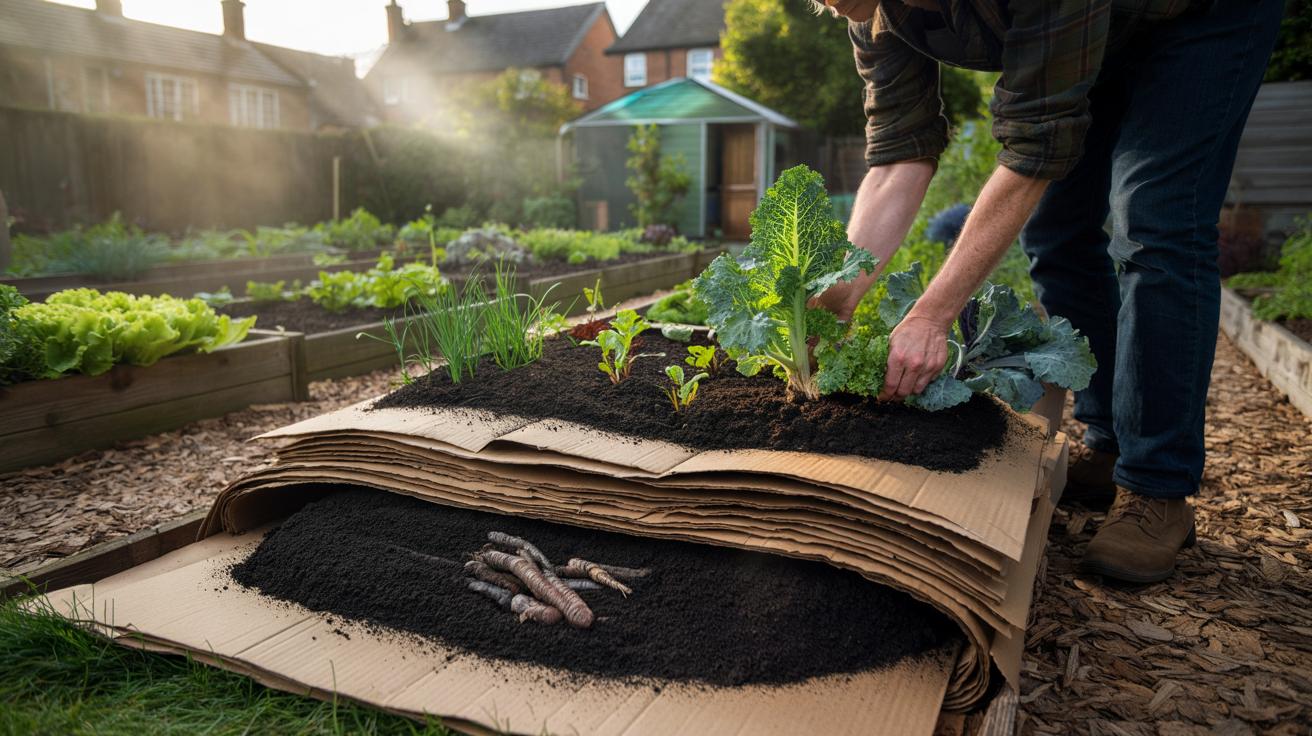
Choose a sunny spot. Mow or trample existing vegetation low, then water. Lay down plain, brown cardboard (no glossy inks), overlapping pieces by at least 10 cm to block light. Drench again so it hugs the contours. Top with 5–8 cm of quality, peat-free compost; add a further 2–5 cm of wood chip or leafmould as mulch on paths and around perennials. Plant immediately by dibbing holes, or wait a fortnight for settling. Cardboard rots; roots run. In heavy-clay regions, resist the urge to dig—persistence with mulches creates crumbly tilth over months, not minutes.
| Material | Purpose | Typical Quantity (per 3m × 1.2m bed) | Notes |
|---|---|---|---|
| Cardboard | Weed suppression | 6–8 large sheets | Remove tape; overlap edges |
| Compost (peat-free) | Fertility layer | 180–240 litres | Sieved for seedlings; coarse for beds |
| Wood chips or leafmould | Mulch moisture and paths | 60–100 litres | Keep chunky mulch off seed rows |
| Water | Layer bonding | 20–40 litres | Soak cardboard thoroughly |
Top-ups are simple. Each autumn or late winter, add 2–3 cm of compost. No double-digging. No rakes and rotavators. For a first season flush of nutrients, interplant fast crops—radishes, salad leaves, spring onions—between slower brassicas and beans. A little layering, a lot of harvest.
Why It Works: Science and Savings
Digging collapses pores and snaps fungal hyphae. No-dig preserves these delicate networks, which boost nutrient exchange and disease resistance. The surface-applied organic matter acts like a sponge, improving water retention—vital during erratic British summers with heat spikes and sudden downpours. It also moderates soil temperature, sheltering seedlings from extremes. Structure first, fertility follows. This is the engine behind the method’s reliability across soils from chalk to clay.
Economically, no-dig trims the hidden costs of gardening. Fewer weeds mean fewer hours bending and hoeing. Compost does the heavy lifting, so you buy less feed and fewer bagged fertilisers. Because you aren’t exposing buried weed seeds, you interrupt the cycle that keeps beds in perpetual clean-up. Many growers find they can reduce watering by a third once mulches bed in, thanks to superior moisture retention under a stable mulch.
There’s also a climate angle. Avoiding rotavation reduces fuel use and helps keep carbon locked in the ground. Healthier soil biology cycles nutrients naturally, lowering reliance on synthetic inputs. It’s satisfying, too: you move from a churn-and-fight model to one of guidance and gentle steering. Less work, more life.
Troubleshooting and Seasonal Tips
Persistent perennials like couch grass or bindweed? Take it slow. Begin with a thicker cardboard layer and extend it beyond the bed edges. Patrol weekly to pull any sneaky shoots that slip through. Slugs and snails can congregate under boards and stones; remove hiding spots, encourage predators (frogs, ground beetles, hedgehogs), and use beer traps or wool pellets around tender seedlings. With brassicas, deploy mesh from day one against cabbage whites and flea beetles; no-dig doesn’t replace good netting.
Compost quality matters. Opt for well-rotted, peat-free mixes; if using manure, ensure it’s at least a year old and free of aminopyralid contamination. Start seedlings in trays, then transplant into the bed; this leapfrogs early slug pressure and uneven germination. For clay-heavy plots, choose deep-rooted pioneers—beans, sweetcorn, perennial herbs—to pry channels for air and water. Roots are the best tillers.
Seasonally, refresh with 2–3 cm of compost in late winter, then again lightly after main harvests. In drought, water less often but deeply, then re-mulch to seal in moisture. In wet spells, keep paths mulched with wood chips to prevent compaction. Rotate families—brassicas, alliums, legumes, roots—even in no-dig beds to spread demand and outfox pests. The routine becomes pleasantly rhythmic.
No-dig isn’t a fad; it’s a return to how soil naturally thrives, translated into a method that suits modern lives and small spaces. You’ll trade spade work for observation, wheelbarrow loads for thoughtful layers. The payoff is visible—crumbly beds, quick harvests, fewer weeds, calmer weekends. Feed the surface and the soil will feed you. Whether you’re a balcony box experimenter or an allotment stalwart, the invitation is the same: try one bed and watch the difference. What corner of your garden will you choose for your first no-dig experiment this season?
Did you like it?4.8/5 (25)