In a nutshell
- 🧂 Salt works via micro‑abrasion and osmotic pressure, lifting grime, suppressing bacteria, and neutralising odours fast—an effective reset rather than hospital‑grade sterilisation.
- 🧽 Method: sprinkle coarse salt on a dry board, scrub (lemon for wood, brush for plastic), allow 60–120 seconds contact time, rinse hot, dry, and oil wood to seal.
- 🧰 Right kit: choose coarse/kosher for general scrubbing, rock salt for heavy grime (with care), fine salt for deodorising; use a cut lemon or short‑bristle brush, and avoid steel wool.
- ⚠️ Safety lines: after raw meats/seafood use a food‑safe disinfectant (e.g., diluted bleach or hydrogen peroxide); dishwasher plastic boards, sand and re‑oil wood; always separate boards by task.
- ♻️ Benefits: frugal, low‑waste, quick between tasks, and kind to home kitchens—salt delivers cleaner surfaces, fewer smells, and fewer bottles under the sink.
A kitchen trick so old it feels new again: a pinch of salt, a quick rub, and a sullied chopping board smells fresher and looks brighter. The science is simple yet satisfying. Coarse crystals scour. Salt draws moisture. Microbes hate deserts. In busy British home kitchens, where wood and plastic boards shoulder everything from onions to oranges, a one-ingredient fix that both cleans and sanitises is gold. Used correctly, salt cuts through grime, suppresses bacteria, and quells stubborn odours in under two minutes. It’s frugal, low-waste, and wonderfully tactile. No spray cloud, no synthetic perfume—just an old miner’s mineral doing quiet, effective work.
Why Salt Works on Stains, Smells, and Microbes
Salt’s power begins with physics. Coarse grains act as a micro-abrasive, physically disrupting sticky films, food residue, and the faintly greasy sheen that clings after chopping. That abrasion opens up the surface, especially on wooden boards where pores hold juices. Then chemistry takes its turn. Sodium chloride creates osmotic pressure, pulling water from microbial cells and from the damp micro-environment protecting them. Dehydrated microbes lose structure and struggle to recover. By collapsing the moisture that bacteria depend on, salt shortens their odds dramatically.
There’s also a quiet bonus: odour control. Volatile sulphur notes from garlic and onion latch on to damp organic matter; remove the damp and you blunt the stink. While salt isn’t a hospital-grade disinfectant, lab tests routinely show meaningful reductions in common kitchen bacteria when coarse salt is used with light scrubbing and a brief contact time. Think of it as a fast “reset” between tasks—particularly effective on fresh spills and after cutting produce, bread, or cooked foods. It’s rapid mitigation, not magical sterilisation, and that distinction matters.
Step-by-Step: A Fast, Frugal Board Reset
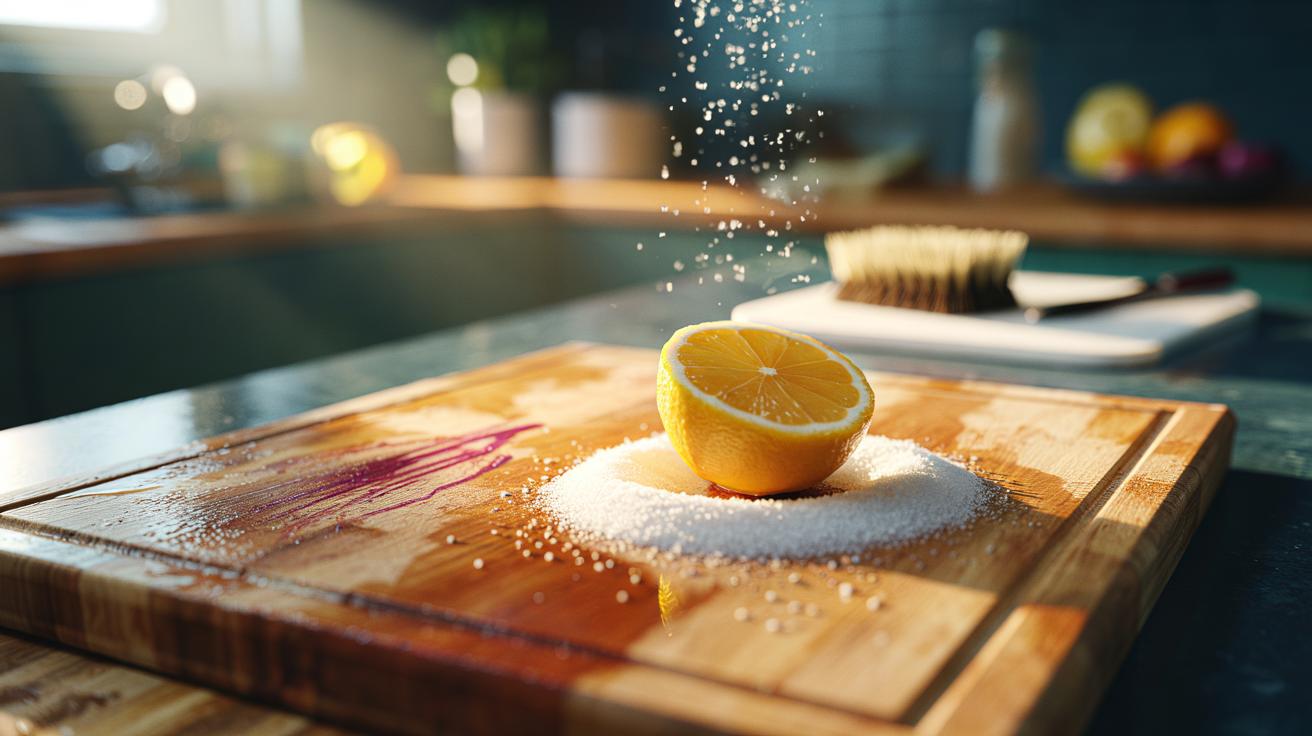
Start dry, not wet. Sprinkle a generous layer of coarse salt—sea salt or kosher-style crystals—over the marked or odorous area. The dryness matters; it lets crystals stay sharp and keeps osmosis working in your favour. For wood, use a cut lemon as the scrubber. For plastic, a clean damp cloth or short-bristle brush works well. Scrub in tight circles for 30–60 seconds, letting the grit bite, not gouge.
Now pause. Give the salted surface a brief contact time of 60–120 seconds. This dwell allows the salt to wick moisture from microfilms and to lift pigments that cause stains. If you used lemon, the mild citric acid complements the salt by loosening protein smears and freshening smell. Rinse with hot water, then wipe dry. Stand wooden boards on edge to air-dry fully. For deeper refreshes, repeat once. If the board still smells after two passes, the issue is likely in deeper pores or cuts, not on the surface. Finish wood with a light food-safe oil to seal against future juices.
Choosing the Right Salt and Tools
Not all salts strike with the same force. Grit size governs how well crystals scour; additives can affect clumping and glide. The quick guide below pairs salt types with ideal uses and timing for kitchen boards.
| Salt Type | Grit Size | Best Use | Contact Time | Notes |
|---|---|---|---|---|
| Coarse sea/kosher | Large | General scrubbing | 60–120 sec | Top choice for wood |
| Rock salt | Very large | Heavy grime | 60–90 sec | Can be too abrasive on soft woods |
| Fine table salt | Small | Quick deodorising | 90–180 sec | Less scouring; good with lemon |
| Flake salt | Medium | Balanced clean | 60–120 sec | Fragments under pressure for even coverage |
Tools matter too. A cut lemon offers gentle acidity and a natural handle; a short-bristle brush gets into plastic’s faint crosshatch without shredding it. Avoid steel wool, which can shed and rust. The winning combo for most homes is coarse salt plus lemon on wood, coarse salt plus brush on plastic. Keep motions small and pressure moderate. You’re aiming for lifted residue and dehydrated microfilms, not furrows. If salt cakes, you’ve added too much water—reset with a dry sprinkle and continue.
When Salt Isn’t Enough: Safety Lines You Shouldn’t Cross
Salt excels at day-to-day resets, but it has limits you should respect. After raw poultry, minced meats, or seafood, treat boards as high risk and escalate your sanitising. Use a food-safe disinfectant—diluted bleach solution, hydrogen peroxide, or a commercial kitchen sanitiser—following label directions and proper contact times. Salt alone cannot guarantee the deeper kill rates required when pathogens may be present in juices trapped within cuts.
Inspect your board. Deep grooves and end-grain can harbour moisture beyond salt’s reach. Plastic boards with entrenched knife marks may be better run through a hot dishwasher cycle; wooden boards should never be soaked, but can be resurfaced with fine sandpaper and re-oiled. Watch for materials: bamboo is tougher and tolerates salt well; soft woods mark easily; some composite boards dislike acids. Odour persistence after repeated salting suggests internal staining—time to resurface or retire. And always separate duties: one board for raw proteins, another for produce and bread. Salt is a brilliant maintenance tool, not a universal cure-all.
In a cost-of-living squeeze, the appeal is clear: salt is cheap, shelf-stable, and astonishingly effective at restoring a board between jobs. The tactile scrub, the clean slate, the absence of chemical haze—it all adds up to a satisfying, sustainable habit for everyday cooking. Used thoughtfully, coarse crystals buy you hygiene, speed, and fewer bottles under the sink. Where might you deploy this mineral next—refreshing cast-iron, rescuing stained mugs, reviving a tired worktop—and what small tweaks could make salt the quiet workhorse of your cleaning routine?
Did you like it?4.5/5 (28)