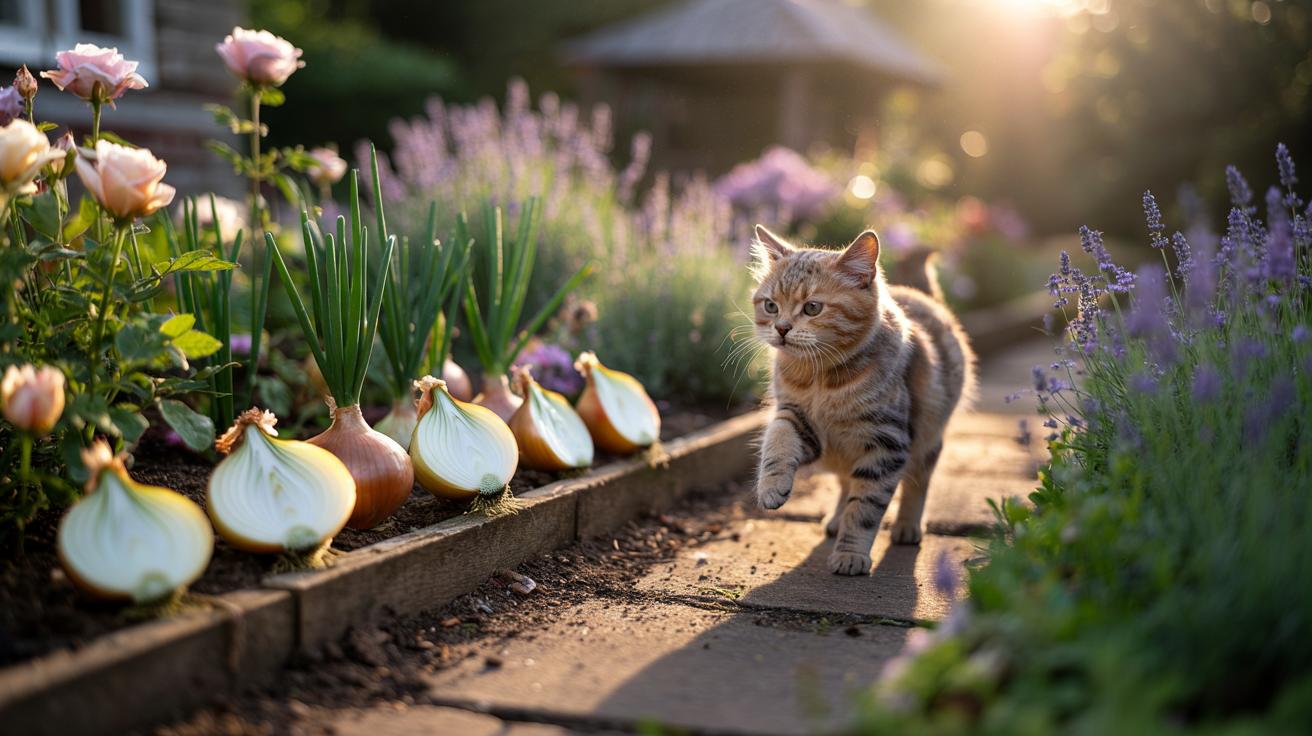
In a nutshell
- 🧅 Sliced onion releases strong volatile sulphur compounds (thiosulfinates, syn‑propanethial‑S‑oxide) that overwhelm feline olfaction and repel cats from flower beds within seconds.
- 🛠️ Deployment: lay thick onion rings along perimeters or in breathable mesh sachets pinned down; refresh every 24–72 hours and after rain for a reliable scented fence.
- ⚠️ Safety first: onion is toxic if eaten by cats and dogs—contain and remove slices promptly, keep from children, and follow humane deterrent practices and neighbourly etiquette.
- 🌦️ Real-world limits: potency fades with weather; keep slices off delicate foliage to avoid spotting; may also discourage foxes and rabbits, but freshness is key.
- 🔁 Best results: combine onion scent with rough mulch, chicken wire under soil, motion-activated sprinklers, and rotating odours (citrus, approved gels) to prevent habituation.
The simplest garden tricks are often the most surprising. Ask any UK gardener defending precious borders from prowling moggies: sliced onion is a quick, low-cost deterrent that can keep cats off your flower beds without gadgets or chemicals. The tangy, nose-prickling odour from fresh onion slices wafts across the soil and triggers an instant “nope” response in many animals, cats included. It’s not a cure-all, and it won’t outmuscle heavy rain or a particularly stubborn tom, but used smartly it can buy your seedlings time and space. Here’s how that sharp scent works, how to deploy it for best effect, and what to watch out for in real-world gardens.
Why Onions Offend Feline Senses
Cats navigate the world through scent. Their feline olfaction is tuned to tiny chemical signals, and onions release an unmistakable cloud of volatile sulphur compounds. Slice a bulb and you liberate thiosulfinates and the tear-inducing gas syn‑propanethial‑S‑oxide. To you, it’s kitchen pungency. To a cat’s sensitive nose and vomeronasal organ, it’s a bold red flag. That’s why a few fresh slices can shift behaviour within seconds, nudging a cat to skirt the bed rather than step into it.
There’s a broader, primal logic at play. Strong allium odours read as “irritant” rather than “food”, so the message is consistent even to curious juveniles. You’ll sometimes see the same flinch from urban foxes, rabbits, or opportunistic rodents. It’s not universal—no scent is—but it’s frequent enough to be useful, especially where cats are using your soil as a loo or a warm napping spot. The key is freshness. As the volatiles evaporate, the deterrent effect fades.
Crucially, the onion trick is about aversion, not harm. Onion is toxic if eaten by cats and dogs, but the point here is to make the area uninviting so they never linger, sniff deeply, or sample the slices. Done properly—using containment and regular removal—you get the scent barrier without risk, and without the harshness of ammonia-based products or banned substances.
How to Use Sliced Onion in Flower Beds
Start simple. Cut a brown or red onion into thick rings, then halve the rings for more exposed edge. Lay pieces along the bed’s perimeter and between the most vulnerable plants, avoiding direct contact with stems. Think of it as a scented fence. In breezy conditions, tuck slices into small, breathable mesh sachets (old net fruit bags work) and pin them down with garden staples so they don’t blow away or tempt wildlife to drag them off.
Refresh frequently. After heavy rain or two to three days of dry weather, potency drops. Swap in new slices and bin or hot-compost the old ones in a sealed caddy to avoid attracting pests. Where cats habitually enter one corner, concentrate your barrier there and pair it with a physical texture they dislike—coarse mulch, pine cones, or lattice laid just under the surface—to stop digging. Consistency beats intensity: a modest, well-maintained scent line outperforms a single dramatic dump of onion that’s left to rot.
| Method | Coverage | Lifespan | Pros | Cons |
|---|---|---|---|---|
| Sliced rings on soil | Perimeter and gaps | 24–72 hours | Fast, cheap, targeted | Moves in wind; needs refresh |
| Chopped pulp in mesh bags | Small hot spots | 48–96 hours | Stronger scent, contained | Must pin down; still replace |
| Onion water spray (strained) | Edges, hard surfaces | 24–48 hours | Good for walls/paths | Avoid plant leaves; mild odour indoors |
Always keep onion material out of reach of pets and children, use gloves if you’re sensitive, and test sprays on a small area away from delicate blooms. The aim is a tidy, humane deterrent that blends into your routine deadheading and watering rounds.
Safety, Side Effects, and Neighbourly Etiquette
Let’s be clear: onions are safe as a scent-based repellent but unsafe as a snack. Ingestion can cause haemolytic anaemia in cats and dogs due to compounds such as N‑propyl disulphide. That’s why the mesh-bag method matters. Contain slices, pin them down, and remove them promptly once they lose their punch. If your own pets roam the bed, consider switching to non-food textures (like prickle mats or chicken wire beneath mulch) during peak curiosity phases.
Soil and plant health? Typically unaffected. Onion residues are small and break down quickly, adding organic matter rather than altering pH in any meaningful way. Keep slices off tender foliage to avoid cosmetic spotting, and don’t bury onion in dense clumps that could ferment. Dispose of spent material in a closed compost system or council food waste so as not to entice foxes. Wear gloves if you’re prone to skin irritation, and avoid touching your eyes mid-session—the kitchen rules apply outdoors.
There’s also the human side. Strong smells travel, particularly in warm, still weather. Have a quiet word with close neighbours before deploying by the front path, and keep the footprint discreet. Good garden etiquette keeps everyone on side. In the UK, the Animal Welfare Act 2006 sets a clear tone: cause no unnecessary suffering. Onion scent, used thoughtfully, sits firmly on the humane end of the spectrum—unlike mothballs or pepper sprays, which you should avoid entirely.
What Else Works: Combining Repellents for Reliability
No single trick wins every time. The most effective strategy layers scent, surface texture, and a dash of surprise. Surround beds with rough mulch or laid twiggy prunings so the surface feels unstable under paw. Sink a sheet of chicken wire just under the soil to prevent digging while allowing bulbs and perennials to push through. Add a motion-activated sprinkler by the usual approach route for the odd bold visitor who ignores scent entirely.
Rotate odours to reduce habituation. Alternate onion with citrus peels in sachets, commercial cat-repellent gels approved for garden use, or a little crushed garlic in a bagged mix—always contained, always out of reach. Coffee grounds can be effective, but they’re not ideal where dogs visit; choose pine needles or crushed seashells instead for a pet-safer texture. Offer a decoy: a small, sandy patch in a quiet corner can divert toileting away from the peonies. Give them a “yes” space and protect your “no” space.
Keep notes. Observe entry points, weather patterns, and which combination holds. Refresh on a schedule—after rain and at weekends when activity peaks. Stay within the law and local guidance, avoid any irritants that could injure eyes or skin, and remember the goal: a garden that’s welcoming to people and pollinators, and politely unwelcoming to paws where they do damage.
Used with a cool head and a regular refresh, sliced onion is a nimble, budget-friendly way to tip the odds in favour of your flower beds. It acts fast, it deters without harming, and it buys you breathing space while plants establish and groundcover thickens. Pair it with texture and smart layout and you’ll see fewer pawprints, fewer dug-up seedlings, and cleaner borders. Humane gardening is strategic gardening. Will you try the onion line this week—and which extra layer will you add to make your deterrent plan truly cat-proof in your patch?
Did you like it?4.4/5 (30)